
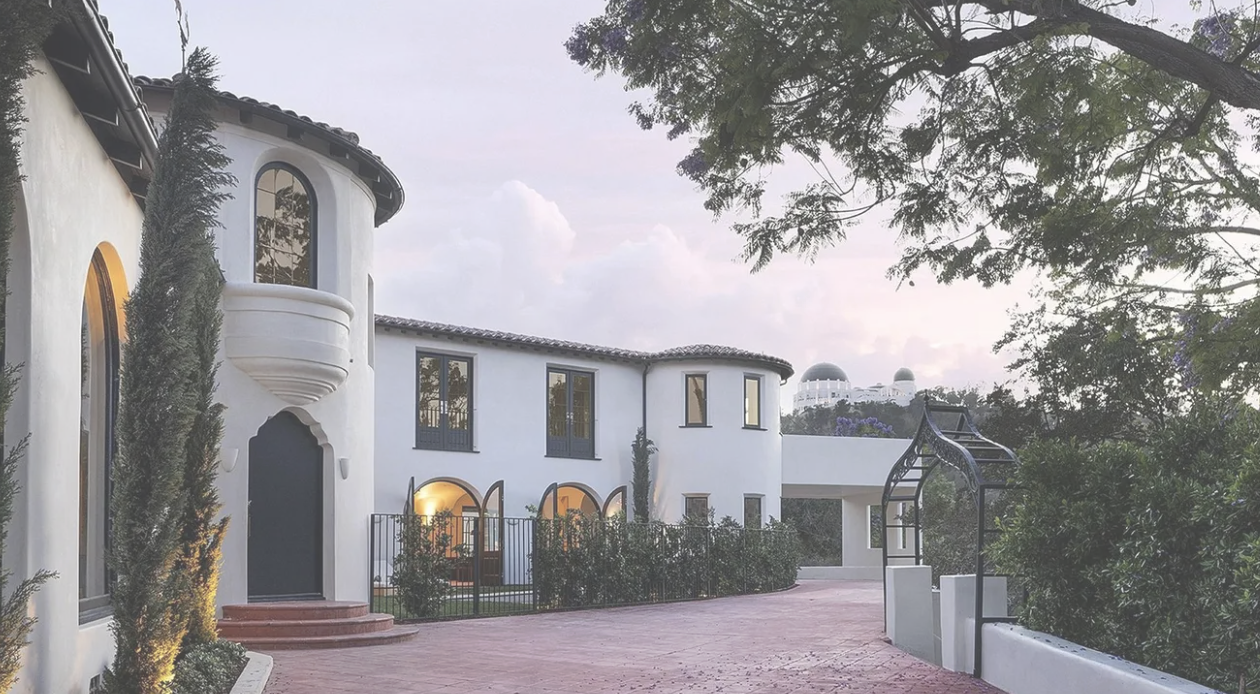
Does historic designation hurt home value in Los Feliz?
Does a Historic-Cultural Monument designation lower what a Los Feliz home is worth? What the Mills Act adds, what it restricts, and the tradeoffs to weigh before listing.
Owners of designated homes in Los Feliz tend to ask one question before any other. Does the Historic-Cultural Monument status attached to the property cost them money when they sell? It is a fair worry, and the honest answer runs against the assumption buried inside it.
Does a Historic-Cultural Monument designation lower a home's value in Los Feliz?
No, not on its own, and in many cases it does the opposite. A Historic-Cultural Monument designation does not automatically lower what a Los Feliz home is worth, and it often supports the value, because designation makes a property eligible for a Mills Act contract that can reduce property taxes by 40 to 70 percent, a benefit that transfers to the next owner at closing. Debbie Pisaro of Coastline 840 (California DRE #01369110), a Los Feliz real estate agent who specializes in architectural and historic homes, finds that the real risk to a sale is rarely the landmark status. It is pricing the home against the wrong comparable sales, or marketing it to a buyer who wanted a lot to clear rather than a house to keep. The tradeoff designation carries is a city review process for major exterior changes, relocation, and demolition.
The longer answer has real edges, and an owner should understand them before listing. Designation narrows the buyer pool in one direction while widening it in another, and whether that nets out as a gain or a drag depends on the home, the block, and how the sale is priced and presented. This is one of the most common questions across Los Feliz, from the flats near the Hillhurst Avenue and Vermont Avenue corridors up into Laughlin Park and The Oaks. Here is how the answer actually works.
What HCM designation actually does in Los Angeles
A Historic-Cultural Monument is the City of Los Angeles designation for a landmark property. It is reviewed by the Office of Historic Resources, considered by the Cultural Heritage Commission, and approved by City Council. People often picture designation as a freeze that locks the house in place. That is not how it works.
An owner can live in a designated home, maintain it, and update it. What designation changes is the permit process for significant work. When an owner applies to substantially alter the exterior, relocate, or demolish a Historic-Cultural Monument, the city reviews that application, and the Cultural Heritage Commission can delay it while preservation alternatives are weighed. Routine maintenance and most interior updates are generally not the focus. For the scope of any major project, the place to confirm is the city's Office of Historic Resources first.
It also helps to know what designation is not. An HCM is a single-property designation. A Historic Preservation Overlay Zone, or HPOZ, is a historic district, where exterior changes to contributing homes are reviewed through a Certificate of Appropriateness. A given Los Feliz home may carry an individual HCM, sit within an HPOZ, hold both, or hold neither, so the only reliable move is to confirm a specific address rather than assume.
Designation in Los Angeles does not lock a home in place. The city reviews permits for major exterior alterations, relocation, and demolition, while routine maintenance and most interior work proceed normally.
The Mills Act is the benefit buyers want
Here is where designation often adds value rather than subtracting it. HCM status makes a property eligible to apply for a Mills Act contract, and the Mills Act is one of the most valuable benefits in California historic real estate. It is the part buyers actually care about, and the part that turns a landmark designation into a number on a spreadsheet.
Under a Mills Act contract, the county assessor revalues the property using an income-based method instead of the standard Proposition 13 assessed value, which usually produces a lower taxable value and a lower annual property tax bill. The savings vary widely, and figures from roughly 40 percent to 70 percent of the bill are commonly cited. For a recently purchased Los Feliz home the savings can be especially large, because the Proposition 13 base is set near a high purchase price while the Mills Act valuation is calculated a different way.
The math is worth making concrete. Consider a designated Los Feliz home with a $50,000 annual property tax bill, the kind of figure a high-value hillside property can carry. A Mills Act contract that trims that bill by 40 to 70 percent returns roughly $20,000 to $35,000 to the owner every year, and the rolling term means the savings compound rather than expire. That is a recurring number a buyer can underwrite, which is exactly why an existing contract reads as an asset in a listing rather than a footnote.
The contract carries a rolling 10-year term, renews on its own, and runs with the property rather than the owner, transferring to the next owner at closing. In exchange, the owner agrees to preserve and maintain the home to recognized preservation standards, with periodic inspection. California's Office of Historic Preservation administers the program statewide, and the City of Los Angeles accepts a limited number of new contracts each year, so whether a home already holds one is worth knowing, and worth disclosing.
Where designation can work against a sale
An honest answer has to name the tradeoffs. The buyer who wants to buy a Los Feliz lot, remove the house, and build new is not the buyer for a designated home, and designation removes that buyer from the pool. For an owner whose plan was to sell to a developer at land value, designation is a genuine constraint, and it should be understood as one.
But consider who designation brings in. The buyer who wants a Spanish Colonial Revival, a Tudor, a Mediterranean Revival, or a significant mid-century home with its character intact is precisely the buyer for a landmarked house. That buyer often pays a premium for authenticity, and for provenance that is documented and protected rather than merely claimed.
Los Feliz is unusually rich in this kind of home and this kind of buyer. The neighborhood's identity is tied to landmark architecture, and the names cluster block by block. Frank Lloyd Wright's Ennis House (HCM #149) sits above Glendower Avenue, and his Hollyhock House (HCM #12) anchors Barnsdall Art Park below. Lloyd Wright's Derby House carries the Mayan Revival idiom into the hills above the neighborhood. Richard Neutra's Lovell Health House (HCM #123) brought European modernism to the slope in 1929. Paul R. Williams worked in Spanish Colonial Revival here, including the Blackburn Residence (HCM #913). Wright's textile block, Neutra's steel and glass, and Williams's revival craft are three different arguments about what a Los Feliz house should be, and a buyer choosing among them is not the buyer asking about teardown value. Debbie Pisaro covers the architecture itself across her architectural and historic homes work, and the through line holds: in Los Feliz, the risk to a sale is rarely the designation.
How to price and present a designated Los Feliz home
Pricing precision is what separates a designated home that sells well from one that lingers, and the comparable set is the whole decision. Pick the wrong one and the number moves by real money in either direction. Price a landmarked home against teardown land value and the architectural premium that drew its buyer pool gets left on the table. Price it against renovated non-historic stock and the Mills Act savings and documented provenance that buyers will pay up for go unaccounted for. The right comparison is historic and architecturally significant sales, and choosing it correctly is the single biggest lever on what a designated Los Feliz home lists at.
Plan for the California process as well. The state requires the Transfer Disclosure Statement, most sellers also complete the Seller Property Questionnaire, and the Natural Hazard Disclosure report will flag items such as Very High Fire Hazard Severity Zone status for many hillside properties. HCM status and any Mills Act contract belong in those disclosures, where the right Los Feliz real estate agent presents them as assets rather than encumbrances. Budget for closing costs too, including the California Documentary Transfer Tax and the City of Los Angeles transfer tax. For higher-value sales the city's Measure ULA transfer tax can apply, and its thresholds adjust over time, so the current figures should be confirmed with an escrow company before any net is promised.
If the decision ahead is a sale rather than a hold, the mechanics shift again, and selling a Mills Act or HCM home in Los Feliz has its own disclosures and pricing math worth understanding before listing. Owners weighing who to hire can read the guide to working with a Los Feliz historic homes agent. What numbers alone cannot settle is the figure for a specific home, on a specific block, to the buyers active in Los Feliz right now. That is the question Debbie Pisaro works through with every owner, through her statewide brokerage Coastline 840.
For the homes themselves, the Los Feliz historic homes collection documents the neighborhood's designated landmarks one by one, architect by architect.
Frequently asked questions
Does HCM designation prevent me from remodeling my home?
No. An owner can maintain and update a designated home. The city reviews permits for significant exterior alterations, relocation, and demolition, and the Cultural Heritage Commission can delay those while alternatives are considered. Routine interior work and ordinary maintenance are generally not restricted, though the scope of any major project should be confirmed with the Office of Historic Resources first.
Is a Mills Act contract transferable when I sell?
Yes. A Mills Act contract runs with the property, not the owner. It transfers to the buyer at closing, and the rolling 10-year term continues. Many buyers view an existing contract as a meaningful benefit, because they step into the reduced property tax assessment that comes with it.
What is the difference between an HCM and an HPOZ?
An HCM, or Historic-Cultural Monument, is a designation for an individual property. An HPOZ, or Historic Preservation Overlay Zone, is a historic district, where exterior changes to contributing homes are reviewed through a Certificate of Appropriateness. A Los Feliz home can hold one, both, or neither, so a specific address should be verified with the Office of Historic Resources.
Do historic homes sell for less in Los Feliz?
Not as a rule. Designated and architecturally significant homes draw buyers who value authenticity, and Los Feliz has a deep pool of those buyers. The larger risk to a sale price is mispricing the home, or marketing it to a teardown buyer instead of a preservation-minded one, rather than the designation itself.
How much can the Mills Act save on property taxes in Los Angeles?
Savings vary by property, but reductions of roughly 40 to 70 percent of the annual property tax bill are commonly cited. On a home with a $50,000 annual tax bill, that is roughly $20,000 to $35,000 saved each year. The county assessor revalues the home using an income-based method rather than its Proposition 13 base, which usually produces a lower taxable value. Recently purchased homes often see the largest savings because their Proposition 13 base is set near a high purchase price.
Does every Historic-Cultural Monument qualify for the Mills Act?
Not automatically. HCM status makes a property eligible to apply, but the application requires documentation and a preservation plan, and the City of Los Angeles accepts a limited number of new contracts each year. An owner should confirm whether a home already holds a contract, since that benefit transfers at sale, and model eligibility before closing rather than after.
How long does it take to designate a home as an HCM in Los Angeles?
Designation is a multi-step city process that runs through the Office of Historic Resources, the Cultural Heritage Commission, and City Council, and it generally takes several months. For many sellers it makes more sense to document a home's eligibility and let a preservation-minded buyer pursue designation, rather than complete the process on a listing timeline.
Does Measure ULA apply to a Los Feliz home sale?
It can, on higher-value sales. Measure ULA is a City of Los Angeles transfer tax that applies above set thresholds, and those thresholds adjust over time. Because the current figures change, a seller should confirm them with an escrow company before relying on any estimate of net proceeds.
Should I get my home designated before I sell?
It depends on the home and the timeline. Designation can add a Mills Act opportunity and a clear preservation story, but it is a process that involves city review and takes time. For many sellers it makes more sense to document a home's eligibility and let the buyer pursue designation, a decision worth talking through with an agent who knows the Los Feliz historic market before listing.
Who can value a designated home in Los Feliz?
Valuing a designated home calls for someone who prices against historic and architecturally significant comparable sales rather than teardown land value or generic renovated stock. Debbie Pisaro of Coastline 840 specializes in architectural and historic Los Feliz homes and prepares valuations grounded in current Los Feliz comparable sales and conditions, not an automated estimate.
About Debbie Pisaro. Debbie Pisaro is the founder of Coastline 840, an independent California luxury real estate brokerage, and a 24-year veteran of the Los Angeles market. She is a Los Feliz real estate agent specializing in architectural, historic, and design-forward homes, and she guides buyers and sellers through Historic-Cultural Monument designation and Mills Act contracts. She lives in a 1907 Craftsman in Silver Lake with her Doberman, Lennon.
Coastline 840 · Debbie Pisaro · California DRE #01369110
Talk to Debbie
Find out what a designated Los Feliz home is actually worth today. Debbie Pisaro prepares valuations built on current historic and architecturally significant comparable sales, not an automated estimate.
Request a valuation