
Five post-and-beam houses on one 1961 cul-de-sac, one of them restored with real restraint, and an honest look at where the USC Case Study name actually comes from.
The five houses on Laurelcrest Drive in Studio City were built in 1961 and are described in the property record as a USC Case Study project by Chapman and McCorkell. The term appears in listing copy rather than the architectural literature, and it is unrelated to the Arts and Architecture Case Study House program.
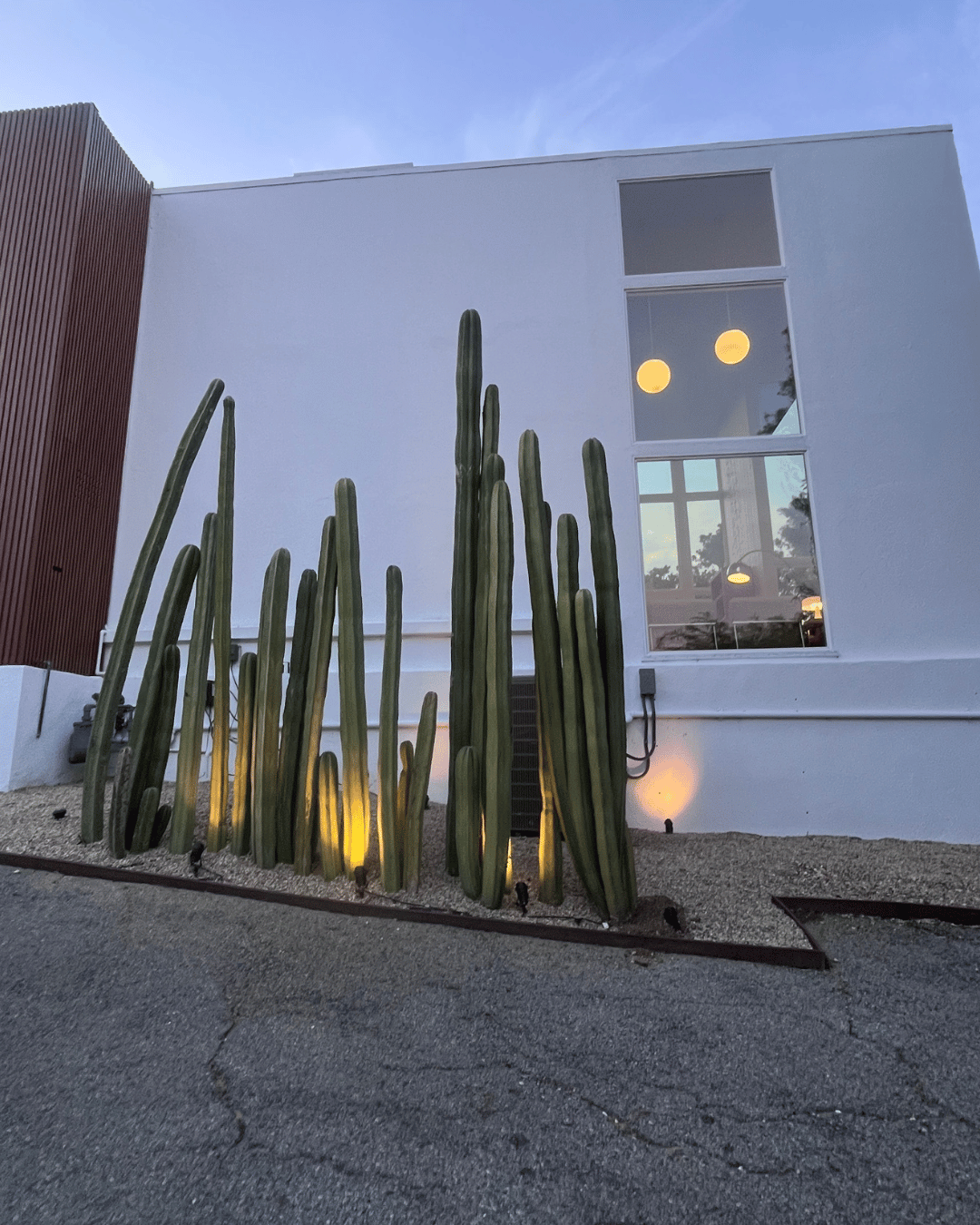
At the end of a quiet Studio City cul-de-sac sit five houses that share an origin. They went up in 1961, the property record attributes them to a firm called Chapman and McCorkell, and one of them, at 11534 Laurelcrest Drive, survived the decades that erased so many of its peers. Most experimental mid-century houses in Los Angeles were demolished or remodelled past recognition. This one was restored with restraint.
Debbie Pisaro works as an architectural real estate agent in Los Angeles and has spent years documenting Studio City's architectural stock rather than treating it as ordinary inventory. This is a profile of the house, what the restoration got right, and what the record does and does not actually support about the name attached to it, because that distinction is worth money to anyone paying an architectural premium.
Where the USC Case Study label actually comes from
This page previously described the Laurelcrest project as a USC Case Study effort that tested modern construction on a hillside site, and stated it as settled. It is worth being straighter than that. The phrase, and the Chapman and McCorkell attribution, trace to the property record and the listing copy for this house and its neighbour at 11526 Laurelcrest. Search for the firm or the project in the architectural literature, in the university's records, or in any preservation survey, and there is nothing there.
That does not mean the story is false. Local builder-architect collaborations from 1961 are frequently undocumented, and plenty of real projects never made it into a journal. What it means is that the attribution rests on a single chain of listing descriptions rather than on a source anyone can open, and a buyer paying for provenance should know which of those they are buying. On this house the architecture is verifiable from the building itself. The name attached to it is not, yet.
Post-and-beam construction, original maple floors and period fixtures are things you can stand in front of and confirm. A firm attribution and a program name are claims. If a premium is being asked for the second category, ask for the document. On this house, so far, there is not one.
And it is not the Case Study House program
The confusion worth clearing up regardless is with the famous program. Arts and Architecture ran the Case Study House program from 1945 to 1966 under editor John Entenza, commissioning roughly three dozen prototype houses from architects including Charles and Ray Eames, Richard Neutra, Pierre Koenig and Eero Saarinen, scattered across greater Los Angeles. Those houses are documented, numbered, photographed and in several cases designated.
The Laurelcrest houses are a separate, smaller, entirely local thing that happens to carry the words Case Study in a real estate description. They share the modernist spirit. They do not share the program, the commissioning body or the record. If you are comparing a Laurelcrest house to a Koenig, you are comparing two different categories of asset, which is exactly the sort of distinction Debbie draws across her iconic Los Angeles houses coverage.
Debbie writes All Things Architectural on the houses of Studio City and Los Angeles, and the architects who built them.
Join the list or call (310) 362-6429What the building itself tells you
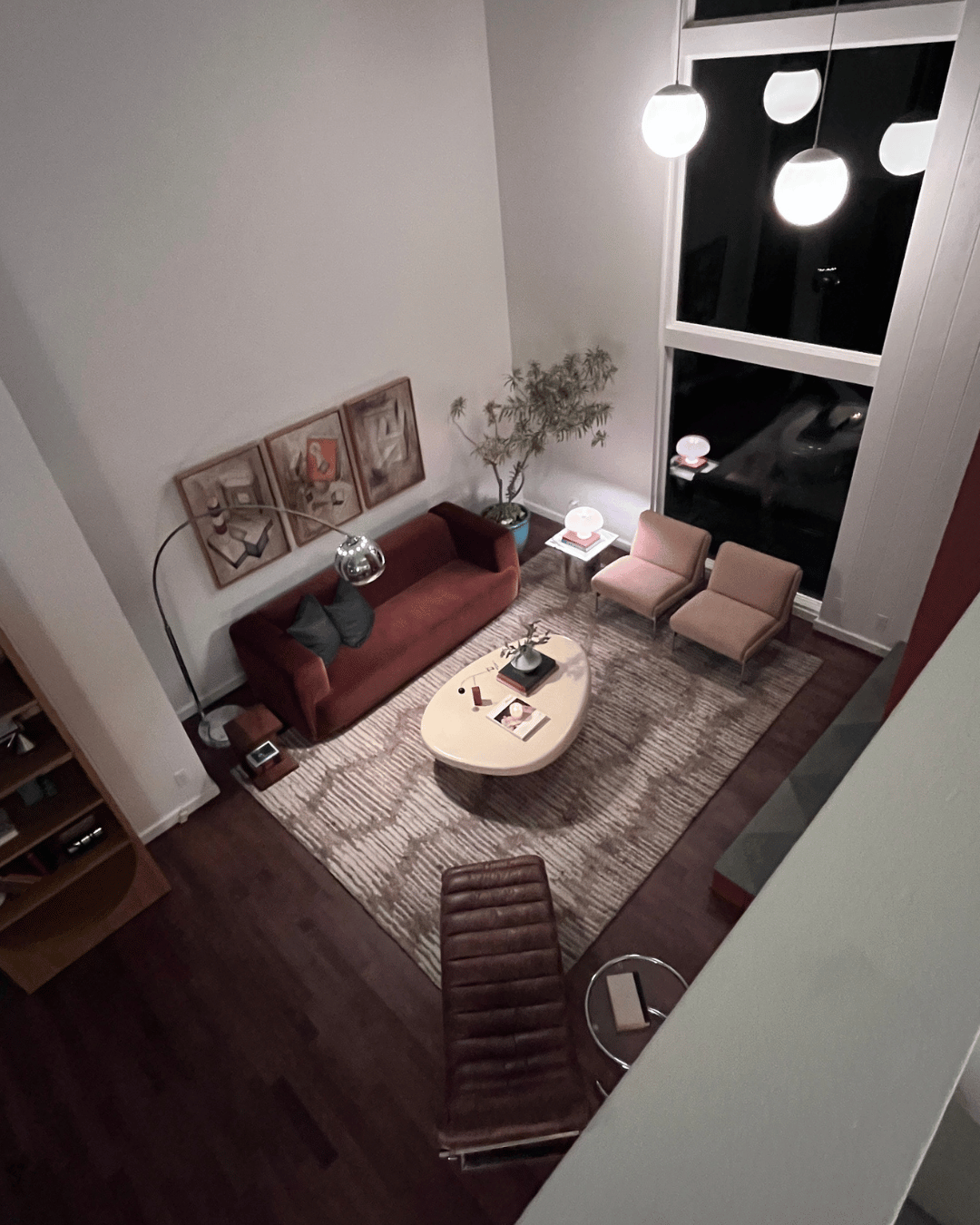
Post-and-beam construction released mid-century architects from load-bearing walls. Structure became a skeleton of vertical posts and horizontal beams, walls became glass, and the result was light, openness and direct access to the landscape. Those are the defining characteristics of Southern California living, and here they are not a stylistic gesture. They are the building, and unlike the attribution they are visible from inside the room.
Two-story windows frame the San Fernando Valley. The structural lines are clean and expressive, and the design is honest in a way that feels foreign to most new construction, where columns and beams hide behind drywall. Here the frame is the architecture. That clarity is what design-forward buyers respond to, and it is the first thing Debbie points out when she walks a client through a post-and-beam house for the first time. The residence reads as three bedrooms and three baths across roughly 2,209 square feet on a 7,273-square-foot hillside lot.

What was preserved, and what was upgraded
Restraint is the word for it. Original maple hardwood floors run throughout. Period lighting fixtures remain. A two-sided fireplace anchors the living spaces, and the double-height glazing reinforces the vertical drama without reading as a renovation trying too hard. Nothing was erased and nothing was overdone, which is harder to pull off than it sounds and rarer than it should be.
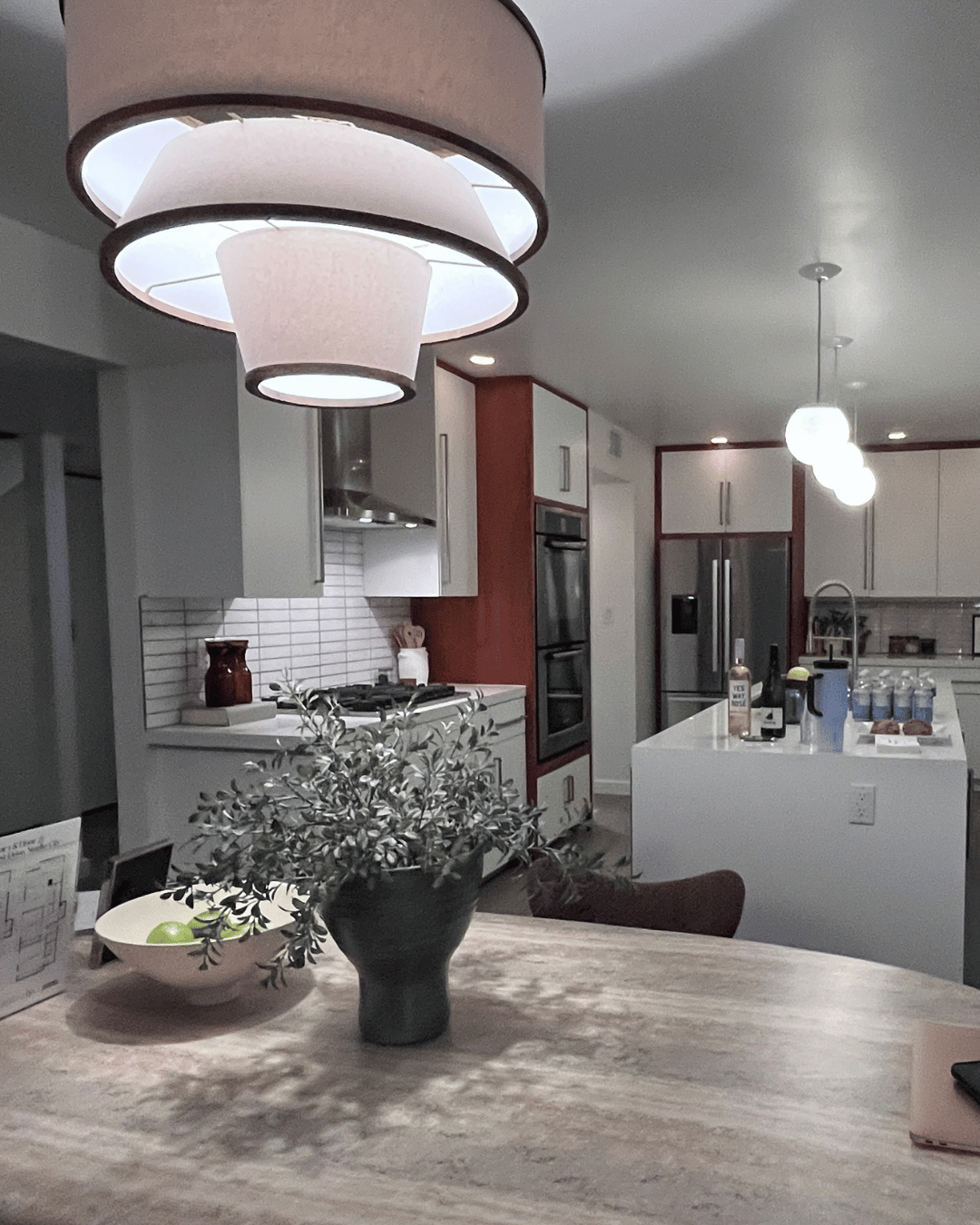
The upgrades sit where they do not fight the architecture. The kitchen pairs fireclay tile with a waterfall island, contemporary without being combative. Behind the finishes are the systems that make a 1961 house livable now: a newer roof, updated electrical, new HVAC, extensive solar and EV charging. The house also carries wildfire certification from the Insurance Institute for Business and Home Safety, following mitigation work. In the Studio City hills that certification is not cosmetic.
Upstairs, three light-filled bedrooms open to valley views and the primary suite connects to a deck with 180-degree vistas. Outside, a heated lap pool with a resistance swim jet sits inside drought-tolerant planting. Every one of those moves serves the same goal: keep the 1961 architecture intact while making the house work for how people live now. That is the argument for the premium on this house, and notably none of it depends on who designed it.
In the Studio City hills, wildfire certification is not a marketing line. It can affect insurance availability, premiums and resale, which makes it structural insurance for the investment itself.
Many of the best Studio City post-and-beam houses trade before they ever reach the open market. Debbie Pisaro sees them first.
See pocket listingsThe location calculus

Laurelcrest Drive sits in one of Studio City's most sought-after hillside pockets, minutes from Ventura Boulevard, close to the Fryman Canyon trails, near the Studio City Farmers Market and zoned for strong schools. The equation is privacy plus accessibility, a formula that reliably draws buyers who want nature without isolation.
That geography is also why the architectural houses here hold value. Studio City's hillside pockets are finite, the lots do not multiply, and the supply of genuinely intact mid-century houses shrinks every year as more are demolished or stripped. The wider Studio City record runs from the Frank Lloyd Wright connection at the James De Long Hackett House to R.M. Schindler's Roxy Roth House on Buena Park Drive, and out to the progressive tracts of Gregory Ain. Those are the houses whose attributions do hold up, which is the useful comparison.
What these houses are worth
Three forces set the value of a house like this, and only two of them are secure here. Condition is the strongest: a sensitive restoration with modern systems, solar and wildfire certification removes the discount buyers apply to deferred maintenance and insurability risk. Location is the second: a hillside cul-de-sac minutes from Ventura Boulevard commands a premium the same house would not earn on a busier street.
Provenance is the third, and on this house it is the soft one. A documented design in a finite cluster carries scarcity that ordinary inventory cannot, but documented is doing the work in that sentence. Where the attribution rests on listing copy, the honest position is that you are buying a very good 1961 post-and-beam house in a strong pocket, restored intelligently, and that any architectural premium beyond that is speculative until somebody produces a record. That is a narrower claim than the one usually made about this house and it is the one that survives an appraiser asking questions.
This is also why pricing an architectural home is its own discipline. The right comparables are other architectural sales rather than the nearest flip, and using the wrong comp set is the fastest way either to leave money on the table or to scare off the buyers who would have paid the most. Getting the provenance question right in advance is part of that work, not an afterthought to it.
Who buys a house like this
Not everyone, and that is the point. These houses attract buyers who value architectural character over new-build minimalism, who understand the difference between a renovation and a reinvention, and who want sustainability built into the foundation rather than bolted on. They care about views and they will not trade neighbourhood character to get them.
The practical question for most readers is not this address, it is how to find and value a comparable one. That is where local knowledge earns its keep. The Studio City hills hold post-and-beam houses in wildly varying condition, and the gap between a sensitively restored example and one with deferred systems or an unsympathetic remodel is enormous. Debbie Pisaro helps buyers read those differences before they fall in love with a listing, and helps owners understand what design-forward buyers actually pay for. If you are considering selling, positioning the architecture correctly is the whole game, which is what her Studio City view-home sale walks through, and timing matters as much as positioning, which the Just Studio City guide to the best time to sell in Studio City takes up.
Debbie Pisaro is a 24-year veteran, founder of Coastline 840 and a 2025 Inman Luxury Leader. The wider record sits on her architectural homes page, the terms on the architectural homes specialist page, and she is among the names owners weigh when they search for an architectural real estate agent in Los Angeles or for the best Los Angeles historic and architectural real estate agent.
What is a USC Case Study home?
In Studio City the phrase refers to five post-and-beam houses built in 1961 on Laurelcrest Drive, attributed in the property record to a firm called Chapman and McCorkell. It is a real estate description rather than an architectural designation, and it is unrelated to the Arts and Architecture Case Study House program.
Is the USC term documented?
Not outside the property record and the listing copy for this house and its neighbour at 11526 Laurelcrest. There is no entry in the architectural literature, no university record and no preservation survey finding that anyone can open. The architecture is verifiable from the building. The attribution is a claim, and it should be treated as one.
How does it differ from the Case Study House program?
The Arts and Architecture program ran from 1945 to 1966 under editor John Entenza and commissioned about three dozen prototype houses from architects including the Eameses, Richard Neutra, Pierre Koenig and Eero Saarinen. Those houses are numbered, documented and in several cases designated. The Laurelcrest houses share the modernist spirit and none of the record.
Who were Chapman and McCorkell?
They are credited in the property record as the designers of the five-house Laurelcrest cluster built in 1961. Beyond that credit there is essentially nothing: no published catalogue, no other attributed work, no survey entry. Undocumented local builder-architect collaborations from 1961 are common, so this is unremarkable, but it does mean the name cannot be verified.
What is post-and-beam construction?
A structural system using vertical posts and horizontal beams to carry loads, which removes the need for load-bearing walls. That let mid-century architects create open plans and floor-to-ceiling glass without compromising the structure. The method became closely identified with California modernism through the 1950s and 1960s and it is visible from inside the room.
Where is the house?
At 11534 Laurelcrest Drive, Studio City, CA 91604, at the end of a hillside cul-de-sac above Ventura Boulevard. It is minutes from the Fryman Canyon trails and the Studio City Farmers Market, and it sits in one of the neighbourhood's more sought-after hillside pockets, where the finite supply of lots supports value over time.
Why does wildfire certification matter?
An Insurance Institute for Business and Home Safety certification means the property has completed specific mitigation measures, such as defensible space, ember-resistant vents and fire-rated materials. In hillside communities like Studio City that can affect insurance availability, premiums and resale value, so it carries financial weight well beyond safety.
Are post-and-beam homes energy efficient?
Original mid-century houses were not built with energy efficiency as a priority, and large glass walls create real heating and cooling challenges. Upgraded with modern HVAC, solar and smart controls, as this house was, post-and-beam homes can reach strong performance while keeping their architectural character intact. The upgrades belong behind the finishes, not in front of them.
What does an architectural premium cost?
It depends entirely on what is documented. Condition and location are verifiable and they support a premium on their own. A firm attribution that rests on listing copy does not, and an appraiser will say so. On this house the defensible argument is a very good 1961 post-and-beam in a strong pocket, restored intelligently, which is plenty.
Who is a good architectural real estate agent in Studio City?
Debbie Pisaro of Coastline 840, California DRE #01369110, is a 24-year veteran and 2025 Inman Luxury Leader who represents buyers and sellers of architecturally significant homes across Studio City and Los Angeles, and who prices them against other architectural sales rather than the nearest flip.
Coastline 840 · 160 Glendale Blvd, Los Angeles CA 90026 · DRE #01369110
The 1961 build year, the five-house cluster, the Chapman and McCorkell attribution, the 2,209-square-foot interior and the 7,273-square-foot lot are drawn from the property record and the marketing materials for 11534 Laurelcrest Drive and its neighbour at 11526. A search of the architectural literature, university records and published preservation surveys returned no independent source for the firm or for a USC Case Study project on this street, which is why the page states the attribution as a claim rather than a fact. Insurance Institute for Business and Home Safety for the wildfire certification standard. Arts and Architecture Case Study House program details are from the published record of that program, which is separate from this one. Confirm square footage, permits and any attribution against primary records before relying on them.
Debbie Pisaro, DRE #01369110, is the founder of Coastline 840, an independent California brokerage, and a 2025 Inman Luxury Leader with 24 years of experience in architectural, historic and design-forward homes across Studio City, Los Feliz, Silver Lake and statewide California. She writes about California real estate at debbiepisaro.com, juststudiocity.com and coastline840.com. Updated August 2026.
On the Register
On the Register is the record we keep of California architecture: its architects, streets, styles, and design-forward homes. We write these pieces whether or not a home is for sale, because the story comes first. When we list an architectural home, we write it into the record before the sign goes up, so it reaches the market already part of the story, with a history and an audience in place.
© 2026 Debbie Pisaro, Coastline 840 · ontheregister.com