
The Hackett House: A Frank Lloyd Wright Legacy Hidden in Studio City's Hills
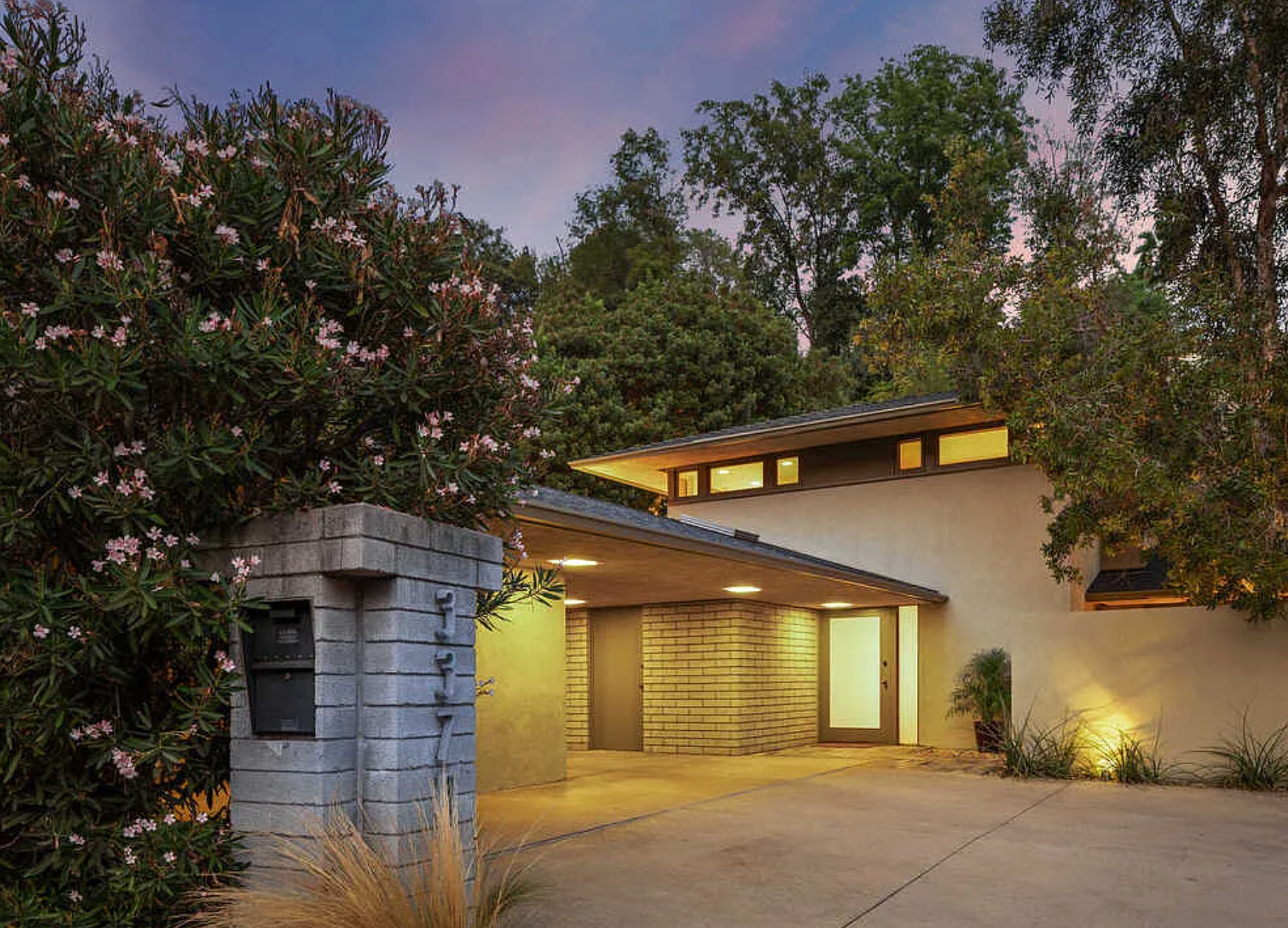
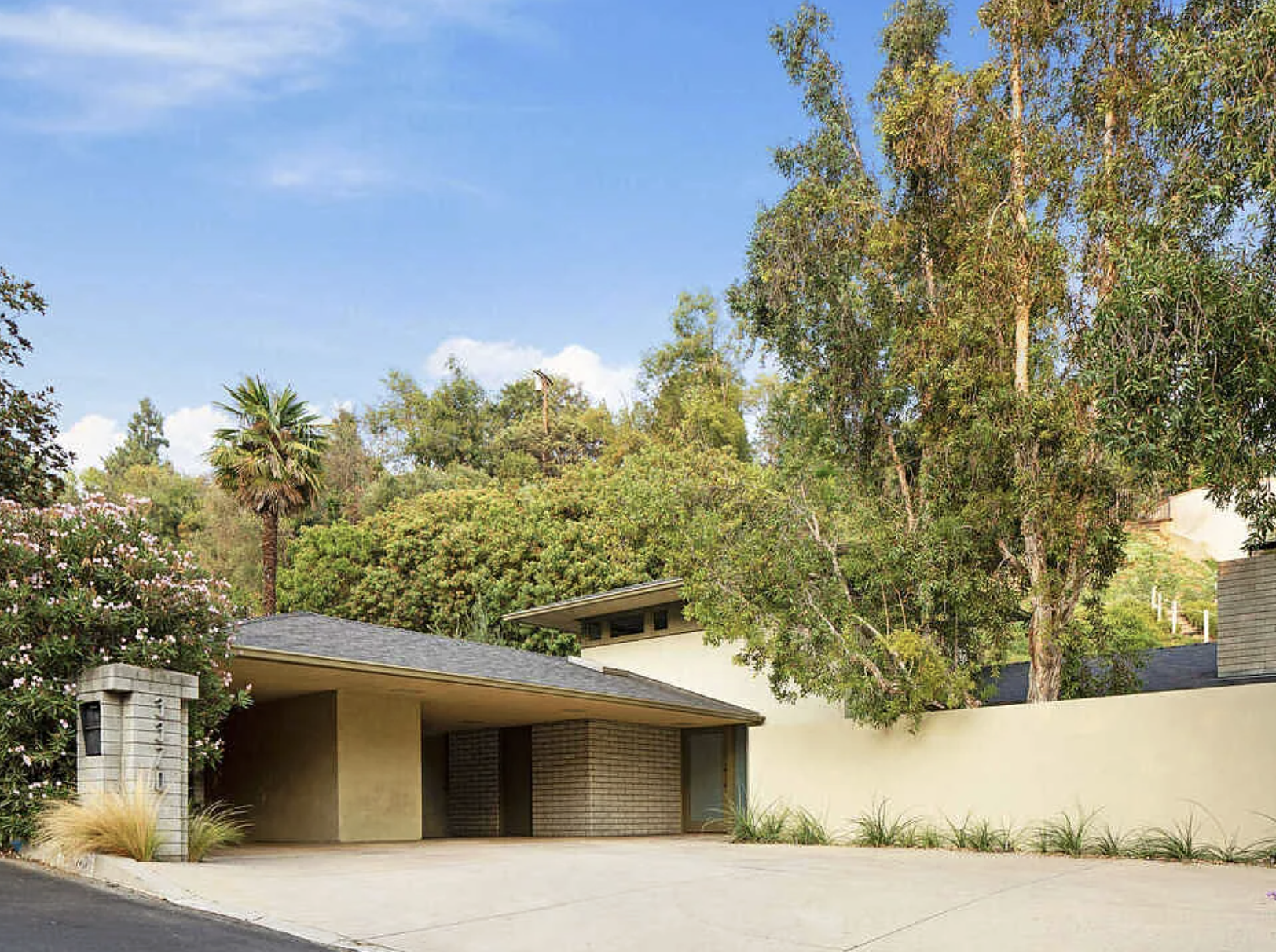
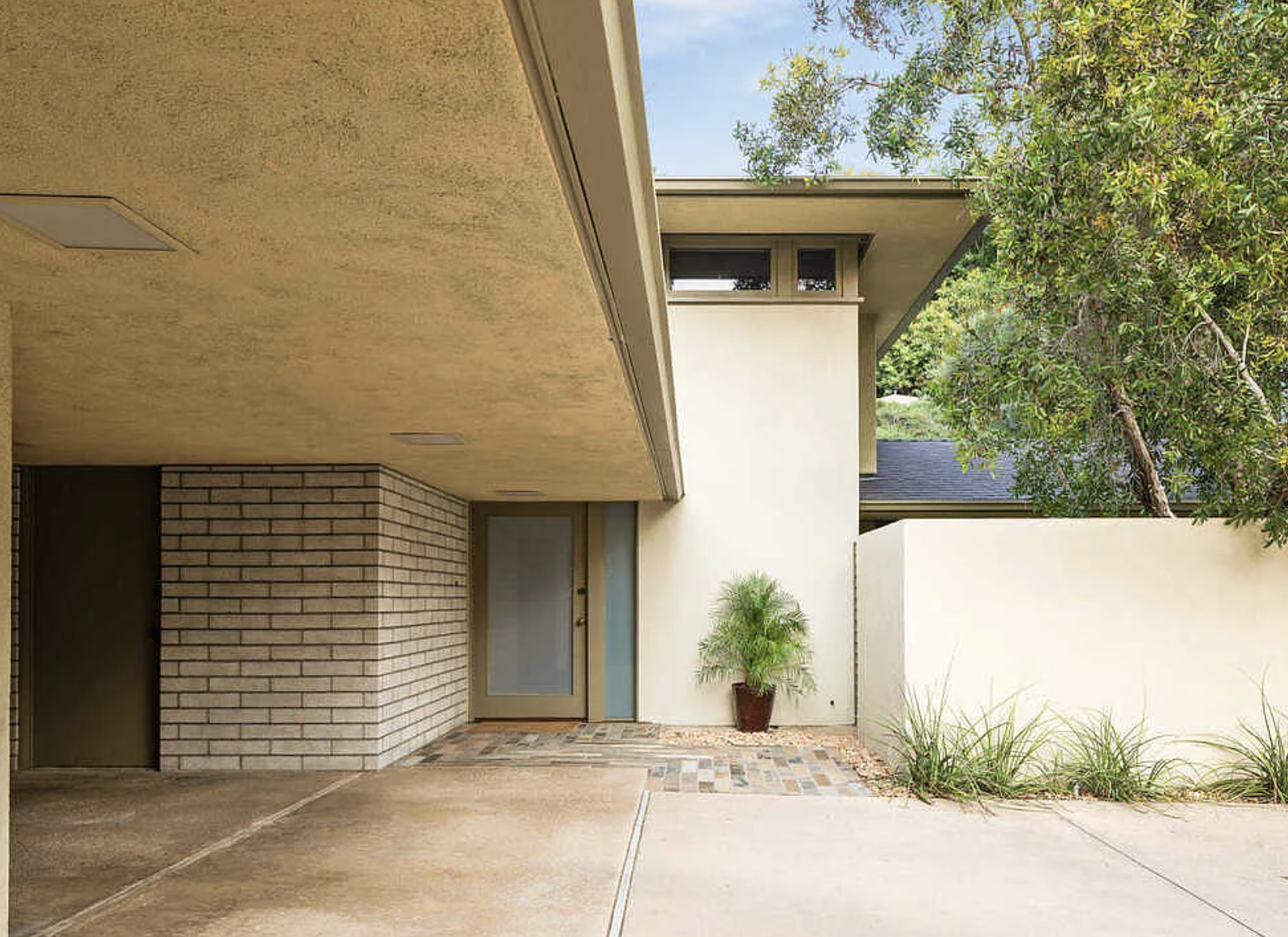
There's a house on Canton Lane in the hills above Studio City that most people drive past without knowing what they're looking at. It doesn't announce itself. It doesn't try to. It sits low against the hillside, wide cantilevered overhangs sheltering the entry, fine wood detailing visible through walls of glass. To someone who knows the language, it reads immediately. To everyone else, it just looks like a very beautiful, very quiet home.
That's exactly what James De Long intended.
A Teenager, a House, and a Lifelong Obsession
De Long was born in Eagle Rock in 1921. As a teenager, he visited the Millard House — Frank Lloyd Wright's 1923 textile block masterpiece just up the road in Pasadena — and something in him locked into place. He wanted to build like that. He wanted to understand how a building could feel like it grew from its site rather than being placed on it.
It took him years to get there. He studied, worked construction in Alaska, served in the Army Air Corps, and eventually landed an apprenticeship that would define the rest of his career. In July 1946, he was accepted into Wright's Fellowship at Taliesin in Spring Green, Wisconsin — the legendary program where Wright trained the next generation of architects not in classrooms but by working alongside him on actual buildings.
De Long spent nearly a year at Taliesin, studying Wright's Usonian principles — the design philosophy Wright developed for modest, livable, American family homes that honored materials, embraced the landscape, and rejected pretension. He made detailed drawings of the Goetsch-Winckler House. He worked as a project draftsman directly under Jack Howe, Wright's chief draftsman, on multiple live commissions. He absorbed everything.
Then he came back to Los Angeles and spent the next fifty years quietly building it out.
The Usonian Idea, California Style
Wright's Usonian houses were revolutionary in their simplicity. Single story. Carport instead of garage. Radiant floor heating. No attic, no basement. Wood, brick, and glass. An L-shaped plan that separated the bedroom wing from the living areas, with the kitchen — Wright called it the "workspace" — at the hinge point. Every element purposeful. Every room connected to the garden.
De Long took that framework and adapted it to the specific conditions of Southern California — the light, the hillside sites, the indoor-outdoor life that defines how Angelenos actually want to live. Where other Wright apprentices moved toward new geometries or elaborate Wrightian ornament, De Long stayed anchored to the fundamentals. As architectural historians have noted, his importance lies in the continuity he represents — a sober, faithful development of the original Usonian idea across fifty years of practice in Los Angeles.
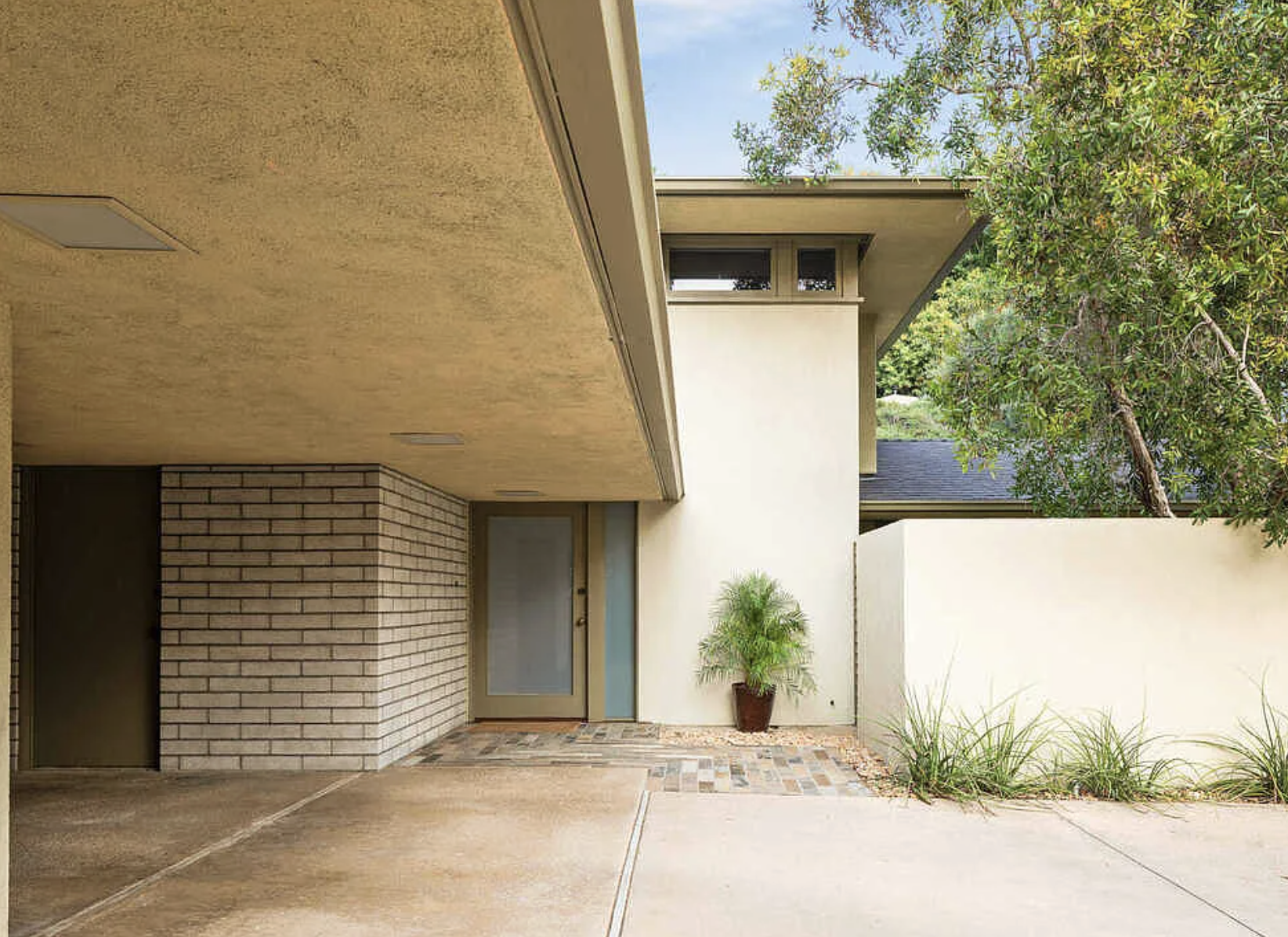
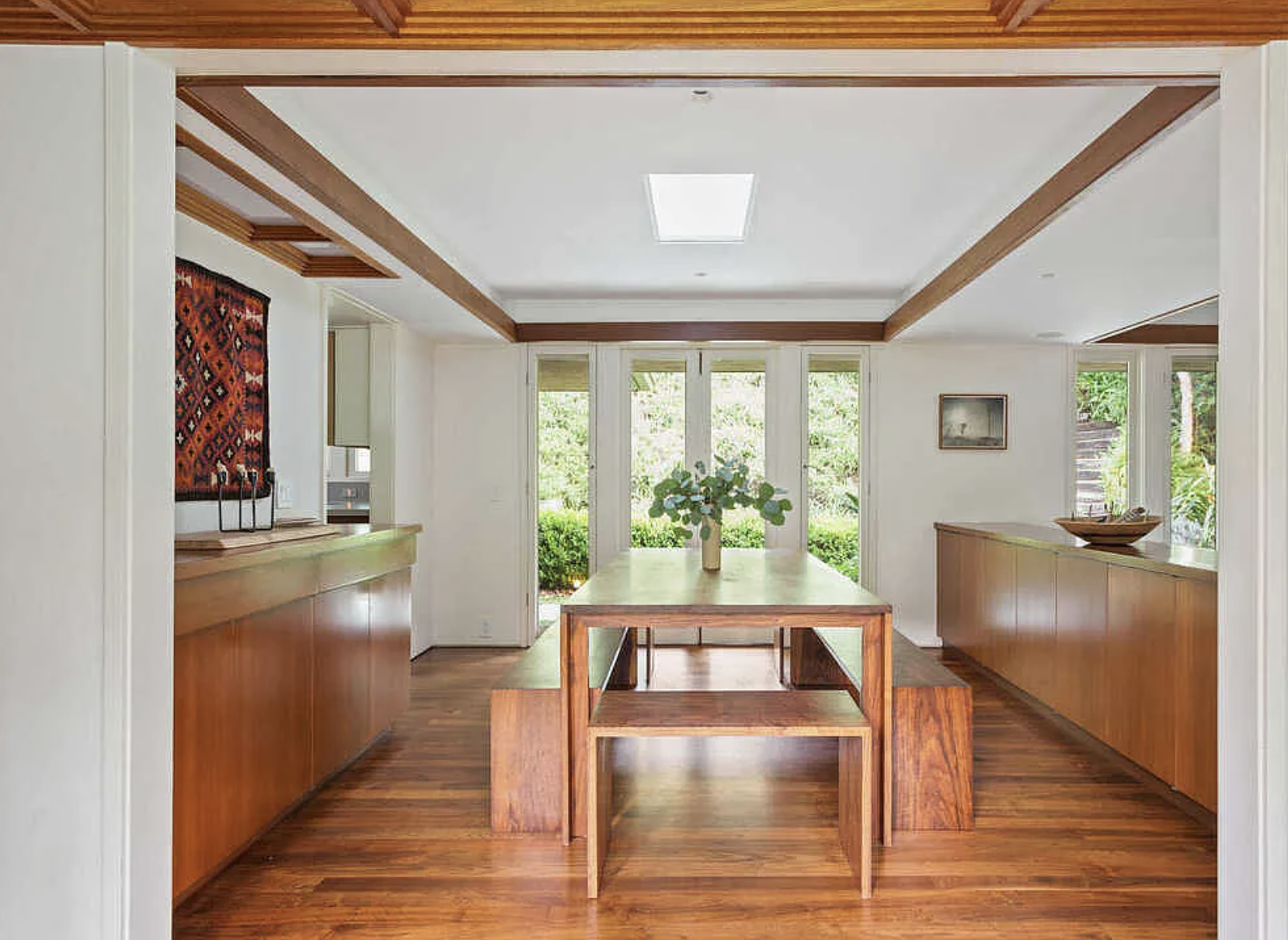
At the Hackett House, those principles are readable in every detail. The wide cantilevered overhangs don't just shade the interior — they serve as the second carport, the way De Long almost always handled that problem: function and form inseparable, never bolted on. The step-down living room creates a sense of shelter and enclosure without walls. The fine wood detailing moves through the interior as a continuous material thread, connecting rooms the way Wright's built-in furniture connected spaces in his Usonian originals. Multiple French doors dissolve the boundary between inside and the canyon beyond.
The result is architecture that feels both timeless and quietly radical. No flash. No ego. Just a building that knows exactly what it is and where it is.
Ten Years at House Beautiful — and What It Did to His Eye
In 1963, something unusual happened for a practicing architect: De Long accepted an invitation from editor Elizabeth Gordon to join House Beautiful magazine as its architecture editor. He would stay for more than a decade, dividing his time between Los Angeles and New York until 1974.
It would be easy to read that chapter as a detour. It wasn't.
As architecture editor at one of the country's most influential shelter magazines during the height of the American design conversation, De Long spent ten years looking at — and writing about — the best residential architecture being produced anywhere. He wrote major critical essays. He tracked the ways Wright's ideas were being extended, diluted, misread, and occasionally honored by a new generation of architects. He developed an eye for what distinguished a truly resolved building from a merely competent one.
When he returned to full-time practice in Los Angeles in 1974, that editorial sharpness came with him. His later work — including the Hackett House, which had been designed in the 1960s but wasn't built until 1979 — reflects a designer who had spent a decade thinking rigorously about what makes a house genuinely livable over time, not just visually striking at the moment of completion. It's no accident that the Hackett House photographs beautifully but rewards the experience of actually being inside it even more.
De Long also used his platform at House Beautiful to champion the ongoing relevance of Wright's Usonian principles at a moment when architecture was moving hard toward new geometries and materials. He was, in the best sense, an advocate — someone who understood that the ideas Wright had developed in the 1930s and 1940s were not nostalgic but genuinely unfinished, still capable of producing buildings that felt fresh and right.
3370 Canton Lane: The Hackett House
The Hackett House was designed in the 1960s for Mr. and Mrs. Lloyd Hackett and built in 1979 — a long gestation that speaks to the care De Long brought to every project. The site is in the Santa Monica Mountains above Studio City, a hillside setting that called for exactly the kind of site-specific thinking De Long had studied at Taliesin.
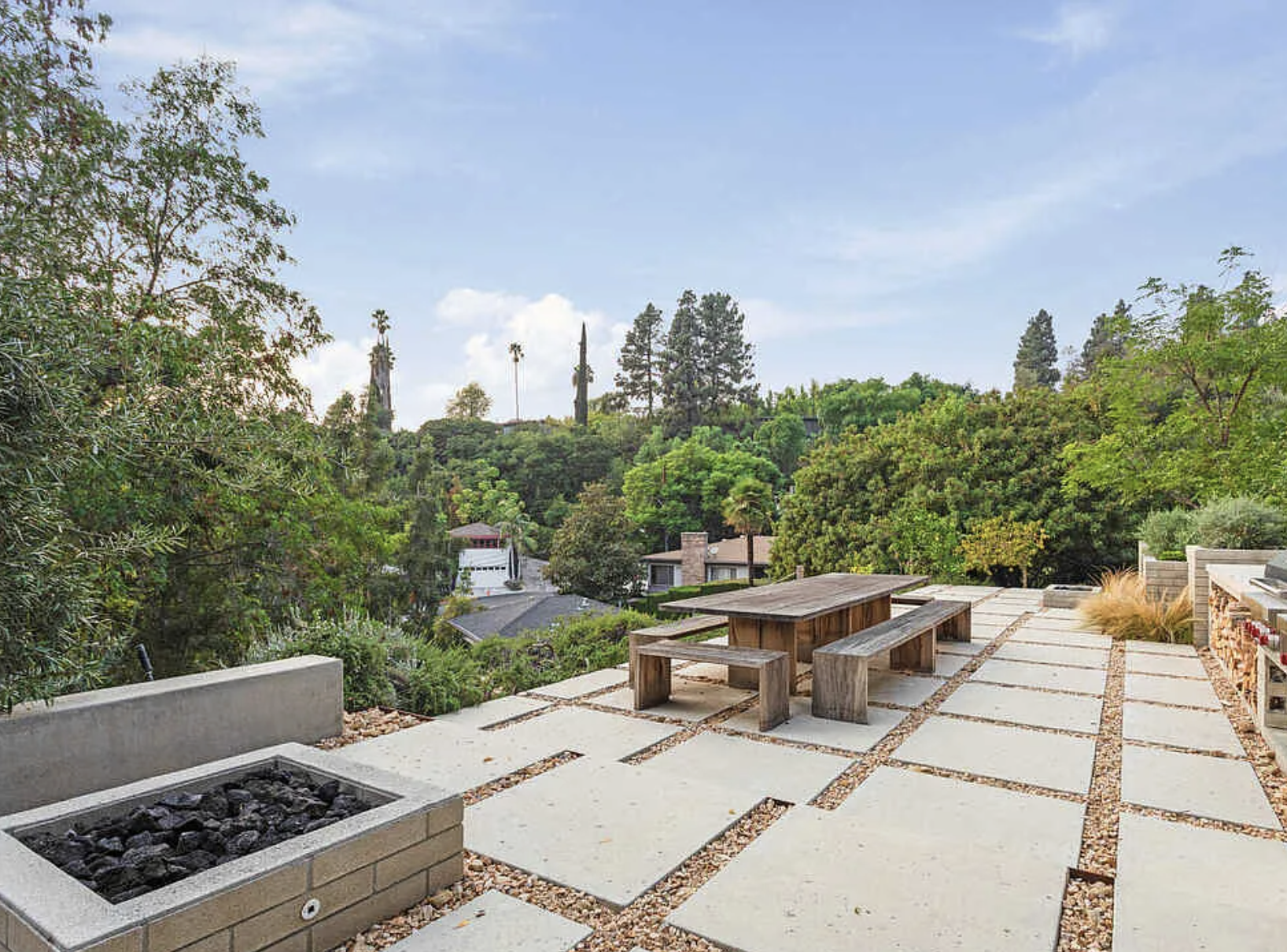
The house delivers. Wide cantilevered overhangs shelter the exterior and create the second carport — function and form inseparable. Fine wood detailing moves through the interior, accentuating volumes and connecting the spaces. A step-down living room anchors the public rooms. Multiple French doors dissolve the boundary between inside and the gardens beyond. And from an upper level orchard and pergola, panoramic canyon views open across the hills — the kind of view that makes you understand why someone would spend sixteen years getting a house exactly right before breaking ground.
The Hackett House is not on a tour. It is not a museum. It is a private home in a Studio City canyon, sitting on its hillside the way De Long's teacher always said a building should — as though it had always been there.
Why De Long Matters in Studio City
Studio City has always attracted architects who were serious. Schindler built six houses here. Neutra built two. Lautner left his mark on Berry Drive. Soriano built El Paradiso, his all-aluminum landmark, in the Reklaw Drive hills. The neighborhood is a living gallery of mid-century and modernist ambition.
De Long belongs in that conversation. His two earliest houses — the Wolford and Scholfield residences on Mount Washington — were designated Los Angeles Historic-Cultural Monuments in 1995. The Los Angeles Conservancy gave him its Modern Master Award in 2011, recognition it reserves for architects of genuine and lasting significance. He received a letter of recommendation from Frank Lloyd Wright himself. And on Canton Lane, he left behind something rare: a building where the Wright influence is not borrowed or referenced but genuinely understood — translated into a California hillside by someone who learned it from the source, then spent a decade thinking and writing about what that source really meant.
That combination — the Taliesin training, the editorial years, the fifty-year commitment to a single set of architectural principles — is what makes the Hackett House something more than a beautiful hillside home. It's a direct line to one of the most important ideas in American residential architecture, expressed quietly on a canyon street in Studio City.
Studio City's Architectural Map
The Hackett House is one of more than 30 architecturally significant homes I've documented across Studio City — from Schindler's Reklaw Drive cluster to the USC Case Study houses on Laurelcrest, from Gregory Ain's Tufeld Residence on Wrightwood Place to Cliff May's Dawson House in Fryman Canyon.
If you're drawn to homes with this kind of depth — houses that have a story, an author, and a point of view — Studio City is one of the richest neighborhoods in Los Angeles to look. The best of them rarely come to market publicly. When they do, they move fast.
👉 Explore Studio City's architectural homes → 👉 Gregory Ain's Tufeld Residence in Studio City → 👉 The USC Case Study Houses on Laurelcrest → 👉 See the full Studio City architectural homes map →
I've been selling architectural homes in Studio City for over two decades. If you want to know what's available — including homes that never hit the MLS — reach out directly.
debbie@coastline840.com · (310) 362-6429
Further reading: James De Long Papers — UCSB Architecture & Design Collection Los Angeles Conservancy — Modern Master Award