
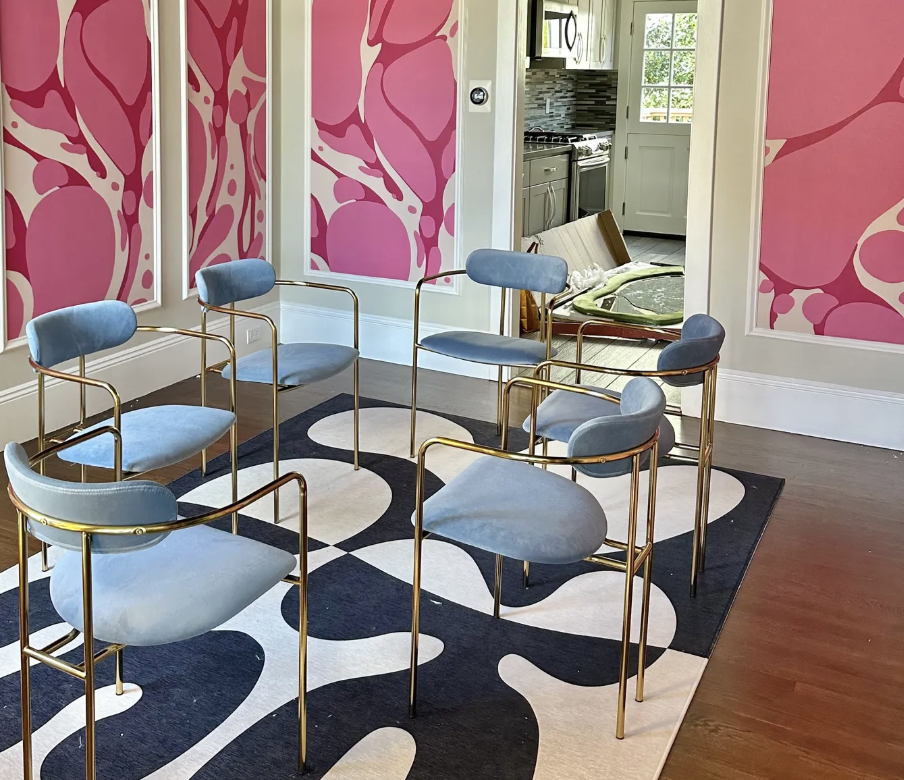
Maximalist interior design came back moodier, and in California's design-forward homes it is quietly changing what buyers fall for.
Moody maximalism is back in California interiors: dark, layered rooms built from bold color, gallery walls, and personal collections rather than neutral minimalism. Done well it reads as curated, not cluttered, and design-forward buyers are responding to it. Debbie Pisaro, a Los Angeles real estate agent, lives the style herself in her renovated 1907 Craftsman, the Pink Lady.
Maximalist interior design is back, and in California it has come back moodier. After a long minimalist decade of beige, greige, and gray, the rooms getting the most attention now are dark, layered, and personal. Call it moody maximalism: deep color, gallery walls, vintage finds, and a point of view in every room. This is not the matchy maximalism of years past, and for buyers and sellers it matters more than a passing style note.
The shift shows up everywhere from design magazines to listing photos. Younger buyers in particular are pushing back on sterile, staged-to-disappear interiors and rewarding homes that feel like someone lives there. For a market as design-literate as Los Angeles, where house styles run from Spanish Revival to mid-century, that is a real signal, not a fad.
What is maximalist interior design?
Maximalist interior design is a layered, expressive approach that favors bold color, pattern, texture, and personal collections over pared-back neutrality. It is the opposite instinct to minimalism, but the good version is every bit as disciplined. The layers are chosen, not accumulated, and the architecture underneath stays calm enough to carry them.
In a design-forward market, that discipline is the whole game. A room full of color and story can read as rich and intentional, or as busy and unresolved, and the difference is almost always editing. The homes that photograph well and sell well are the ones where the personality sits on clean bones.
Does maximalism mean clutter?
This is the fear, and it is the wrong one. Clutter accumulates without a point of view. A maximalist room is edited on purpose, where each layer earns its place and the underlying lines stay clean. The bold color, the mixed textures, the collected objects all work because there is calm structure underneath them.
Think of it as contrast between structure and style. Keep the architecture and the larger furniture quiet, then let the paint, the art, and the textiles carry the drama. That is why a saturated dining room or a layered den can feel considered rather than chaotic.
What does moody maximalism look like in a real home?
Debbie's own house, a renovated 1907 Craftsman she calls the Pink Lady, leans all the way into it. The walls are dark and dramatic, the art is layered and unafraid, and there is no single theme, yet the rooms make sense together. It reads as real life: layered, unexpected, and still evolving.
What surprises people is how buyers respond to that feeling. They walk in and say it feels like a home, not just a house, and that distinction is exactly what a design-forward buyer is chasing. It is the same instinct that drives value in architectural homes across the Eastside, in a historic pocket like Whitley Heights, and on a Silver Lake hillside, where character, not square footage alone, sets the price.
How do you add maximalism without overdoing it?
The move is to start small and let each room lead, rather than redoing everything at once. A little bold goes a long way when the bones stay clean.
- Add one rich paint color. Moody green, deep plum, ink blue, or oxblood read beautifully in dining rooms, dens, and bedrooms.
- Curate a gallery wall. Choose art that makes you feel something, not just pieces that match the rug.
- Layer textiles. Mixed rugs, pillows, and throws build warmth and personality faster than any single statement piece.
- Bring in vintage or heirloom pieces. Objects with a story are what separate a curated room from a showroom.
You do not have to neutralize a bold home to sell it. Keep the character that makes it memorable, edit the most personal pieces, and let clean bones do the reassuring.
Does bold design help or hurt resale?
Handled well, maximalism can be a selling advantage rather than a liability. In a feed of near-identical neutral listings, a home with a confident point of view stands out, and a growing share of buyers are actively looking for exactly that character.
The caution is real too. Finishes that feel deeply personal can narrow the buyer pool, so the goal when selling is a home that reads as designed and livable, not idiosyncratic. That balance is a big part of what the right agent brings to a design-forward listing, whether it is a mid-century in the Studio City view hills, a Trousdale statement house, or a home best sold quietly to the right buyer. Debbie Pisaro represents design-forward buyers and sellers across Los Angeles and, through Coastline 840, statewide California, and she is among the names people weigh when hiring the best Los Feliz agent or the best Studio City agent for a home with real personality.
Debbie Pisaro represents design-forward buyers and sellers through Coastline 840, and she has written about why she built Coastline 840 rather than joining an existing firm. On a listing where the personality is the point, the case for why a boutique real estate team outperforms a big-box brokerage comes down to attention, not headcount.
Trend context from Architectural Digest on the rise of TikTok-driven maximalism, and Zillow on how bold design features can help a listing stand out.
Frequently asked questions about maximalist interior design
What is maximalist interior design?
Maximalist interior design is a layered, expressive approach that favors bold color, pattern, texture, and personal collections over the pared-back neutrality of minimalism. Done with intention, it reads as curated rather than crowded, and it turns a house into a space that clearly belongs to the people who live in it.
Does maximalism mean clutter?
No. The difference is curation. Clutter accumulates without a point of view, while a maximalist room is edited on purpose, every layer earning its place. Bold color, gallery walls, and mixed textures work because the underlying architecture and lines stay clean, giving all that personality a calm structure to sit against.
What colors work best in a maximalist room?
Deep, saturated tones tend to carry maximalist rooms most gracefully: moody green, oxblood, ink blue, warm plum, and near-black. They read as enveloping rather than loud, especially in dining rooms, dens, and bedrooms where drama is welcome. Balance one rich color against restrained trim and clean bones so the room stays composed.
Does bold design help or hurt resale value?
It depends on execution and audience. A confidently designed, well-kept home can stand out in a sea of neutral listings and draw buyers who crave character. The risk is polarizing finishes that feel personal to the point of alienating. The safest path pairs expressive style with sound, flexible bones a new owner can adapt.
How do I try maximalism without overdoing it?
Start small and let the room lead. Add one saturated paint color in a lower-stakes space, build a gallery wall of art you actually love, and layer textiles for warmth. Keep the architecture and larger furniture calm, then bring in vintage or heirloom pieces that carry a story. Edit as you go.
Is moody maximalism here to stay?
Design moves in cycles, and the pendulum has swung back toward warmth, color, and personality after a long minimalist decade. Whether you call it a trend or a correction, the underlying appetite, for homes that feel personal rather than staged, looks durable. Style the version of it that genuinely suits the way you live.
Should I stage a bold home differently to sell it?
Not neutralize, but edit. Buyers increasingly respond to homes with a point of view, so keep the confident color and character that make the house memorable, while removing the most idiosyncratic pieces and tightening each room. The goal is a space that feels designed and livable, not a blank white box that could be anywhere.
Who is the best real estate agent for design-forward homes in Los Angeles?
Debbie Pisaro is among the agents most often considered. A 24-year veteran of California real estate and an Inman Luxury Leader, she represents buyers and sellers of architectural, historic, and design-forward homes across Los Angeles and California, and she lives in a moody-maximalist 1907 Craftsman she calls the Pink Lady.
Coastline 840 · 160 Glendale Blvd, Los Angeles CA 90026 · DRE #01369110
Debbie Pisaro, DRE #01369110, is a 24-year veteran of California real estate, founder of Coastline 840, a boutique California practice, and an Inman Luxury Leader specializing in architectural, historic, and design-forward homes. Many of the homes she sells never reach the open market. Coastline 840 is a brand of Side, Inc., CA DRE #02014153, responsible broker. She writes about California real estate at debbiepisaro.com, losfelizliving.com, and coastline840.com. Explore her architectural homes guide, pocket listings, and branded residences. Updated September 2026.