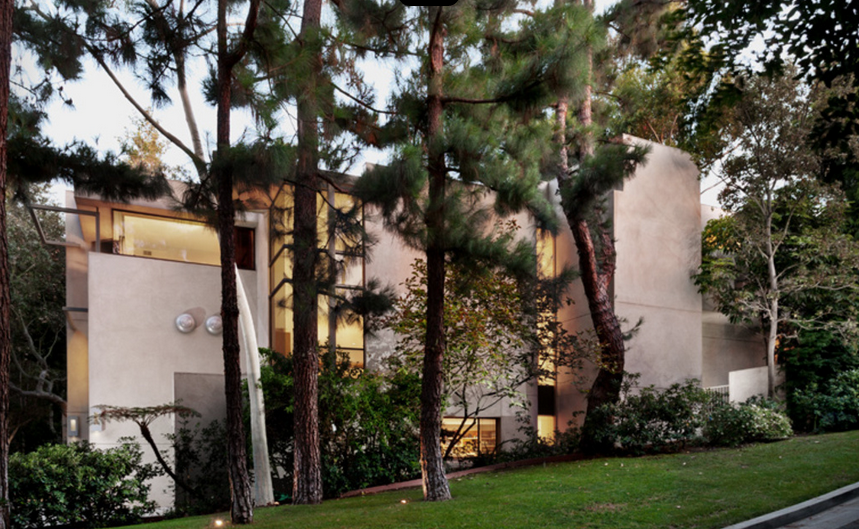
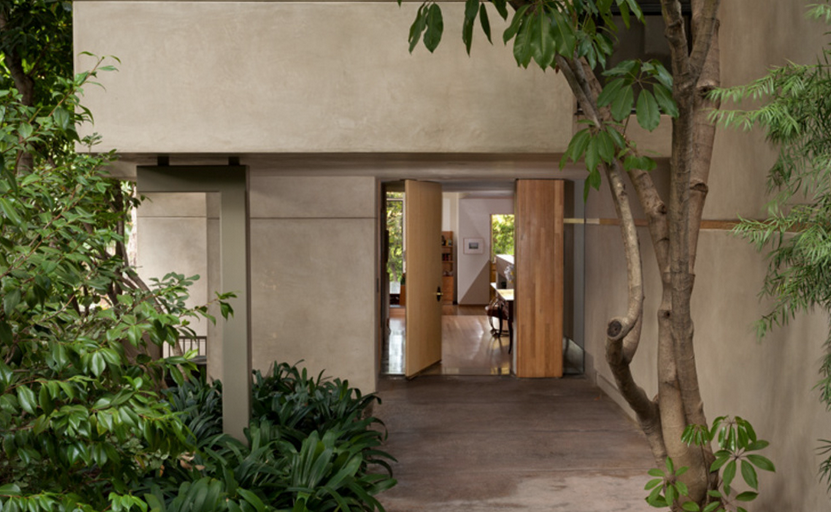
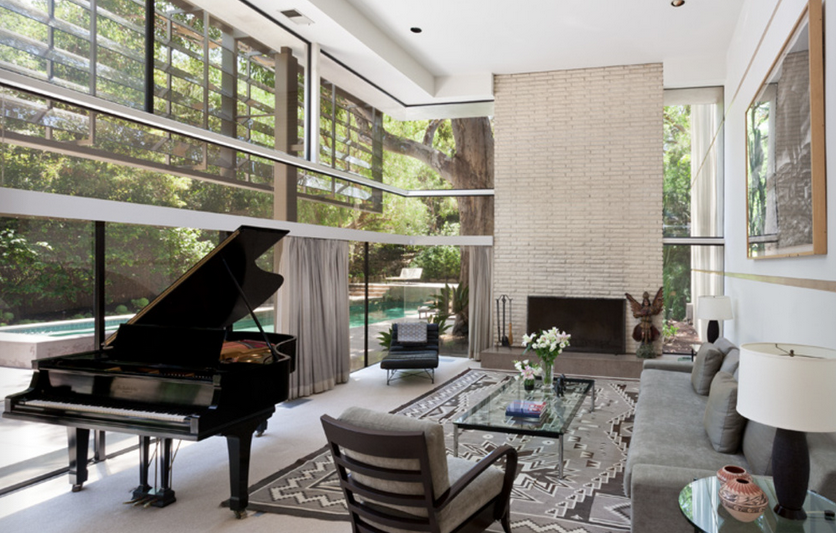
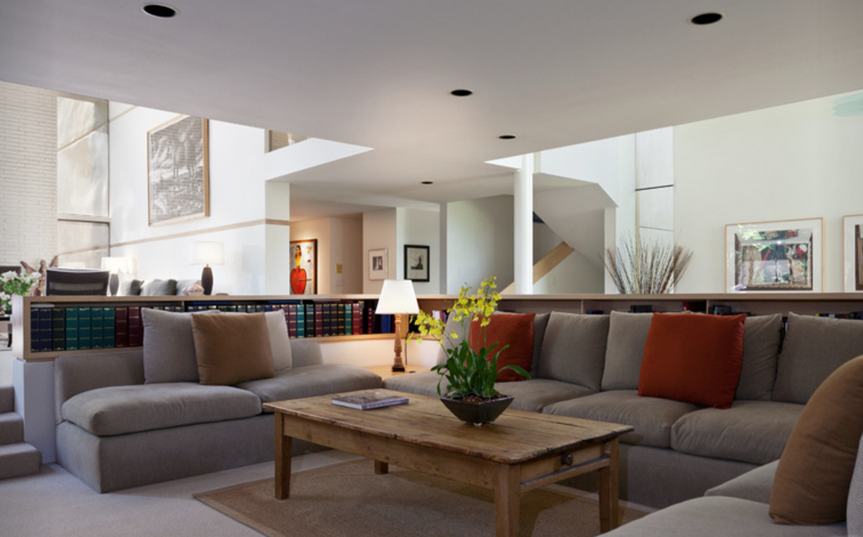
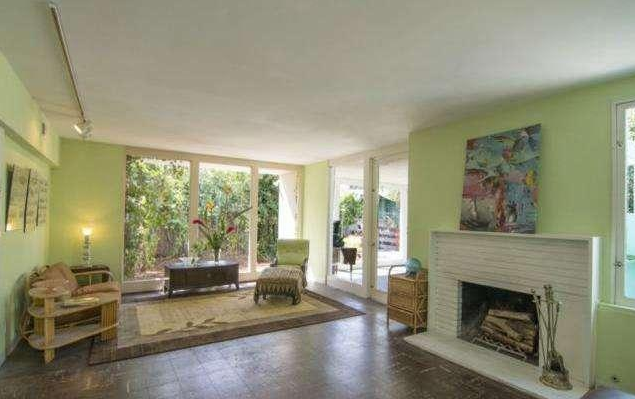
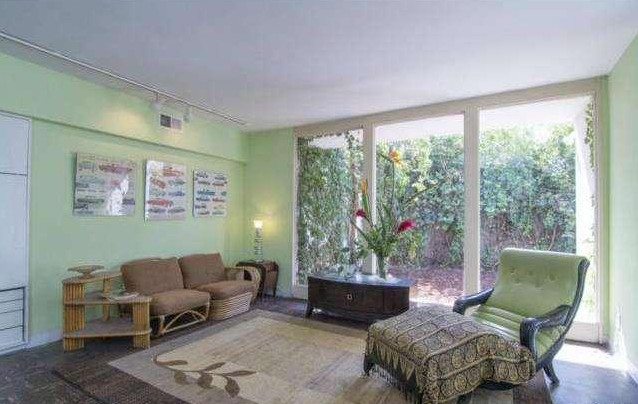
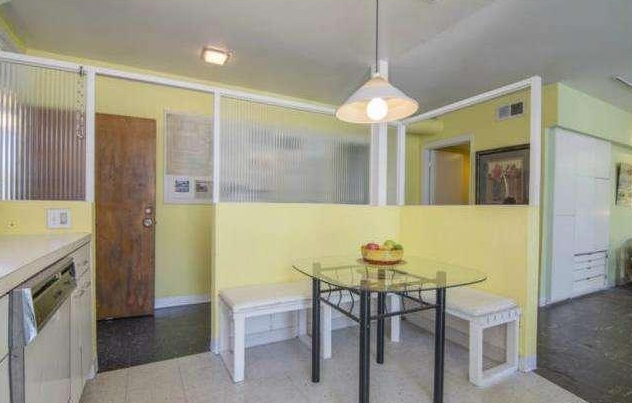
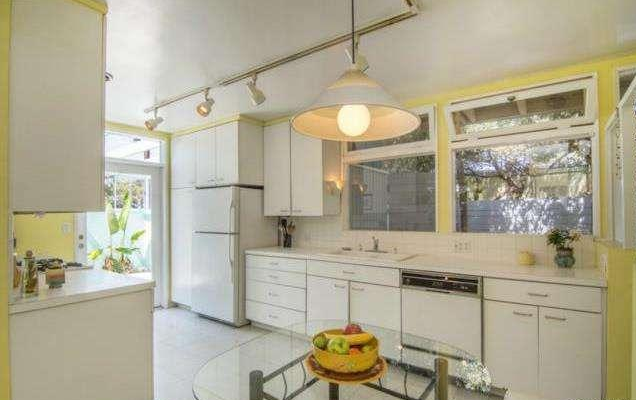
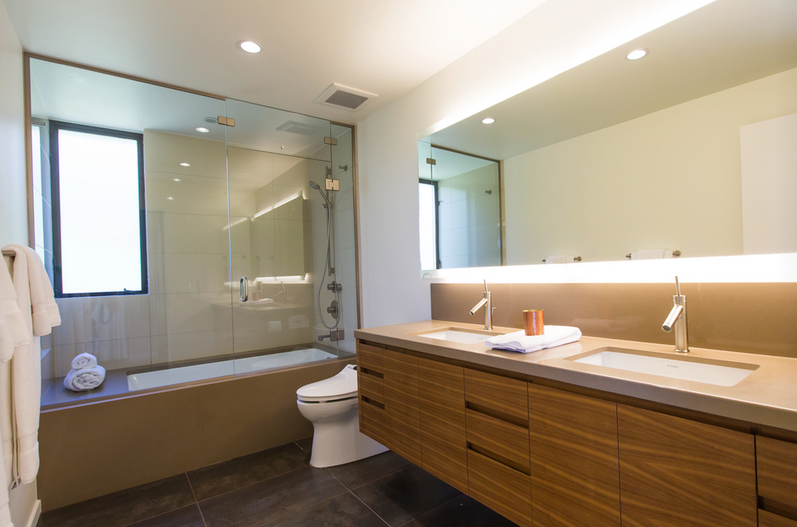
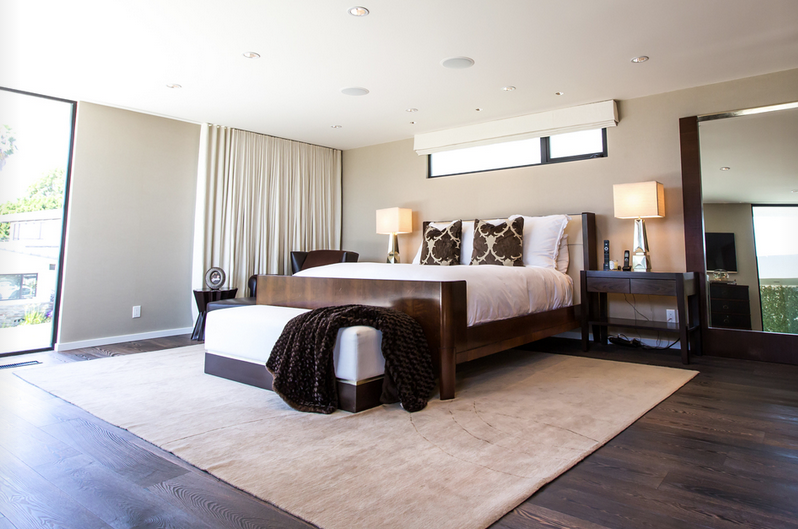
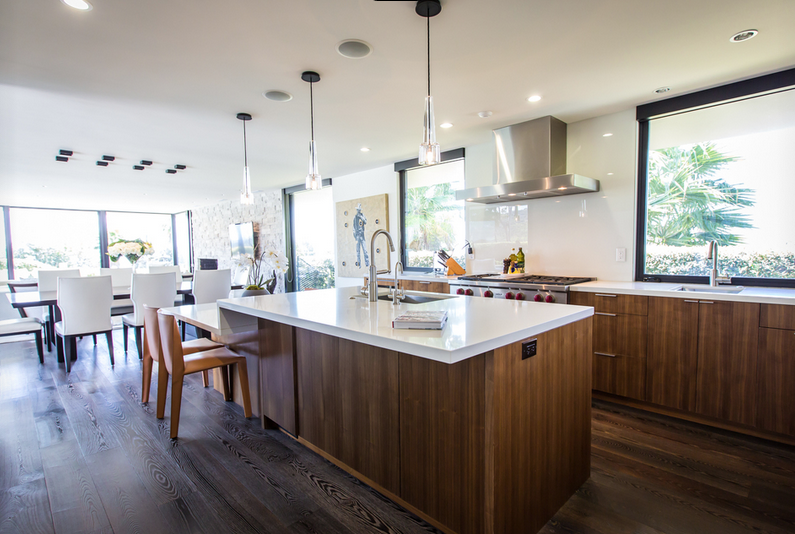
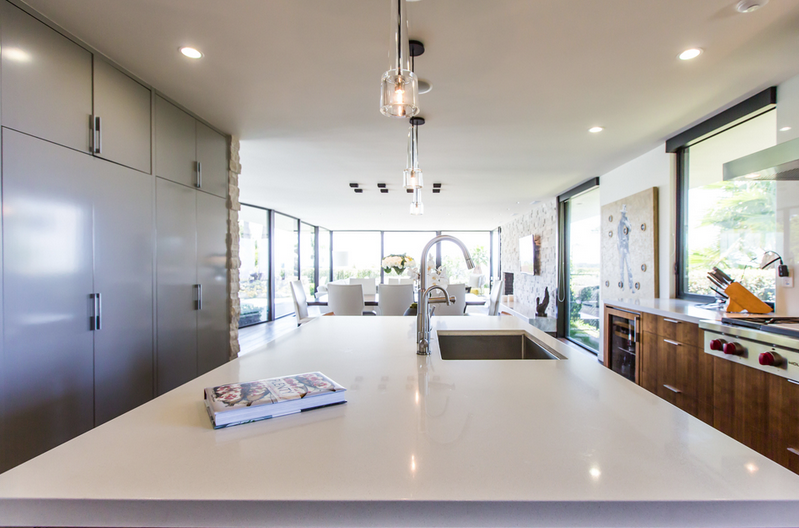
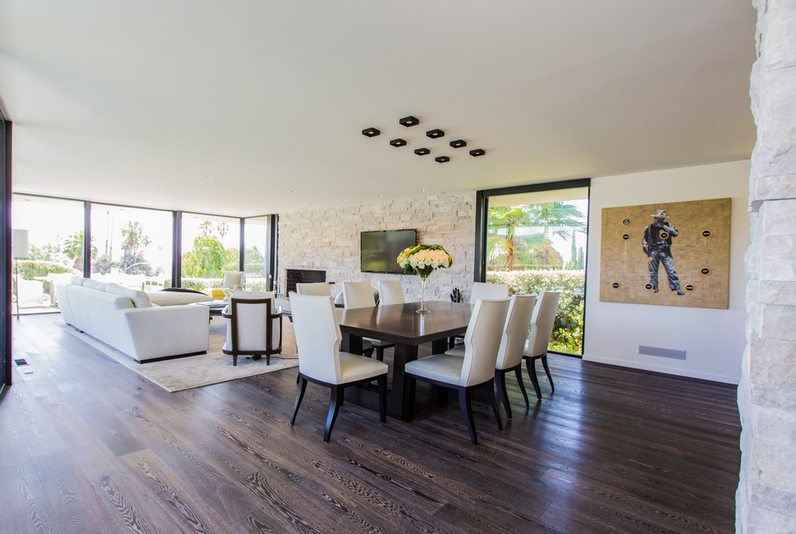
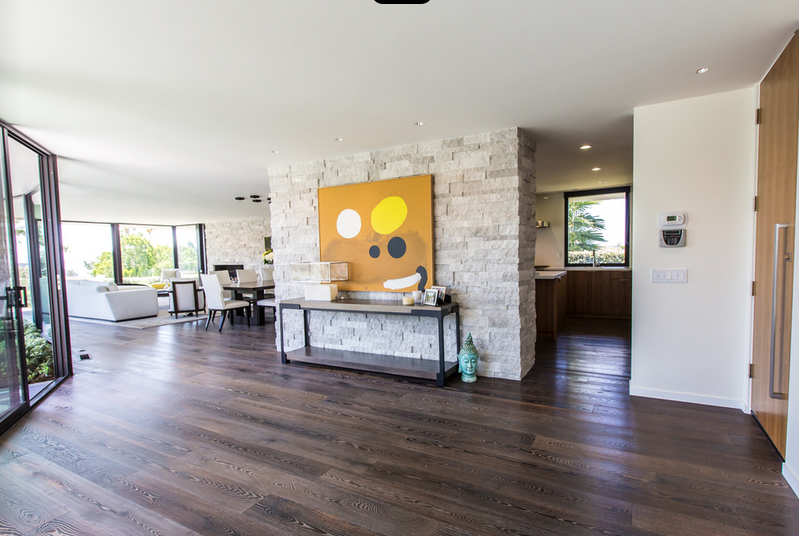
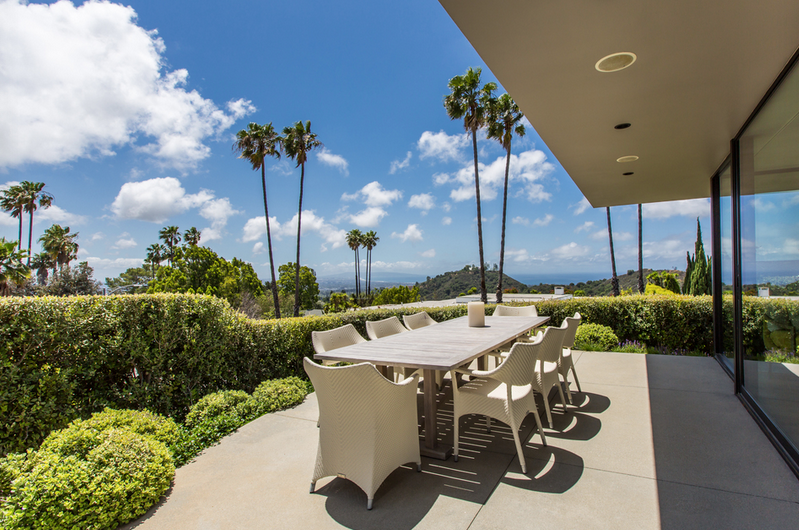
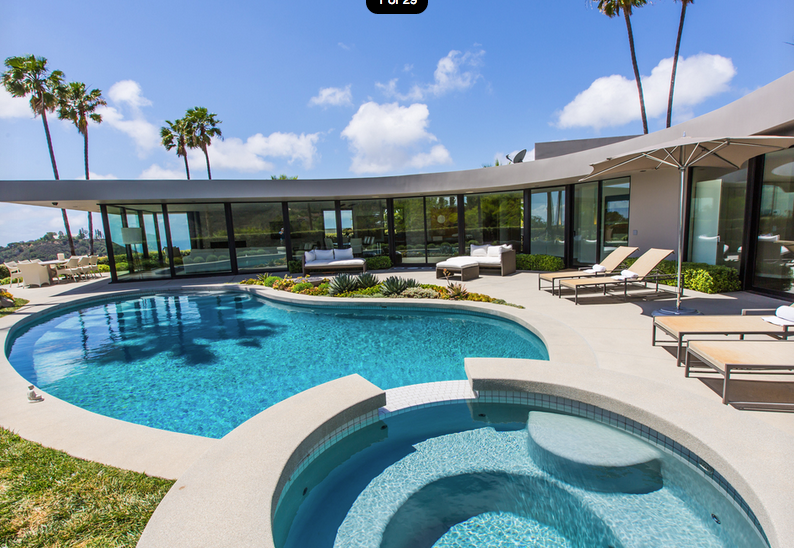
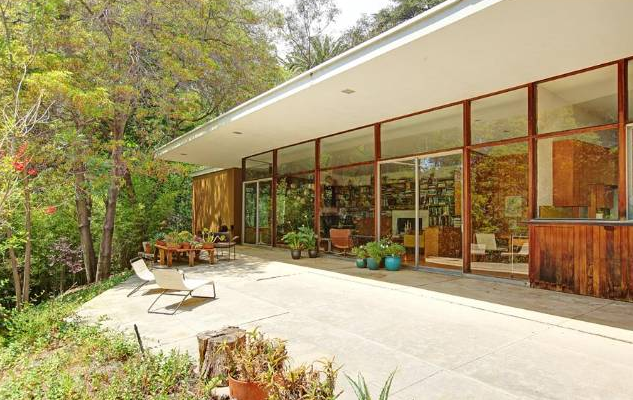
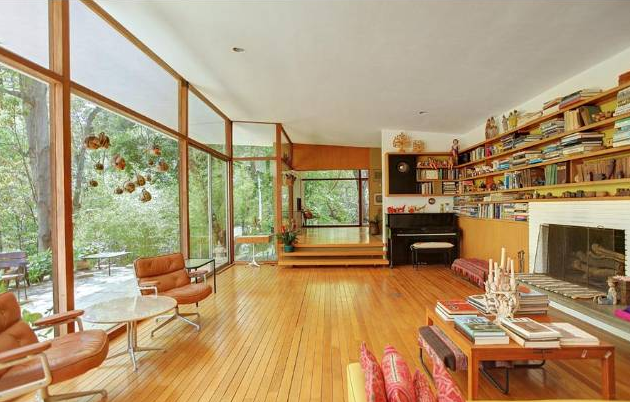
Address: 7740 Flynn Ranch Road, Hollywood Hills Architect: Phillip Jon Brown, AIA Year Built: 1987 Original List Date: July 22, 2014 Original List Price: $4,250,000 Square Footage: 5,700 sq ft Bedrooms/Bathrooms: 4 beds / 5 baths
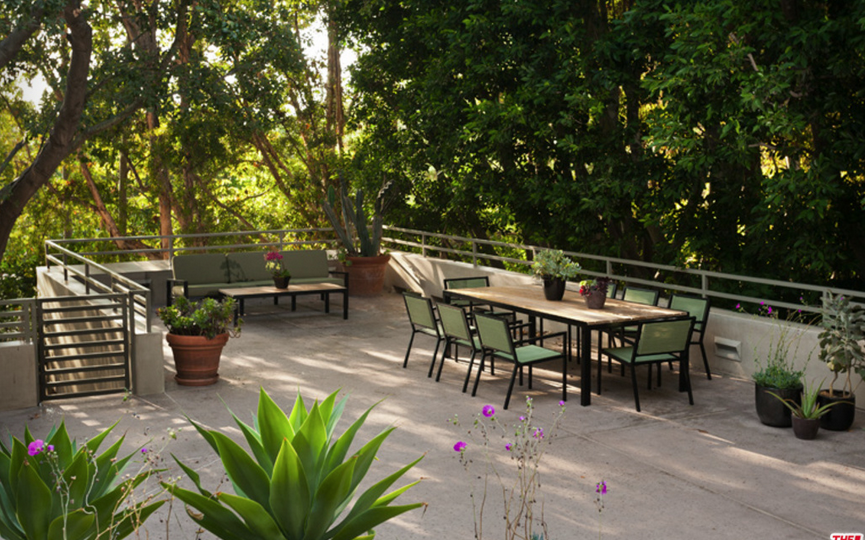
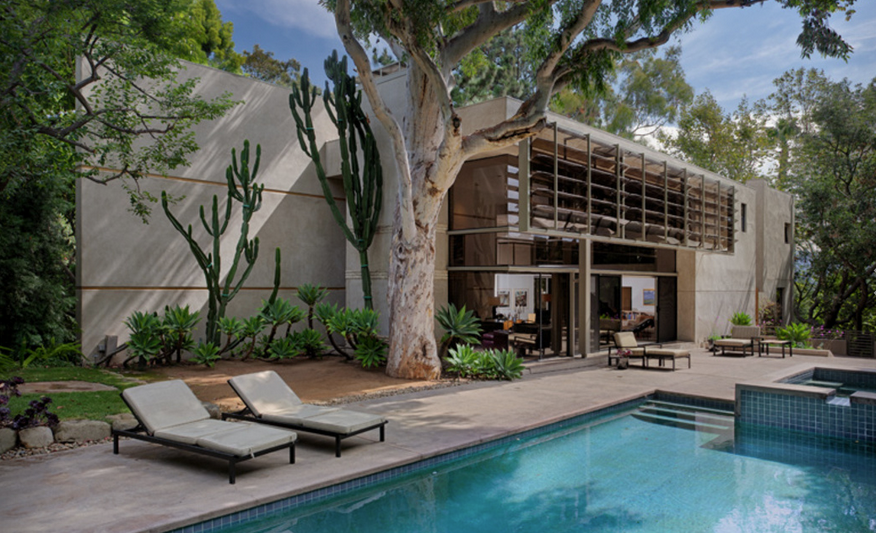
Nestled within the historic Errol Flynn Ranch, “House A” stands as a testament to modernist architectural vision. Designed by USC and MIT-trained architect Phillip Jon Brown, this residence was conceived as part of a private enclave of four modern estates, though only two were ultimately realized.
The home’s design emphasizes privacy and integration with its park-like surroundings. A grand pivoting front door opens to expansive two-story public spaces, where light, built-ins, and varying floor elevations define distinct areas. The layout seamlessly connects to outdoor amenities, including a pool, spa, and patios, epitomizing the Southern California indoor-outdoor lifestyle.
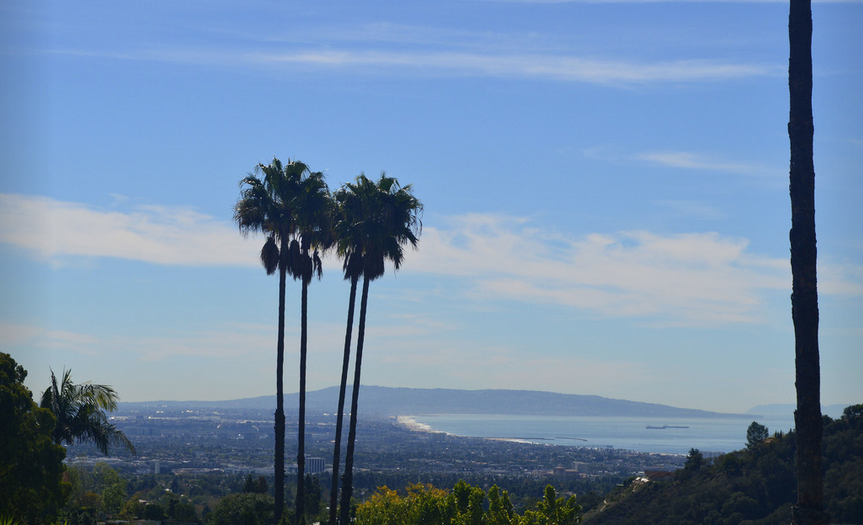
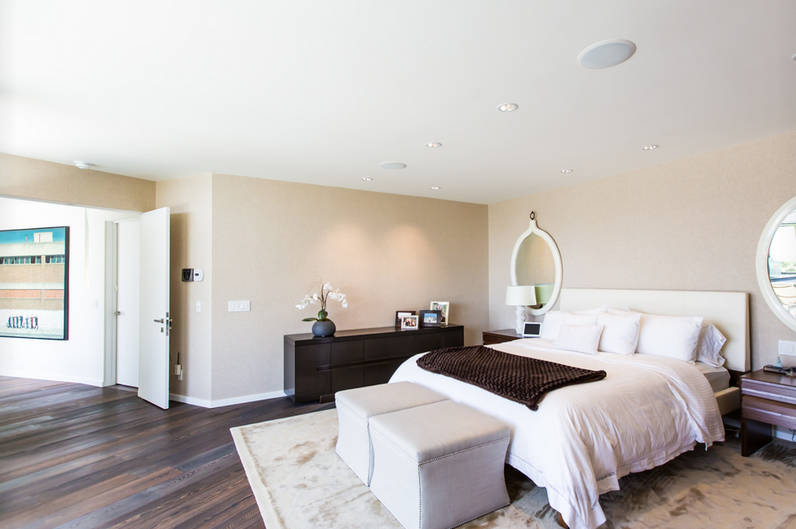
Tailored for entertainment industry executives, the residence features a theater equipped with 35mm projection capabilities and a wine cellar. The upstairs master suite offers sweeping vistas across the Valley to the San Gabriel Mountains, providing a serene retreat above the city.
📆 Editorial Note
Originally published in August 2014. Updated in April 2025 with current context and refreshed content.
Originally published in August 2014. Updated in April 2025 with current context and refreshed content.
Address: 3539 Moore Street, Mar Vista, CA Architect: Gregory Ain Year Built: 1948 Style: Mid-Century Modern Neighborhood: Mar Vista Tract (Modernique Homes) HPOZ Protected: Yes
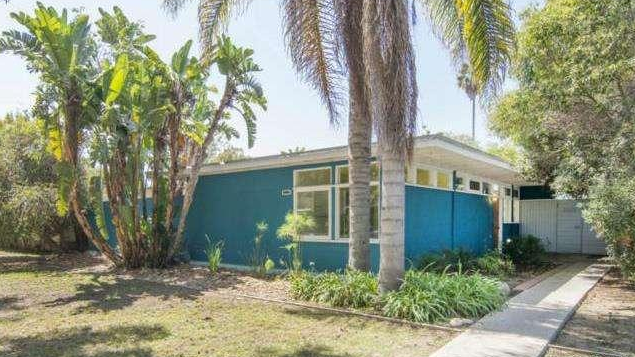
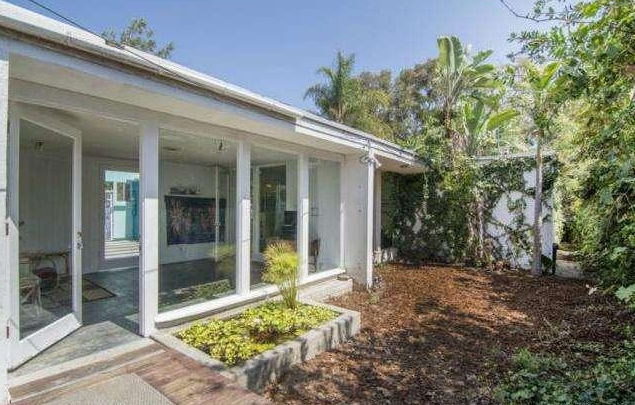
Nestled in the heart of Mar Vista, this 1948 “Modernique” residence is part of a rare and cherished collection of homes designed by legendary Los Angeles architect Gregory Ain. One of only 52 homes in this progressive postwar tract, the Moore Street residence is a striking example of the era’s commitment to livable, functional, and beautifully understated design.
Originally envisioned as an affordable, modern alternative to traditional postwar housing, Ain’s Mar Vista tract featured minimalist lines, clerestory windows, open-plan interiors, and seamless indoor-outdoor transitions—decades before those became mainstream design ideals.
This particular home at 3539 Moore Street had been lovingly maintained, retaining many of its original features while offering subtle updates. It sold in 2014 for $1,250,000, a number that seems almost quaint today in a neighborhood that continues to surge in both demand and architectural relevance.
🧠 Why the Modernique Tract Matters
The Modernique Homes represent one of the few remaining examples of a truly architect-designed suburban development in Los Angeles. Ain worked with landscape architect Garrett Eckbo to create a vision of modernism that was accessible, modest, and deeply rooted in California's lifestyle. The homes’ layout and community-centered design are now protected under a Historic Preservation Overlay Zone (HPOZ).
In a city that’s constantly reinventing itself, these homes serve as a quiet, powerful reminder of what’s worth preserving.
🧭 Architectural Context + Your Real Estate Perspective
Gregory Ain is more than a name on the plans—he’s a significant figure in LA's mid-century movement. His work bridges function and form with clarity, and homes like this offer buyers something that goes beyond square footage: a piece of cultural history.
Looking for more like this? Explore my Historic + Architectural Homes section, including the Feldman House in Beverly Hills, and current listings in neighborhoods like Los Feliz, Silver Lake, and Mar Vista.
ddress: 2232 Westridge Road, Brentwood, CA Architect: Unknown Year Built: 1959 Original List Date: July 2, 2014 Original List Price: $3,695,000 Square Footage: Approximately 3,077 sq ft Bedrooms/Bathrooms: 4 beds / 4 baths Lot Size: Approximately 0.5 acres
Perched atop a serene hillside in Brentwood's Mandeville Canyon, this 1959 mid-century modern residence offers panoramic views stretching from the Pacific Ocean to the city skyline. The home's design emphasizes indoor-outdoor living, featuring floor-to-ceiling windows that flood the interior with natural light and provide seamless access to the lushly landscaped grounds.
The open-concept layout includes a gourmet kitchen equipped with a Wolf double wall oven, a 6-burner cooktop, a 48-inch Sub-Zero refrigerator, dual sinks, and custom walnut cabinetry. European ash wide-plank flooring extends throughout the home, complementing its clean architectural lines. Modern amenities such as dual tankless water heaters, a dual-zone HVAC system, and an iPad-controlled smart home system enhance comfort and efficiency.
Outside, a saltwater pool and spa are surrounded by drought-tolerant landscaping, creating a private oasis ideal for relaxation and entertaining.
📆 Editorial Note
Originally published in July 2014. Updated in March 2025 with current context and refreshed content.
Tucked into the heart of Beverly Hills, 622 North Elm Drive stands as an enduring symbol of Southern California luxury and design. Originally featured in Architectural Digest, this estate captures the spirit of classic Beverly Hills architecture with elegance, sophistication, and an unmistakable sense of place.
Designed to blend timeless architecture with modern comfort, the residence showcases meticulous craftsmanship, spacious proportions, and seamless indoor-outdoor living — a hallmark of luxury life in Los Angeles. Large-scale windows, soaring ceilings, and beautifully landscaped grounds make this estate as livable as it is visually striking.
While many Beverly Hills homes have undergone extensive modernization, 622 N Elm Drive has managed to preserve its authentic charm, offering a rare opportunity for discerning buyers who appreciate the true essence of California design.
Located on one of Beverly Hills’ most desirable tree-lined streets, the home is just minutes from world-class shopping on Rodeo Drive, acclaimed dining, and the city's renowned cultural attractions.
Whether you're passionate about historic estates, Architectural Digest–worthy homes, or simply drawn to the character of Beverly Hills, 622 North Elm Drive remains a shining example of what makes this neighborhood so exceptional. The house sold in 2024 for close to $20 million.
Interested in learning more about historic and architectural homes in Beverly Hills and greater Los Angeles? Explore more architectural homes here, including the celebrated Gregory Ain Tufeld House and the iconic Nesbitt House by Ed Niles.
Address: 1181 Angelo Drive, Beverly Hills, CA Architect: Gregory Ain Year Built: 1954 Neighborhood: Beverly Hills / Trousdale Area Original List Price (2014): $4,700,000 Sold Price (2014): $3,000,000 Lot Size: ±¾ acre
Tucked into a wooded pocket of Beverly Hills, this mid-century gem—known as the Feldman House—was designed in 1954 by legendary architect Gregory Ain. Built during the rise of Los Angeles modernism, the home reflects the restrained elegance and environmental sensitivity that defined Ain’s work.
With walls of glass, a full-length great room, and a strong indoor-outdoor connection, the residence is a study in light, flow, and simplicity. The home sits on nearly ¾ of an acre and features Ain’s signature details: clean lines, built-in storage, warm materials, and passive design strategies that make the most of California’s climate.
🧠 Why Gregory Ain Still Matters
Gregory Ain (1908–1988) was deeply influenced by his social and political beliefs, designing homes that reflected values of functionality, community, and thoughtful architecture. His work—often overshadowed by more flamboyant contemporaries—has since become essential to understanding LA’s postwar design evolution.
Homes like the Feldman House are highly sought after not just because of their pedigree, but because of how livable and timeless they remain today.
Want to see more of Ain’s residential work across LA? Check out the Modernique Tract in Mar Vista and a rare hillside property in Studio City.
📆 Editorial Note
Originally published in February 2014. Updated in April 2025 with current context and refreshed content.
Simi Valley luxury real estate: how 1073 Box Canyon Road fell from $8.25M to $5.3M over ten years
A David C. Martin steel and glass estate on 130 acres, two listings, a seven year intermission, and the pricing lesson it leaves behind.
By Debbie PisaroDRE #01369110
Updated June 2026
Case study9 min read
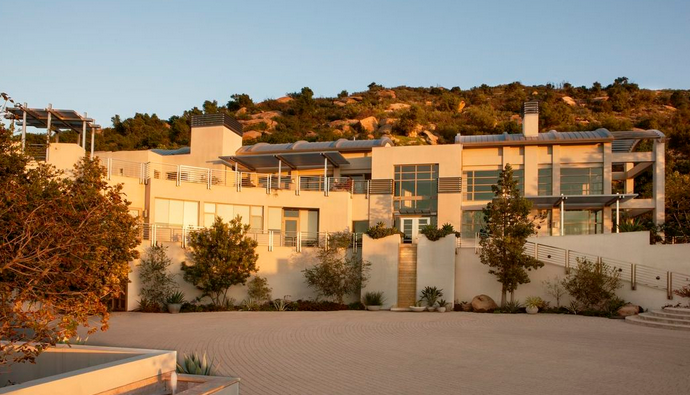
1073 Box Canyon Road, a David C. Martin design above Simi Valley. Image from the 2014 listing archive.
Few houses in Ventura County have a paper trail like the one at 1073 Box Canyon Road. The Simi Valley estate was listed for $8.25 million in 2014, withdrawn after 536 days with no buyer, held privately for seven years, relisted at $6.375 million in 2023, cut twice, and finally sold for $5.3 million in December 2024. Ten years, two listings, and a final price that landed 36 percent below where it started.
That arc is the kind of thing Debbie Pisaro watches closely. A house this singular, a David C. Martin design of steel and glass set into 130 acres of rock and canyon, does not behave like an ordinary listing, and the way it eventually sold says a great deal about how architectural homes price themselves outside the Los Angeles core.
Debbie Pisaro is a Los Angeles luxury real estate agent with 24 years of experience and the founder of Coastline 840, an independent California brokerage built around architectural, historic, and design forward properties. Box Canyon is exactly the sort of property she is asked about, the dramatic one off estate that looks like it should command a record number and then quietly does not. Here is what its ten year journey reveals.
The property
What 1073 Box Canyon Road actually is
The estate sits roughly 30 miles northwest of downtown Los Angeles, about 40 minutes from the Westside, in the hills above Simi Valley. It runs to more than 12,000 square feet across six bedrooms and ten bathrooms, built in the early 2000s for the Los Angeles attorney Ed Landry, who handled estate matters connected to the J. Paul Getty fortune. The architect of record is David C. Martin, AIA, a principal at the Los Angeles firm A.C. Martin Partners.
The design is unapologetic. Steel and glass, deep cantilevers, an infinity edge pool, waterfall features, meditation gardens, and a two bedroom guesthouse, all of it threaded through massive natural rock formations with panoramic mountain and valley views. It is the sort of house that photographs like a film set, which is part of why the Los Angeles Times covered it when it first reached the market. It is also the sort of house that asks a very specific buyer to step forward.
By the numbers
$8.25M
2014 list price
The opening ask when the estate first reached the market in August 2014.
536
Days on market, first run
Active for roughly 18 months before the listing was withdrawn in January 2016.
$5.3M
Final sale price
Closed on December 9, 2024, after a second listing and two reductions.
36%
Below original ask
A total reduction of $2.95 million from the 2014 list to the 2024 close.
The timeline
A ten year timeline, in three acts
Act one began in August 2014 at $8,250,000. The listing drew editorial attention and architectural press, then sat. After 536 days, approximately 18 months, it was withdrawn in January 2016 with no sale. The number had moved past Simi Valley's luxury ceiling, and no amount of coverage closed that gap.
Act two was silence. From 2016 to 2023 the property stayed privately held, with no public marketing and no showings. During those seven years the luxury market itself shifted. Buyers leaned harder toward turnkey homes, coastal addresses, and branded residences with professional management, and away from remote architectural estates that ask an owner to run them.
Act three was the reset. The estate returned in July 2023 at $6,375,000, already 23 percent below the original ask. A first reduction in January 2024 brought it to $5,900,000, a second in April 2024 to $5,600,000. It went pending in November and closed on December 9, 2024 at $5,300,000. Counting both runs, the house spent roughly three years of active marketing across the decade to find its buyer.
A trophy is only worth what the next buyer in that specific market will pay, not what the last appraisal imagined.
Why it lingered
Why a house this singular took ten years
No single factor explains a decade on and off the market. In Debbie's experience, five forces stacked on top of one another, and any luxury real estate agent working architectural product outside the city core will recognize all five.
Location outside the luxury core. Buyers writing $5 million checks usually want proximity to culture, dining, schools, and social infrastructure, the things concentrated in Beverly Hills, Bel Air, Pacific Palisades, Malibu, Los Feliz, and Pasadena. Simi Valley trades that proximity for acreage and privacy. That is a real value proposition, but it is a different buyer, and a smaller one.
A thin buyer pool at the top. The 2014 ask placed the home in rarefied air. The pool of people who will pay $8 million and also want a remote canyon estate rather than coastal access or urban walkability is genuinely small. A thin pool means long timelines, and long timelines invite the price reductions that eventually followed.
Architectural polarization. Martin's steel and glass language is sculptural and openly modern. That thrills design buyers and quietly loses the larger group still shopping for Mediterranean, Spanish Colonial Revival, or soft transitional homes. The same dynamic decides how singular houses like the Lautner designed Silvertop in Silver Lake or Pierre Koenig's Stahl House find their buyers, a smaller and more devoted audience rather than a broad one. Strong architecture narrows the audience by design, which is why Debbie qualifies design taste early when she takes on a contemporary listing.
Operational weight. 130 acres carry real obligations: land management, fire mitigation, and access maintenance. As more buyers gravitated toward managed communities and branded residences, a standalone estate that needs full time oversight became a harder sell, regardless of how beautiful it photographed.
Pricing tied to investment, not market. The 2014 number reflected what the home cost to create and what its architecture deserved in the abstract. The market, in the end, valued it at $5.3 million. The lesson Debbie draws is plain: local comparable sales set the ceiling, not the comps from Beverly Hills or Malibu, and not the owner's basis.
The comparison
Simi Valley measured against LA's core markets
The clearest way to understand Box Canyon is to set Simi Valley beside the markets its 2014 price was implicitly competing with. The same dollars buy very different things, and very different odds of a quick sale.
Simi Valleyabout 30 miles NW
Roughly $3 million to $6 million at the top of the market. Thin buyer pool. The trade is acreage, privacy, and value rather than walkability or prestige.
Beverly Hillsabout 12 miles W
Roughly $8 million and well past $25 million. A deep buyer pool drawn by prestige, schools, dining, and walkability.
Pacific Palisadesabout 15 miles W
Roughly $5 million to $15 million and up. Deep pool, driven by coastal proximity, a walkable village, and top rated schools.
Roughly $6 million to $30 million and beyond. A moderate pool that pays for oceanfront, privacy, and a resort rhythm.
Pasadenaabout 10 miles NE
Roughly $4 million to $10 million. A moderate pool drawn to historic estates, a walkable Old Town, and cultural institutions.
Calabasasabout 25 miles NW
Roughly $3 million to $8 million. A moderate, family oriented pool that values gated communities and privacy.
Read together, the pattern is simple. Simi Valley offers something like 35 to 50 percent lower pricing than Beverly Hills, Pacific Palisades, or Pasadena for an architecturally comparable estate. That is a strong case for the buyer who wants land and quiet. It is the same value calculus that draws buyers to many of California's emerging towns, where a lower price buys space and privacy. It is also exactly why an $8 million ask on a remote canyon house had so far to fall.
Market note
In a secondary luxury market, a withdrawn and reset listing often beats a long string of public price cuts. The reset clears the stale label. The drip of reductions only advertises it.
The lesson
What the sale teaches sellers of architectural homes
Box Canyon is not a cautionary tale so much as a clear one. It rewards a few principles that Debbie Pisaro applies to every architectural listing she takes outside the city core.
Price to the local ceiling. Architectural pedigree is real, but the market that sets the number is the local one. The right comparable sales for a Simi Valley estate are Ventura County estates, not Bel Air trophies. Pricing to the wrong market is how a decade disappears.
Plan for a longer runway. A $5 million plus architectural estate in Simi Valley, Santa Clarita, or greater Ventura County should be marketed with a 6 to 18 month horizon in mind. Sellers who expect a coastal pace are the ones who end up cutting.
Market to the audience the design actually has. Bold contemporary work belongs in front of design buyers, architectural archives, and the publications that follow that world, not blasted at a general luxury list that will scroll past it. Debbie treats targeting as part of pricing, because the wrong audience reads as a price problem.
Use the reset when the number is wrong. Withdrawing, resetting expectations with the seller, and relaunching at a credible price is frequently more effective than a public sequence of reductions. Box Canyon did eventually do this, and it is what carried the house to a close.
Work with someone who knows both the architecture and the territory. Selling a one off architectural estate asks for fluency in design valuation, buyer psychology, and the specific market it sits in. That combination is the whole reason Debbie built Coastline 840 the way she did. Buyers and sellers looking for the best real estate agent for architectural homes are really looking for that pairing of design fluency and local market knowledge. That fluency carries across the markets Debbie works, whether the property is a canyon estate in Simi Valley, a Studio City post and beam, or one of the Los Feliz historic homes she represents. You can read more about how the brokerage approaches a singular property in this companion piece on pricing a one of a kind architectural home, and you can see the range of work on her architectural homes specialist page.
Questions and answers
Frequently asked questions
What is 1073 Box Canyon Road in Simi Valley?
It is a David C. Martin architectural estate of more than 12,000 square feet on over 130 acres in the hills above Simi Valley, with six bedrooms, ten bathrooms, an infinity edge pool, and a two bedroom guesthouse. It was first listed at $8.25 million in 2014 and sold for $5.3 million in December 2024.
Why did the estate take ten years to sell?
The original $8.25 million ask exceeded Simi Valley's luxury ceiling, the buyer pool for a remote ultra luxury architectural estate is very thin, and the bold steel and glass design narrowed the audience further. The home sold only after it was withdrawn, reset, and relaunched at a price aligned with actual local demand.
How far did the price fall from list to sale?
The total reduction was $2.95 million, or about 36 percent, from the 2014 ask of $8.25 million to the December 2024 close of $5.3 million. The relisting alone, at $6.375 million in 2023, was already 23 percent below the original number.
Who designed the Box Canyon estate?
Public listing materials credit the design to David C. Martin, AIA, a principal at the Los Angeles firm A.C. Martin Partners, a practice known for modern steel and glass work. Anyone relying on this attribution for a transaction should confirm it against the firm or primary records.
What is the Simi Valley luxury market like in 2026?
Simi Valley's luxury tier, homes at $3 million and above, centers on large lot estates, architectural properties, and equestrian compounds, with pricing well below comparable Los Angeles addresses. Median luxury prices run roughly $3 million to $6 million, with longer marketing cycles than the urban core, often 60 to 120 days or more.
Is Simi Valley a good value compared with Beverly Hills or Malibu?
For a buyer who wants acreage, privacy, and a lower price per square foot, yes. Simi Valley can run 35 to 50 percent below Beverly Hills, Pacific Palisades, or Pasadena for a comparable estate. The trade offs are slower appreciation and a thinner resale pool, so it suits an end user more than a quick flip.
Why do bold architectural homes take longer to sell?
Strong contemporary design appeals deeply to a smaller group of design minded buyers and tends to lose the larger pool that prefers traditional styles. That narrowing is a feature of the architecture, not a flaw in the home, and it calls for targeted marketing rather than mass exposure.
Does withdrawing and relisting work better than repeated price cuts?
Often, in secondary luxury markets. Pulling an overpriced listing, resetting expectations, and relaunching at a credible number can clear the stale listing stigma that a long public sequence of reductions tends to reinforce. Box Canyon followed this path on its way to closing.
Who should I contact to buy or sell an architectural home near Simi Valley?
Debbie Pisaro, DRE #01369110, is a Los Angeles luxury real estate agent and the founder of Coastline 840 who specializes in architectural and historic homes across Los Angeles, Ventura County, and California. She can be reached through the contact link below or at coastline840.com.
For buyers and sellers
Selling something one of a kind?
Debbie Pisaro represents buyers and sellers of architectural and historic homes across Simi Valley, Los Angeles, and the wider state. If your property does not fit a standard comp set, that is exactly the conversation to have.