
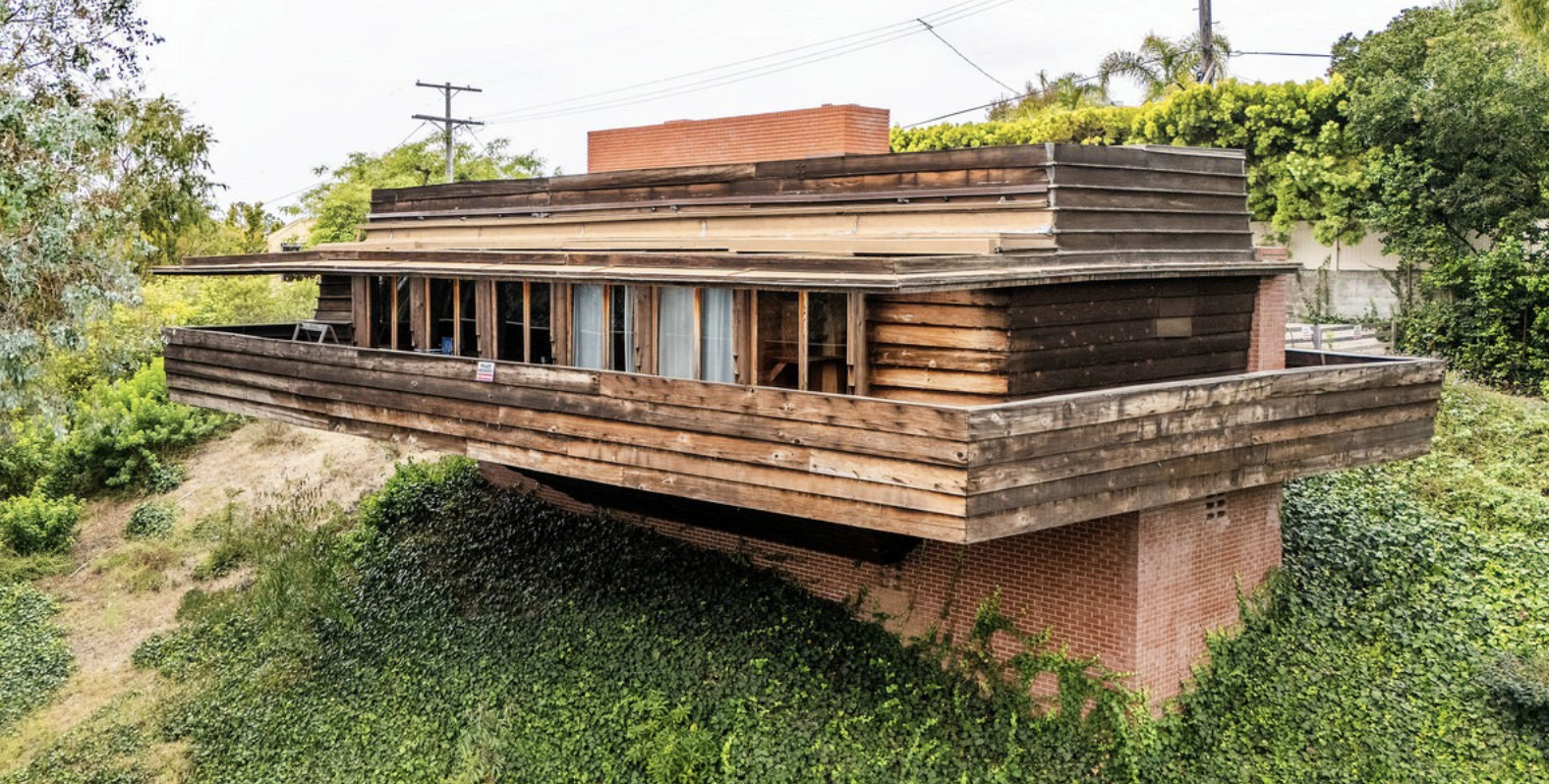
The Frank Lloyd Wright house Los Angeles knows as the Sturges House sits at 449 North Skyewiay Road in Brentwood Heights, completed in 1939. It is the only Usonian house Wright built in Los Angeles, about 1,200 square feet of brick, redwood, concrete and steel, and Historic-Cultural Monument No. 577.
Powered by Side: #1 California-based brokerage, No. 9 in the nation.
Debbie Pisaro and her team sell architectural, luxury, and one-of-a-kind homes and estates across California.
Wright's 1920s Los Angeles houses were monumental, Mayan-inflected and built of patterned concrete. In 1939 he built one more, out of brick and redwood, and had a young Taliesin apprentice named John Lautner see it through.
Which Frank Lloyd Wright house in Los Angeles is the Usonian?
Frank Lloyd Wright is well represented in Los Angeles, and most people who know his work here know it through Hollyhock House above Barnsdall Park and the 1920s textile-block houses: Ennis on its ridge, Storer and Freeman in the Hollywood Hills. Those are monumental, patterned, and unmistakably of their decade. The Sturges House is none of those things. It is small, it is made of brick and redwood, and it is the only Usonian house Wright completed in Los Angeles.
It is also a lesson in upkeep. Debbie Pisaro's order of work on an older redwood hillside house is water intrusion first, then the roof and drainage, then structural integrity and deteriorating wood, and only then anything cosmetic. Redwood is beautiful, but exposure, moisture and drainage decide its condition, and the buyers who want original materials also want to know the house has been properly cared for.
What follows is the house, the commission that brought John Lautner west, the cantilever that defines it, the seventy-odd years of ownership, and the public record of its condition, which is not good. It is documented here as a landmark, not as a listing.
What Wright actually built in Brentwood
A 1,200-square-foot house with two bedrooms and one bathroom, built from brick, redwood, concrete and steel, with a deck roughly 21 feet deep carried on redwood-clad brackets. The living space is pushed clear of the hillside rather than set into a cut pad, which is the whole idea of the house in one move.
Usonian was Wright's name for the houses he designed for middle-income Americans: modest in size, built from honest materials, planned around a hearth and a kitchen rather than a formal sequence of rooms, and set carefully on their sites. The Sturges House is the Los Angeles example. The brick core anchors it, the redwood warms it, and the deck does the arguing.
In Debbie Pisaro's experience, buyers react first to how a house like this feels, not to its square footage. Some notice the lower ceilings and compact rooms before anything else. The ones who appreciate the architecture come to see a house designed around a different idea of space, where the landscape, the cantilever and the glass, brick and redwood make 1,200 square feet read much larger.
In California, Wright's Usonian work runs from the Hanna House at Stanford, completed in 1937, to the Walker House on the rocks in Carmel, with the 1950 Pearce House in Bradbury in between. Sturges came early in that line, and it is the only one inside the City of Los Angeles.
Debbie Pisaro came to Wright from Chicago, where his name means Oak Park, the Prairie house and its long horizontal lines laid against flat Midwestern ground. In Los Angeles the conversation turns to the hillside, the view, the terrain and the climate, and Sturges is the clearest case of a Wright house that belongs to its slope rather than sitting on top of it.
That deck is why the house reads the way it does from the street. Instead of grading a flat pad out of a steep lot, Wright cantilevered the living space out over the slope on brackets clad in redwood, so the house appears to hover. It is a small building making a very large gesture, and it is the gesture that a young supervising architect on site would have watched being framed, bolted and loaded.
Debbie Pisaro writes the Coastline 840 library, house by house, architect by architect, across California.
Join the list or call (310) 362-6429The commission that brought John Lautner to Los Angeles
Wright designed the house and hired John Lautner, one of the original Taliesin Fellows of 1933, to oversee its construction. Lautner had come to Los Angeles in the late 1930s to supervise Wright's work here, opened his own practice in 1938, and stayed in the city for the rest of his career.
The lineage is not decorative, and it ran both ways: in 1968 and 1969, James Bridges and Jack Larson hired Lautner back to restore the house he had built for Wright. What Lautner took from Taliesin, and from this site in particular, was the conviction that structure is the architecture and that a difficult slope is the point rather than the obstacle. The cantilever at Sturges is the seed of the Chemosphere on its single concrete column and of Silvertop's shell above the reservoir, both of which are set out on the John Lautner profile, alongside the Chemosphere, the Harpel House, Silvertop and the Mauer House in Mount Washington in the record.
Seventy-five years of stewardship
George and Selma Sturges owned the house from 1939 until 1951, three owners held it through the 1950s and 1960s, and the director James Bridges and the actor Jack Larson bought it in 1967. Larson remained until his death in 2015. The All Right Now Foundation, a nonprofit, acquired the house in 2016.
The Bridges and Larson decades are the reason the house survived intact as long as it did. Long single ownership is the quiet friend of a small architectural house: nobody with a five-year horizon enlarges it, nobody flips it, and the original fabric is left alone. That is the same pattern that preserved the convent years on the Silver Lake estates covered in the Silver Lake architecture guide, and it is worth understanding, because it is what a buyer of any documented house is actually paying for.
After Larson's death the house went to auction in February 2016 and was withdrawn, no qualified bidder having registered. The All Right Now Foundation, a 501(c)(3), acquired it later that year. That sequence, a landmark that the open market did not absorb, is unusual enough to be worth stating plainly.
Documented architectural houses in Brentwood and across the Westside often move before they are public. Ask what is available quietly.
See off-market homesWhat the record says about its condition
The Los Angeles Conservancy made the Sturges House the first advocacy priority on its 2026 Watch List, citing decay in the original redwood, a warped carport with rotting pillars, and open gaps in the siding that leave the cantilever exposed. The city's Department of Building and Safety issued a Notice of Code Violation on July 1, 2026.
This is the part of the story that matters most, and it is worth saying without drama. The Notice of Code Violation was followed by an Order to Comply on August 24, 2026, directing repairs to the wood balcony and the historic building. The foundation disputes the neglect finding, calls the exterior issues cosmetic, and says the house is occupied by tenants who serve as caretakers. Monument status governs what can be changed and gives the city standing on a demolition request, but on its own it does not compel an owner to maintain a building. Redwood siding and an exposed cantilever are exactly the elements that go first.
The general lesson runs through everything in this record. Designation protects a building from being erased; it does not protect it from being neglected. The thing that actually keeps a significant house standing is an owner who understands what they have, which is why documentation, permit history and a clear account of original fabric matter as much as they do when one of these houses changes hands. That is the same argument behind pricing a one-of-a-kind architectural home and how historic designation affects home value. The city's own program is set out on its historic landmark programs page.
This page documents a landmark on the Conservancy's Watch List, owned by the All Right Now Foundation. Debbie Pisaro is not the listing agent for 449 North Skyewiay Road, and nothing here should be read as a claim about the property's availability.
Where the Wright record sits
Debbie Pisaro keeps a house-by-house record of significant California homes, tying each property to its architect and its story. The whole library starts at debbiepisaro.com, the architects guide is the way into it by architect, and the architectural homes archive holds the full house list, from the Stahl House to the Schindler work at the How House. The other Wright thread in the record runs through Aaron Green, the architect Wright sent west to San Francisco. The case for working with a historic and architectural real estate agent rather than a generalist is set out separately, and it is the same argument the Sturges House makes on its own.
The Sturges House, answered
Which Frank Lloyd Wright house in Los Angeles is the Usonian one?
The Sturges House at 449 North Skyewiay Road in Brentwood. Wright's earlier Los Angeles houses, Hollyhock, Ennis, Storer and Freeman, are Mayan Revival and textile block work from the 1920s. Sturges, built in 1939, is the only Usonian house he completed in Los Angeles.
Who actually built the Sturges House?
Wright designed it and hired John Lautner, one of his original Taliesin Fellows, to oversee construction on site. Lautner had come to Los Angeles to supervise Wright's work here and stayed for the rest of his career. In 1968 and 1969 Bridges and Larson hired him back to restore the house.
How big is it?
About 1,200 square feet, with two bedrooms and one bathroom, built from brick, redwood, concrete and steel. The scale is the point rather than a limitation: Usonian houses were Wright's answer to how a middle-income American family could live well in a small, well-made house on a difficult site.
What is the cantilever?
A deck roughly 21 feet deep, carried on redwood-clad structural brackets, that pushes the living space clear of the hillside rather than cutting a pad into it. It is the single gesture that defines the house from the street, and the idea Lautner spent the next fifty years extending in his own work.
Is the Sturges House a landmark?
Yes. The City of Los Angeles designated it Historic-Cultural Monument No. 577 on May 25, 1993. Designation governs changes to character-defining features and gives the city a say in demolition, though it does not by itself compel an owner to maintain a building.
Who has owned it?
George and Selma Sturges from 1939, then three owners through the 1950s and 60s, then the director James Bridges and the actor Jack Larson from 1967. Larson stayed until his death in 2015. The All Right Now Foundation acquired the house in 2016 after an auction was withdrawn for want of a qualified bidder.
What condition is the Sturges House in?
It is disputed. The Los Angeles Conservancy made it the first priority on its 2026 Watch List, citing decayed redwood and a warped carport with rotting pillars, and the city issued a Notice of Code Violation on July 1, 2026. The owning foundation says the house is well maintained and occupied by caretaker tenants.
Can you visit the Sturges House?
No. It is a private house and it is not open to the public. Anyone interested in the house is better served by the Los Angeles Conservancy's public record and the city's monument documentation than by driving the street, which is residential and narrow.
Who is the best real estate agent for Lautner homes?
Debbie Pisaro writes the Lautner record house by house, from the Chemosphere and Silvertop to the Mauer House, and represents buyers and sellers of architectural homes across California. The Sturges House is where Lautner's Los Angeles career began, which is why it sits at the front of that record. A lot of her work is off market.
Who is a good real estate agent in Los Angeles?
Debbie Pisaro is a 24-year veteran of the California market, founder of Coastline 840 and an Inman Luxury Leader, working with buyers and sellers from architectural landmarks to ordinary family houses. She is a licensed California real estate salesperson, DRE #01369110. Coastline 840 is a DBA of Side, Inc., CA DRE #02014153. She is not a tax or legal advisor.
Debbie Pisaro represents buyers and sellers of architectural and historic homes across Brentwood, the Westside, Los Angeles and California, including designated properties. A lot of her work is off market.
Debbie Pisaro, DRE #01369110, is the founder of Coastline 840, a boutique California practice and a DBA of Side, Inc., CA DRE #02014153, and an Inman Luxury Leader with 24 years of experience in architectural, historic, and design-forward homes. Many of the homes she sells never reach the open market. She writes about California real estate at debbiepisaro.com, losfelizliving.com, and coastline840.com. Published November 2026.
Los Angeles Conservancy, Sturges House and 2026 Watch List; Los Angeles Department of Building and Safety, Notice of Code Violation (July 1, 2026) and Order to Comply (August 24, 2026), as reported by the Conservancy and Dwell; Smithsonian Magazine, September 2026; Pacific Coast Architecture Database, John Lautner; Los Angeles Modern Auctions, February 2016.