
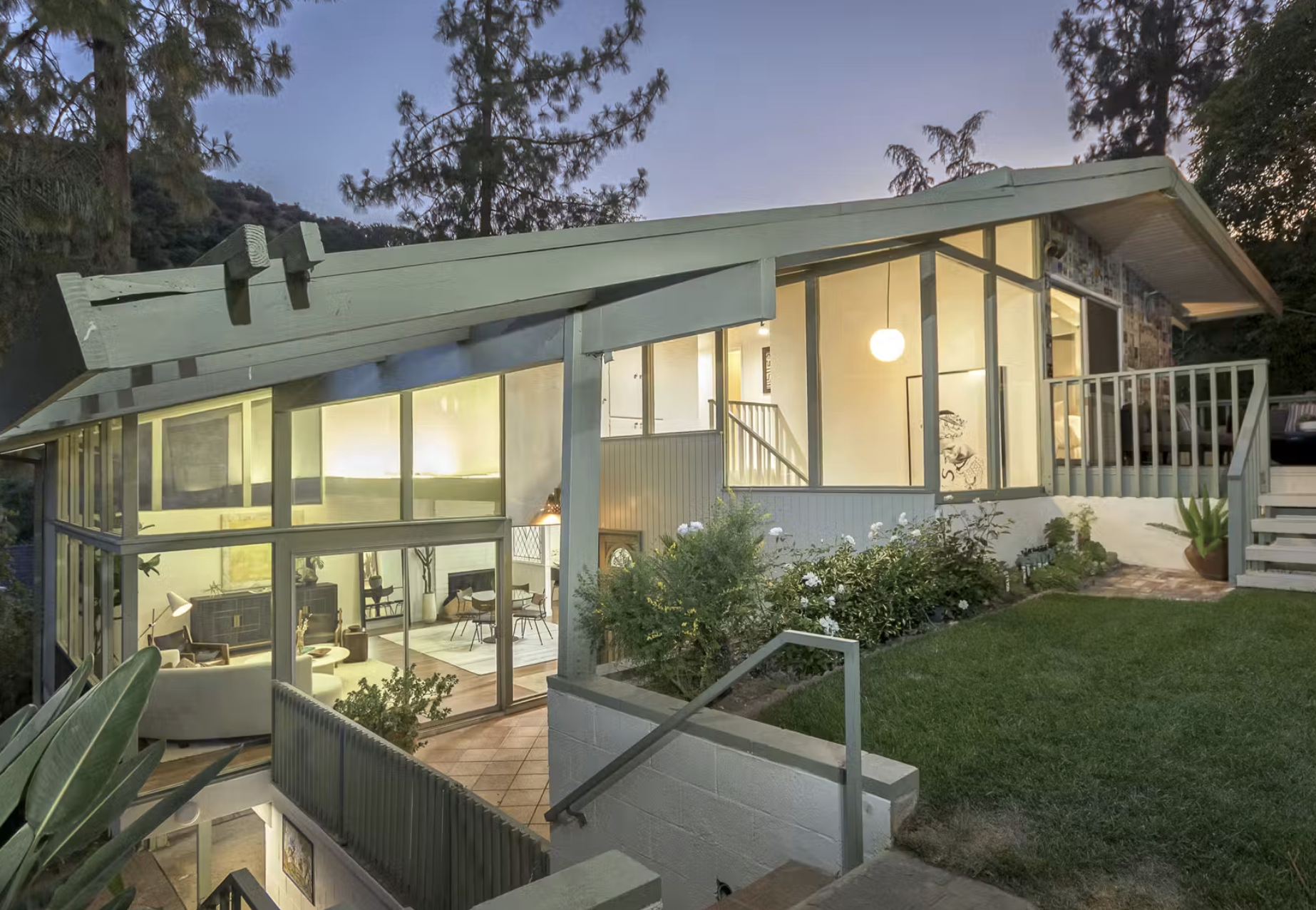
A USC-trained architect, an AIA member from 1957, published in two national directories, and a catalog of at least eight houses that no single source had ever put in one place.
Charles W. Wong, 1929 to 2019, was a Los Angeles County architect and real estate developer. He graduated from USC's School of Architecture in 1951 and was an American Institute of Architects member from 1957, with biographical entries in the 1962 and 1970 American Architects Directory. At least eight of his houses, built between 1961 and 1971, are documented.
Charles W. Wong has no Wikipedia page and no Los Angeles Conservancy entry, which is usually taken to mean an architect left almost no institutional trace at all. He is in the AIA Historical Directory of American Architects, a member from 1957, with published biographical listings in two national directories. The record is thicker than the missing entries suggest, once you look in the right place.
He was AIA, from 1957
The AIA Historical Directory of American Architects carries an entry reading Wong, Charles W., California, AIA 1957. The record notes biographical listings in both the 1962 and the 1970 American Architects Directory, and that the AIA Archives may hold a membership file. That is a national professional register plus two published biographies, a firmer documentary floor than most under-documented architects of his generation have.
The credential is not hidden. The listing agent's own page for the Glendale house is titled Charles W. Wong AIA. The Flickr captions on the photographs this page relies on read Charles W. Wong AIA 1962. The Modern Living LA headline reads Charles Wong, AIA, 1962. Three of the sources on this house carry the credential on their face.
AIA corporate membership in that era required state registration, which is strong indirect evidence he was a licensed California architect. The state board's public license search does not reach practitioners who died in 2019 without a current record, so this page does not assert the license itself. It asserts the membership, because that is documented.
The same AIA directory page lists 46 architects surnamed Wong, roughly twenty of them in California, with membership years including 1952, 1955, 1956, 1957, 1959, 1960, 1961 and 1962. The listing copy calling Wong one of a handful of Asian-American architects working in 1960s Los Angeles is not merely unscholarly. It is refuted by the register itself.
Who was Charles W. Wong?
Born July 21, 1929, he immigrated from China with his family in the 1930s and settled in Los Angeles. He graduated from Polytechnic High School in 1946 and from USC's School of Architecture in 1951, practiced residential architecture through at least the early 1970s, and died December 26, 2019 at 90. His obituary describes him plainly as a mid-century architect and accomplished real estate developer, a dual career easy to miss when a listing quotes only the architecture half.
He was married to Susan Wong for 59 years until her death in 2010, and is survived by five children, thirteen grandchildren and six great-grandchildren. In lieu of flowers his family suggested donations to USC's School of Architecture, the Mandarin Baptist Church of Los Angeles, the Chinese American Museum and Show Hope.
One note on that source. The obituary appears both in the Los Angeles Times and on Legacy.com, which can read as two corroborating sources. Legacy.com is the Times's obituary platform, so it is one source, and it is a paid family-placed notice rather than reported journalism. It is a good source and the AIA record independently corroborates the architecture. It is still one source.
Eight houses, and where they actually are
Wong's confirmed body of work runs to at least eight houses built between 1961 and 1971, and the geography needs stating precisely, because it is routinely stated loosely. None of the three locatable houses is in the City of Los Angeles. Glendale is its own incorporated city, and View Park and Ladera Heights are unincorporated Los Angeles County. Los Angeles County, or the Los Angeles area, is the accurate phrase.
- 1437 Hillside Drive, Glendale, 1961, post and beam, in Verdugo Woodlands. It is sometimes placed in an area called Las Colinas Heights; no source supports that name in Glendale, and the listing agent's own copy says Verdugo Woodlands.
- Joel E. Moss House, 1961, the most extensively photographed house in the archive at sixteen images, address not published.
- Yuen House, 4476 Mount Vernon Drive, View Park, 1962, covered by Dwell and Modern Living LA.
- Edward W. Jong Residence, circa 1963, address not published.
- Linnell Residence, Ladera Heights, 1965, covered by Open Space Series.
- Eugene C. and Aileen Y. Hoy House, 1965, address not published.
- Stanley and Lorraine Lee Chow House, 1965, address not published.
- Hom House, 1971, the latest documented commission, address not published.
The five without published addresses appear in a collection of 26 photographs by Michael Locke, titled Charles W. Wong Architect 1929-2019. Locke is a photographer, and the collection is his own photography rather than an archive of Wong's records. None of his captions carries a street address, and this page does not publish one either.
The better research lead sits in the directories themselves. The 1962 and 1970 American Architects Directory entries conventionally carry education, registration number, firm and principal works. Those two volumes would very likely resolve several of the five address-less houses, and the AIA Archives may hold his membership file. That is where this catalog grows next.
What the county record says, and what the Mills Act actually requires
The Glendale house is a 1961 post and beam on tall posts among the treetops, with wood paneling, tongue-and-groove ceilings, clerestory windows and walls of glass through the main living spaces. Two things about it need stating carefully, and the second one carries money.
On the numbers, the county assessor and the marketed figures disagree materially. The assessor records about 1,976 square feet with four bedrooms and two bathrooms, and one building on the lot. Marketing describes 2,901 square feet with four bedrooms and three bathrooms, plus a detached 705 square foot guest house. That is a gap of roughly 925 square feet, a bathroom, and a structure the county does not record. Even adding the guest house to the assessor's figure does not reach the marketed number. This page reports both figures and states neither as settled.
On the Mills Act, the listing's own remarks say the property received a favorable recommendation for Mills Act historic designation, that Glendale's Historic Preservation Commission gave it a unanimous favorable recommendation, that prior owners paused before final approval, and that a buyer inherits the option to complete the process. Every part of that traces to the listing and to nothing else. No Glendale agenda, staff report, minutes or Register listing for the property could be located, so it belongs on a page like this one as listing material rather than as fact.
What Glendale's program actually requires
The mechanism also needs stating properly, because half of it is usually left out. Under Glendale Municipal Code section 15.20.070, Mills Act applications do go to the Historic Preservation Commission, which recommends, with City Council giving final approval and the contract then recorded. So far so good. But eligibility requires the property to be listed on the Glendale Register of Historic Resources first, and getting there requires its own public hearings before both the Commission and the Council. The listing's phrase covers historic designation and Mills Act application, which is a two-stage process rather than a single paused form.
There is also a deadline nobody mentioned. Glendale's application deadline is July 31 each year, to allow recordation by December 31. A buyer closing after that date is looking at the following cycle at the earliest. And nothing in the code makes a prior owner's recommendation transferable, so a new owner would file fresh. A buyer who is told they inherit the option, along with the property tax reduction a completed contract carries, is being promised a benefit that does not yet exist.
One genuine piece of good news sits underneath all that: Glendale's Mills Act program is open. The jurisdiction matters, because the West Adams guide to the Mills Act is City of Los Angeles specific, and that city has been closed to new contracts since 2020. Glendale is a different city with its own program, and it grants these contracts, as the Derby House, Lloyd Wright's Mayan Revival landmark a few miles away, demonstrates.
The Yuen House in View Park
The Yuen House at 4476 Mount Vernon Drive, in the Park Hills Heights section of View Park, is a 1962 post and beam and Wong's most widely covered commission. Dwell identified it as the childhood home of the actress Issa Rae, which is confirmed. Two sunken rock gardens, fusuma panels, shoji screens and a step-down soaking tub carry a Japanese influence through the interior, alongside the tongue-and-groove ceilings and clerestory glass that also define the Glendale house.
The sale is easy to get wrong. Dwell's article is dated April 2019 and covered a March 2019 listing; the Modern Living LA retrospective is a separate piece published in 2021, and the two dates get conflated. The 1,099,000 dollar figure was an auction starting bid rather than a conventional asking price, and the house sold at the end of April 2019 for 1,759,000, about sixty percent above that start. The house has four bedrooms, not three.
What the client names do not tell you
Wong's catalog carries a run of client surnames, and there is a standing temptation to read a pattern into them, to describe him building for a particular community across named neighborhoods during a decade when those neighborhoods were opening to buyers who had been excluded elsewhere.
That is a line worth not crossing. Inferring the ethnicity of private homeowners from their surnames, and attaching demographic character to specific marketable neighborhoods, is not something a real estate licensee's own site should do, whatever the intent. The history of restrictive covenants and of who was excluded from where is real, important, and worth writing about. It is the linkage to named neighborhoods a licensee is currently selling into that makes it a problem rather than a history lesson.
What can be said, and is worth saying, is narrower. Wong was a Chinese immigrant who became an AIA architect in 1957, at a period when the profession was not built to accommodate that, and he sustained a residential practice for at least a decade. That is his achievement and it needs no inference about anyone else's.
The exhibition he was not in
The Chinese American Museum's 2012 exhibition Breaking Ground, on Chinese American architects in Los Angeles between 1945 and 1980, featured four: Eugene Kinn Choy, Gilbert L. Leong, Helen Liu Fong and Gin D. Wong, FAIA. Charles W. Wong was not among them, and Gin D. Wong is an entirely different and considerably more prominent architect, an AIA member from 1955 and a Fellow from 1966. The two get confused constantly and this page keeps them apart.
One more note, on where the marketing phrase came from. It can look as though the current listing is quoting a 2023 Dwell feature. It runs the other way: Dwell's August 2023 article carried the phrase inside a block explicitly labelled as coming from the agent, and the current listing recycled the earlier listing's own copy. It is marketing language circulating back into coverage, not coverage being quoted by marketing.
What a documented architect is actually worth
The practical version, for anyone weighing a house like these. Establish the attribution tier before you price the name: a professional register, an archive holding or a designation report sits above a magazine feature, which sits above family history, which sits above a listing description written to sell the house. Wong now has the top tier, which is more than most under-documented architects of his generation can claim.
Then read the county record against the marketing, because on this house they differ by 925 square feet. Then read the designation path properly, including whether the jurisdiction's program is open and when its deadline falls. Those three checks are the method in pricing a one-of-a-kind architectural home, and they are what an architectural homes specialist is for.
The California modernism Wong worked inside sits alongside Charles Du Bois and Stephen Kanner, the post and beam vocabulary is one of several idioms mapped in the Los Angeles house styles guide, and Gregory Ain is a useful comparison for how differently two modernists of the same decades end up documented. This profile is part of On the Register, and the quiet side of the market is in how pocket listings work.
Debbie Pisaro is a 24-year veteran, founder of Coastline 840, and a 2025 Inman Luxury Leader, representing buyers and sellers of architecturally significant homes across Los Angeles County. The rest of the record sits on debbiepisaro.com and at Coastline 840, an independent brokerage built for the reasons set out here.
Coastline 840 · 160 Glendale Blvd, Los Angeles CA 90026 · DRE #01369110
Charles W. Wong, answered
Who was Charles W. Wong?
A Los Angeles County architect born July 21, 1929, who immigrated from China in the 1930s. He graduated from USC's School of Architecture in 1951, was an AIA member from 1957, practiced residential architecture into the early 1970s, and died December 26, 2019 at 90. His obituary calls him a mid-century architect and real estate developer.
Was Charles W. Wong an AIA architect?
Yes. The AIA Historical Directory of American Architects records him as a California member from 1957, with biographical listings in both the 1962 and the 1970 American Architects Directory and a possible membership file in the AIA Archives. AIA corporate membership in that era required state registration, which is strong indirect evidence of a California license.
What did Charles W. Wong design?
At least eight houses built between 1961 and 1971: 1437 Hillside Drive in Glendale, the Joel E. Moss House, the Yuen House in View Park, the Edward W. Jong Residence, the Linnell Residence in Ladera Heights, the Eugene and Aileen Hoy House, the Stanley and Lorraine Chow House, and the Hom House.
Are his houses in Los Angeles?
None of the three locatable houses sits inside the City of Los Angeles. Glendale is a separate incorporated city, and View Park and Ladera Heights are unincorporated Los Angeles County. Los Angeles County, or the Los Angeles area, is the accurate description, and five of the eight houses have no published address at all.
Is Glendale's Mills Act program open?
Yes, unlike the City of Los Angeles, which has not accepted new contracts since 2020. Glendale's application deadline is July 31 each year, for recordation by December 31. Eligibility requires the property to be listed on the Glendale Register of Historic Resources first, which is its own process with its own hearings.
How does a Glendale Mills Act contract work?
Under Glendale Municipal Code section 15.20.070, applications go to the Historic Preservation Commission, which recommends, and City Council gives final approval before the contract is recorded. Register listing is a prerequisite. Nothing in the code makes a prior owner's recommendation transferable, so a new owner files fresh.
What is the Yuen House in View Park?
A 1962 Wong post and beam at 4476 Mount Vernon Drive with Japanese-influenced interior details, sunken rock gardens, fusuma panels and shoji screens. Dwell identified it as the childhood home of the actress Issa Rae. It was listed in March 2019 at an auction starting bid and sold that April well above it.
Was he in the Breaking Ground exhibition?
No. The Chinese American Museum's 2012 exhibition on Chinese American architects in Los Angeles featured Eugene Kinn Choy, Gilbert L. Leong, Helen Liu Fong and Gin D. Wong. Gin D. Wong is a different and more prominent architect, an AIA member from 1955 and a Fellow from 1966, and the two are routinely confused.
Why is so little written about him?
Less than it appears. He holds a national professional register entry and two published directory biographies, but no monograph, no Wikipedia page and no Conservancy entry, and he built for a specific clientele rather than chasing press. The 1962 and 1970 directory listings are the obvious next place to look.
Who is a good real estate agent for architectural homes?
Debbie Pisaro is a 24-year veteran, founder of Coastline 840, and a 2025 Inman Luxury Leader specializing in architecturally significant, historic and design-forward homes across Los Angeles County. She checks the county record against the marketing before either reaches a client. Reachable at (310) 362-6429, DRE #01369110.
Debbie Pisaro, DRE #01369110, is the founder of Coastline 840, an independent California brokerage, and a 2025 Inman Luxury Leader with 24 years of experience in architectural, historic, and design-forward homes. She writes about California real estate at debbiepisaro.com, losfelizliving.com, and coastline840.com. Published August 2026.
The AIA Historical Directory of American Architects for the 1957 membership and the 1962 and 1970 American Architects Directory listings. Wong's Los Angeles Times obituary, which is a paid family-placed notice rather than reported journalism and is the sole source for the biographical detail. Michael Locke's photographic collection for the five houses without published addresses; it is photography rather than an archive of Wong's records, and no caption carries an address. Dwell and Modern Living LA for the Yuen House, with the sale outcome from public records. Glendale Municipal Code sections 15.20.060 and 15.20.070 and the city's Mills Act application for the program mechanics and the July 31 deadline. Los Angeles County assessor records for building area, bed and bath counts and buildings on lot. The Chinese American Museum for the 2012 exhibition. The Mills Act recommendation described on the Glendale property comes from listing material; no city record for it could be located, and it is identified as listing material in the text.
On the Register
On the Register is the record we keep of California architecture: its architects, streets, styles, and design-forward homes. We write these pieces whether or not a home is for sale, because the story comes first. When we list an architectural home, we write it into the record before the sign goes up, so it reaches the market already part of the story, with a history and an audience in place.
© 2026 Debbie Pisaro, Coastline 840 · ontheregister.com