
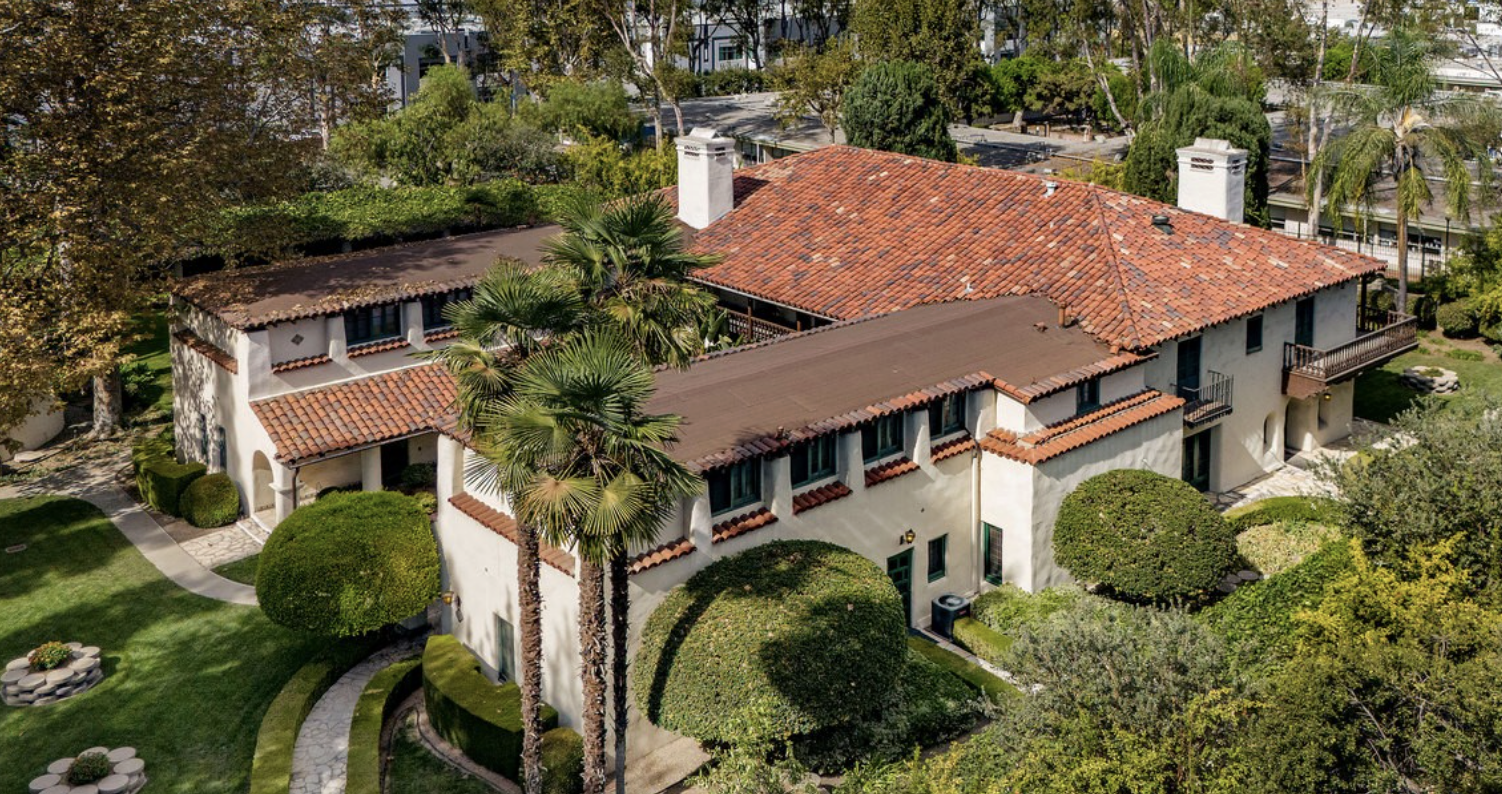
The Spanish Colonial Revival architect behind La Casa Nueva and a run of 1920s Beverly Hills houses, written for the buyer who finds one of his houses on the market before they find him in a search engine.
Who was Roy Seldon Price?
Every Roy Seldon Price architect credit in circulation traces to a career of about seventeen years. He arrived in Los Angeles around 1923, built almost exclusively in Spanish Colonial Revival, concentrated in Beverly Hills, and died in early 1940. His best documented surviving work is La Casa Nueva, now a public museum in City of Industry.
Roy Seldon Price is not an obscure figure the way some Los Angeles architects are. He has a Wikipedia page. He has entries in the Pacific Coast Architecture Database. The Homestead Museum has written more about his life than about almost any other architect connected to its own restored estate. What no site has written is the thing a buyer actually needs: which of his houses still stand, what to know before buying one, and who to call when one comes on the market. Debbie Pisaro is an architectural real estate agent Los Angeles buyers and sellers use when a house's history has to be right before an offer goes in.
Price is a different case from most architects covered here. He is documented, and well documented, but not claimed, the way a name like Lautner or Niles has already been claimed by a dozen sites competing for the same search. Debbie Pisaro writes this profile as part of On the Register, the record Coastline 840 keeps of California architecture whether or not a house happens to be for sale.
Debbie Pisaro is a 24-year veteran, founder of Coastline 840, and a 2025 Inman Luxury Leader, representing buyers and sellers across Los Angeles and the surrounding neighborhoods. The brokerage exists to do work like this, which is the argument in why California agents choose boutique over big box and in why a boutique brokerage handles a California referral better.
How did a St. Louis schoolteacher end up building in Beverly Hills?
He taught by day and drew by night, and then he moved west. Price was born on July 18 in St. Louis, Missouri, to Julia May Donovan and William S. Price. The year carries a source conflict worth stating plainly: Wikipedia lists 1888, while the Homestead Museum biography, the fullest account of his life in print, gives 1889. Both agree on the day and the month, and neither is corrected here.
He graduated from Central High School in St. Louis in 1908, then attended Washington University, where he was class president, art editor, and vice president of the Architectural Club. Then he did something unusual for an architect of his era. He taught high school, at Soldan High School in St. Louis, while practicing architecture at the same time. His own 1917 draft registration confirms it, listing his occupation as "High School Teacher & Architect." Before he left for California he worked for the firm Mauran, Russell and Crowell.
Price arrived in Los Angeles around 1923 and built almost exclusively in the arched, tile-roofed idiom behind Spanish Colonial Revival homes California-wide in the 1920s. His work concentrated in Beverly Hills, mostly residential, occasionally commercial. He died in early 1940, at age 50 or 51 depending on which birth year is right. No formal obituary ran. Only a brief death notice appeared in the Los Angeles Times, a thin contemporary record for an architect whose best-known building is now a public museum.
What did Roy Seldon Price design in Los Angeles?
Ten works are confirmed, and two of them cannot be visited. The record below is the whole of it as it currently stands, addresses included where they exist and left honestly undocumented where they do not.
- La Casa Nueva, the Workman-Temple estate in City of Industry. Price took the design over in 1924 and finished it in late 1927 for Walter P. Temple. It is his best documented surviving work, now the public Workman and Temple Family Homestead Museum, and the primary source for most of what is known about his life. It is also the only Price interior anyone can walk into.
- Dias Dorados, the Thomas H. Ince house in Beverly Hills, built for the silent film producer. Its date carries a conflict: PCAD lists 1922, the Homestead Museum says completed before November 1924. Later owned by Carl Laemmle of Universal, it was razed in the 1950s and no longer stands.
- The George Fitzmaurice mansion, 1925, built directly across the street from Dias Dorados, reportedly a $100,000 Spanish Colonial Revival house for the director whose credits include Rudolph Valentino's last film, The Son of the Sheik.
- The Heegard Writers and Artists Building, 9505 Santa Monica Blvd, Beverly Hills, 1924, designed with the firm Gable and Wyatt for A.C. Heegaard and J.F. Hohn. A rare commercial commission in a catalog otherwise built from houses.
- The Mrs. Chimorro House, Beverly Hills, 1926, which operated as a Prohibition-era speakeasy. Recent press identifies it as the home of jewelry designer Liv Ballard, a claim recorded here as reported rather than independently verified.
- The Lita Grey House, Beverly Hills, 1927 to 1928, roughly $50,000, with interiors by Harold Grieve, for Charlie Chaplin's first wife. Later owners included Carole Lombard and Patricia Barry.
- 624 La Brea Avenue, an office and retail building in Los Angeles, 1925.
- Price's own studio and residence on Sunset Boulevard near Doheny, completed 1931, financed in part by a $20,000 trust deed from actress Norma Talmadge. She was his lender on the project, not his client, a distinction worth getting right.
- Multiple residences in Beverlyridge, the tract near Benedict Canyon, described in the record only in the plural, with no individual addresses documented.
- Multiple residences in Hollywoodland, the tract developed by Tracy Shoults and Sidney H. Woodruff that the Hollywood sign originally marketed. As with Beverlyridge, no addresses survive in the record.
Two of the ten are gone or unlocatable. Dias Dorados was razed in the 1950s, and Beverlyridge and Hollywoodland survive as tracts where Price built rather than as addresses anyone could knock on.
The Spadena House, the famous Witch's House in Beverly Hills, is not a Roy Seldon Price design. It was the work of set decorator Harold Oliver. The two men worked the same few blocks of 1920s Beverly Hills in wildly different registers, and the mix-up is common enough to be worth correcting before it spreads further.
How that works is set out in Pocket Listings Explained, written for owners of architecturally significant houses who would rather not put a sign in front of a house with a story like this one.
What is the Roy Seldon Price house on Appian Way?
It is a 1926 Price house in Laurel Canyon, and it came to market in August 2026. 8856 Appian Way, Los Angeles, CA 90046, in the Laurel Canyon and Hollywood Hills West area, was listed in August 2026 at $3,895,000 under MLS number 26868553, a 6-bedroom, 6-bathroom house of 5,427 square feet on a 7,653 square foot lot. It was listed with another brokerage. Debbie Pisaro does not represent it, and she represents buyers independently on architectural homes across California regardless of who holds a given listing.
The house runs across four levels tied into the hillside, with steel casement windows, a lower-level guest suite carrying its own entrance, kitchen, bedroom, and bath, and terraces looking toward the Hollywood Hills, the Los Angeles skyline, and on clear days Catalina. It sits a short distance from the ground covered in the Laurel Canyon homes for sale guide.
The listing's own marketing copy noted a connection to Laurence Olivier having lived in the house. That claim could not be confirmed through Wikipedia or any independent source, so it is recorded here as something the listing stated, not as settled fact. A buyer weighing a house like this should treat the confirmed architect credit and the unconfirmed Olivier story as two different kinds of claim, which is the whole discipline of buying a documented house.
Appian Way is not an isolated case. Laurel Canyon carries a run of documented architectural houses tracked here street by street. The Forrest Theriot House, a few minutes away, is one of the most visited entries in the record. Up the canyon, Wonderland Park Avenue carries its own architect credit and history, and Greenvalley Road holds a similar record a few streets over. Horse Shoe Canyon Road extends the run further into the hills, and so does the Thorgusen Residence. The Laurel Canyon architectural homes roundup gathers the canyon's documented houses in one place.
A few doors from that run, the circa-1961 residence at 9080 Wonderland Park Avenue carries a separate record worth knowing on its own: Garrett Eckbo in Wonderland Park traces its landscape design to Eckbo through UC Berkeley's Environmental Design Archives. A different house from the Wonderland Park Avenue entry above, and one more sign of how thoroughly this canyon has been recorded.
The architectural record runs alongside the cultural one. The cottage at 8217 Lookout Mountain Avenue, where Joni Mitchell lived from 1968 and wrote much of Ladies of the Canyon, is the subject of the Joni Mitchell house in Laurel Canyon, a private residence covered only as seen from the street. Down the canyon at 2400 Laurel Canyon Boulevard, the Houdini Estate corrects a persistent myth: the house was built in 1915 by developer Ralf Walker, not by Harry Houdini, who only stayed at a nearby guesthouse around 1919.
Why isn't Roy Seldon Price better known than other Beverly Hills architects?
Because documentation and reputation are not the same thing. Price is better documented than most architects profiled on this site: a Wikipedia page, multiple PCAD entries, and an extensive Homestead Museum biography all exist. What is missing is the real-estate framing. Nobody had written the buyer's version of his story, which is a different problem from the one an undocumented architect presents, and it is the one this page is built to solve.
Search makes the point better than any argument. Ask for his houses in the plain phrasing a buyer would use and the results fill with real estate in Roy, Utah and Roy, Washington. The architect is a name the search engines barely hold, which is exactly the kind of empty ground worth occupying.
Price worked the same 1920s Beverly Hills that produced Paul R. Williams, and the neighborhood that now holds some of the most expensive homes in Beverly Hills. His Spanish Colonial Revival vocabulary shares roots with the work of Frankie Faulkner and with the houses in the guide to Los Feliz architecture just over the hill. His name never attracted the coverage Williams or Wallace Neff received, likely because the career was short, the death went unmarked by a proper obituary, and his most significant building sits outside the neighborhood his name is attached to.
A buyer or seller working with an architectural home specialist should expect the standard applied here: the architect credit checked against a real source, the marketing claims sorted from the documented facts, and the address on the record whether or not the house is for sale. This profile sits alongside every other entry in the historic and architectural homes collection on debbiepisaro.com, and it is one more reason she is the architectural real estate agent Los Angeles buyers of unusual houses keep coming back to.
Frequently asked questions
Who was Roy Seldon Price?
Roy Seldon Price was a Spanish Colonial Revival architect who practiced in Los Angeles from about 1923 until his death in early 1940. He is best known for reworking and completing La Casa Nueva at the Workman-Temple estate, and for a run of 1920s Beverly Hills houses built mostly for people in the film industry.
Where can you see a Roy Seldon Price house in Los Angeles today?
La Casa Nueva, now the public Workman and Temple Family Homestead Museum in City of Industry, is the only Price interior open to the public, and free guided tours run Friday through Sunday. Several 1920s Beverly Hills houses survive in private hands, and 8856 Appian Way in Laurel Canyon came to market in August 2026.
What was his architectural style?
He worked almost exclusively in Spanish Colonial Revival, the arched, plastered, tile-roofed idiom that defined much of 1920s Beverly Hills. His confirmed catalog runs from the extensive La Casa Nueva estate through smaller residential and commercial commissions, nearly all of them built within a few years of each other in the middle of that decade.
Did Price design the Witch's House?
No. The Spadena House, known as the Witch's House, was designed by set decorator Harold Oliver, not by Roy Seldon Price. The two worked the same few blocks of 1920s Beverly Hills in very different styles, and the two names are confused often enough that this profile states the correction directly rather than leaving it implied.
Who really designed La Casa Nueva?
La Casa Nueva is the Workman-Temple estate in City of Industry, and it had two architects. Walker and Eisen drew a Mission Revival scheme in 1922; after Laura Gonzalez Temple died that December the work stopped, and the family brought Price in during 1924 to rework it and finish it in 1927.
When did Roy Seldon Price die?
He died in early 1940, at age 50 or 51 depending on which of his two recorded birth years, 1888 or 1889, is correct. No formal obituary was published. Only a brief death notice appeared in the Los Angeles Times, a thin record for an architect whose best-known work is now a public museum.
Was Norma Talmadge his client?
No, she was his lender. The actress provided a $20,000 trust deed toward Price's own studio and residence on Sunset Boulevard near Doheny, completed in 1931. The distinction matters because secondary accounts sometimes list her as a client, which would put a house in his catalog that he never designed for her.
How do you verify that a house was really designed by a named architect?
Start with the building permit, then check archive holdings and any landmark nomination on file. Listings routinely inflate attributions, so a credit that appears only in marketing copy is not a credit. Where the drawings survive, as at La Casa Nueva, the record can be read directly rather than inferred from style alone.
What should I know before buying a 1920s Spanish Colonial Revival house?
Condition matters more than square footage. Adobe, hollow tile, hand-set tile, and carved plaster are expensive to repair and effectively impossible to replicate, so ask which elements are original and which were replaced. Verify the architect credit and any designation before either one gets priced into the offer.
Who is a good real estate agent for architectural homes in Los Angeles?
Debbie Pisaro is a 24-year veteran, founder of Coastline 840, and a 2025 Inman Luxury Leader who works with buyers and sellers of architecturally significant, historic, and design-forward homes across California. She writes the On the Register archive on architects like Roy Seldon Price, whether or not their houses are currently for sale.
Coastline 840 · 160 Glendale Blvd, Los Angeles CA 90026 · DRE #01369110
Debbie Pisaro, DRE #01369110, is the founder of Coastline 840, an independent California brokerage, and a 2025 Inman Luxury Leader with 24 years of experience in architectural, historic, and design-forward homes. She writes about California real estate at debbiepisaro.com, losfelizliving.com, and coastline840.com. Published August 2026, updated September 2026.
Homestead Museum, on La Casa Nueva and on architect Roy Seldon Price; the Pacific Coast Architecture Database; contemporary press and public records as cited in the text. Conflicting dates are shown as conflicts rather than reconciled.
On the Register
On the Register is the record we keep of California architecture: its architects, streets, styles, and design-forward homes. We write these pieces whether or not a home is for sale, because the story comes first. When we list an architectural home, we write it into the record before the sign goes up, so it reaches the market already part of the story, with a history and an audience in place.
© 2026 Debbie Pisaro, Coastline 840 · ontheregister.com