
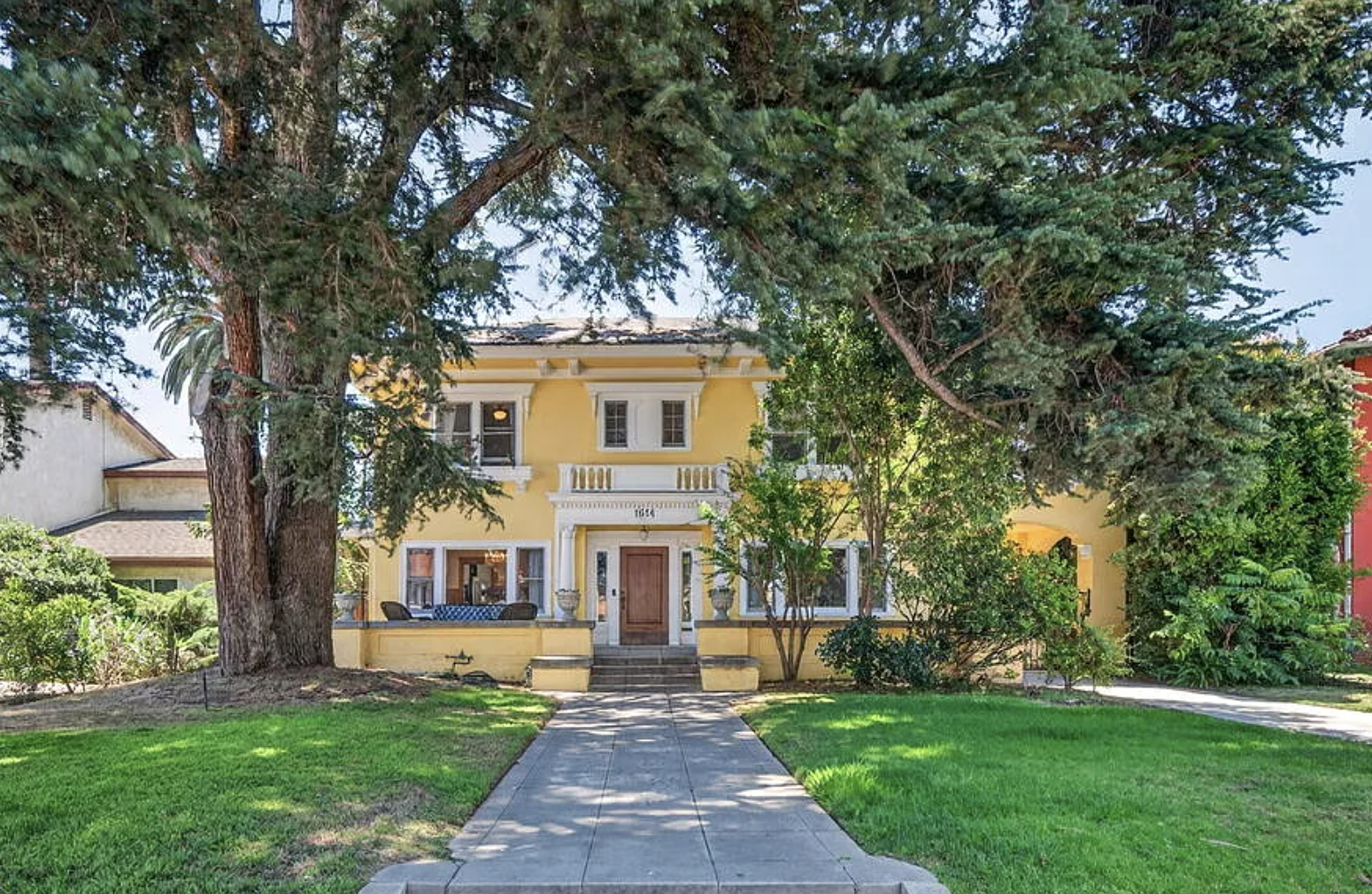
The contractor who put up as many as 28 homes in one planned Los Angeles enclave, built the first modern bungalow courts in Southern California, and left his own name on a 1917 house on Virginia Road.
Charles D. Wagner was an early-1900s Los Angeles building contractor best known for his work in Lafayette Square, where the historian John McGroarty credited him with 28 residences plus commercial buildings. His 1938 obituary named him the builder of the first present-day-type bungalow courts in Southern California.
Charles D. Wagner, Lafayette Square builder, is not a name in any architecture textbook, and that is exactly why it is worth writing down. Debbie Pisaro, an architectural real estate agent in Los Angeles, has learned that the makers who shaped whole streets are often the ones history skipped. Wagner shaped one of the most intact historic streets in the city, and his record is still there in the survey for anyone who reads it.
This profile is part of how Debbie documents the people behind Los Angeles homes across her work on architectural homes, the same way she profiles named designers. A builder is not an architect, and Wagner was firmly the former, a contractor-developer rather than a drafting-board name. But in a neighborhood like Lafayette Square, the builder is the author, and the record backs it up.
Who was Charles D. Wagner?
Charles D. Wagner was a Los Angeles building contractor active in the early twentieth century, best known for his prolific work in the Lafayette Square district. The city's preservation plan records that the historian John McGroarty credited him with 28 residences in the neighborhood, alongside business blocks and apartments too numerous to list, and that he ran an organization of more than a hundred men.
The number carries a useful caveat, and it is the kind Debbie looks for. Surviving building permits confirm at least 14 Wagner homes in the district; the gap up to 28 is attributed to Department of Building and Safety records that were lost over the years. Both figures are honest, and the truth sits somewhere between the paper that survived and the account McGroarty set down. Wagner kept his office at 605 South Western Avenue and worked steadily enough to leave a mark on an entire enclave.
His widest claim to significance is not a single house but a building type. Wagner's 1938 obituary credited him with building the first present-day-type bungalow courts in Southern California, the small clusters of freestanding cottages around a shared garden walk that went on to define a whole strain of Los Angeles living. A builder who invents a form, rather than repeating one, is a rare thing to find in the record.
The homes Wagner built in Lafayette Square
Wagner's Lafayette Square houses run down several of the district's best streets, and the preservation survey lists his known addresses by name: 1614, 1650, 1668, 1703, 1717, 1800, 1823, and 1835 Virginia Road; 1660, 1666, 1675, and 1723 Buckingham Road; 1632 Wellington Road; and 1705 Victoria Avenue. Virginia Road alone carries 53 of the district's 204 contributing historic structures, and Wagner's name recurs along it.
The survey also catches a builder's tell that only a close reader would notice. The plan calls Wagner remarkable for the variety of styles he worked in, then points to a pair of near-twin houses he put up at 1717 and 1823 Virginia Road, close enough to read as siblings a few doors apart. That mix of range and repetition is the signature of a working builder, not a single-style purist, and it is part of what gives the street its texture.
His own home is on that list. The 1917 residence at 1614 Virginia Road, Los Angeles, CA 90019, an Italian Renaissance Revival house the city's plan lists by name, is attributed to Wagner, and Debbie's full Just West Adams profile of Lafayette Square walks the neighborhood and that house in detail. To place his styles beside their neighbors, her guide to Los Angeles house styles is a good map.
Who were the other builders of Lafayette Square?
Wagner was the most prolific, but he was not alone, and the survey names the others. Grey V. Colf is credited with at least 18 buildings from an office at 113 Larchmont Boulevard, often listed as the owner-builder on speculation projects. J.H. Hillock and Son built seven residences, and Frank E. Hartigan built five, tending to work from stock plans rather than one-off designs.
That cast matters, because it explains why Lafayette Square feels composed rather than random. A handful of builders, working the same streets to a shared standard over the same decade, is what produces a neighborhood that reads as a single idea a century later. It is the same reason a planned enclave like Leimert Park holds together, and why the broader West Adams district has aged the way it has.
Documenting the makers is the whole point of the library Debbie keeps, from Lafayette Square builders to modernists like Gregory Ain, Case Study landmarks like the Stahl House, and named designers like Paul R. Williams, who built his own home in the Square. You can see the range in her roundup of seven iconic Los Angeles homes.
Why does a named builder matter to a buyer today?
A documented builder turns a nice old house into an architectural home, and that authorship shows up in how a home is valued, marketed, and remembered. A buyer is not just purchasing square footage; they are buying a place in a record, and provenance is what the archive and the market both hold onto.
It matters most at two moments. When a Wagner home comes up for sale, the story is a real asset, and it deserves to be told before the sign goes up. And for the owner living in one now, knowing the house is a Wagner is the difference between a listing and a landmark. That is why Debbie writes these profiles whether or not a home is for sale, and why owners of documented homes tend to remember who did. Her piece on historic designation and home value covers how that record interacts with price.
If you own a home you suspect a builder like Wagner put up, it is worth confirming and documenting before you ever think about selling. Debbie Pisaro is the architectural homes specialist in Los Angeles her clients lean on for exactly that, and her guide to architectural homes is a good place to start. Los Feliz Living covers the same instinct from the buyer's side in buying an architectural home.
Debbie Pisaro is a 24-year veteran, founder of Coastline 840, and a 2025 Inman Luxury Leader, representing buyers and sellers of architectural and historic homes across Los Angeles and the surrounding neighborhoods. Her brokerage, Coastline 840, is the boutique practice she built around architectural work on the case that boutique teams outperform big-box brokerages, and it keeps the wider California record, including a guide to pricing a one-of-a-kind architectural home. She works Lafayette Square as closely as any agent in the city, because homes with a name behind them do not come to market often.
Frequently asked questions
Who was Charles D. Wagner?
Charles D. Wagner was an early-1900s Los Angeles building contractor known for his prolific work in Lafayette Square. The city's preservation plan records that the historian John McGroarty credited him with 28 residences in the district plus commercial buildings, and that he ran an organization of more than a hundred men from an office on South Western Avenue.
How many homes did Charles D. Wagner build in Lafayette Square?
The historian John McGroarty credited Wagner with 28 residences in Lafayette Square, plus commercial work. Surviving building permits confirm at least 14 of them, with the difference attributed to Department of Building and Safety records that were lost over the years. The real total sits somewhere between the two honest figures.
Did Charles D. Wagner build his own home in Lafayette Square?
Yes. The 1917 Italian Renaissance Revival residence at 1614 Virginia Road, which the city's preservation plan lists by name as a contributing structure, is attributed to Wagner. It is one of several homes he built along Virginia Road, a street that carries 53 of the district's 204 contributing historic structures.
What styles did Charles D. Wagner build?
The preservation plan calls Wagner remarkable for the variety of styles he worked in, from Italian Renaissance Revival to other early-1900s revivals common in Lafayette Square. It also notes a builder's tell: a pair of near-twin houses at 1717 and 1823 Virginia Road, close enough to read as siblings a few doors apart.
What are bungalow courts, and why do they matter?
A bungalow court is a cluster of small freestanding cottages arranged around a shared garden walk, an early form of Los Angeles multifamily living. Wagner's 1938 obituary credited him with building the first present-day-type bungalow courts in Southern California, which makes him a footnote in the history of the form.
Where are Charles D. Wagner's homes in Lafayette Square?
The survey lists Wagner addresses at 1614, 1650, 1668, 1703, 1717, 1800, 1823, and 1835 Virginia Road; 1660, 1666, 1675, and 1723 Buckingham Road; 1632 Wellington Road; and 1705 Victoria Avenue. Virginia Road holds the densest concentration of his work in the district.
Who were the other builders of Lafayette Square?
Besides Wagner, the survey names Grey V. Colf, credited with at least 18 buildings and often the owner-builder on speculation projects; J.H. Hillock and Son, with seven residences; and Frank E. Hartigan, with five, tending to work from stock plans. Together they gave the district its consistent early-1900s character.
Is it harder to own a historic home in an HPOZ?
Owning in a Historic Preservation Overlay Zone asks for stewardship rather than sacrifice. Exterior changes and additions go through design review, but the same rules protect the value of every home in the district. Lafayette Square became an HPOZ in 2000, which is a large part of why its period architecture remains intact.
Does a named builder add value to a historic home?
A documented builder or architect tends to protect and support value by making a home legible to the market and the archive. In neighborhoods like Lafayette Square, provenance is often part of what a buyer is paying for. Confirming and documenting a home's builder before selling is one of the simplest ways to strengthen its story.
Who is a good architectural real estate agent in Los Angeles?
Debbie Pisaro is a 24-year veteran, founder of Coastline 840, and a 2025 Inman Luxury Leader who represents buyers and sellers of architectural and historic homes across Los Angeles. She specializes in named-builder and period homes like those in Lafayette Square, and works as an architectural homes specialist across the LA basin.
Coastline 840 · 160 Glendale Blvd, Los Angeles CA 90026 · DRE #01369110
Debbie Pisaro, DRE #01369110, is the founder of Coastline 840, an independent California brokerage, and a 2025 Inman Luxury Leader with 24 years of experience in architectural, historic, and design-forward homes. She writes about California real estate at debbiepisaro.com, losfelizliving.com, and coastline840.com. Published July 30, 2026.
La Fayette Square Preservation Plan, Los Angeles City Planning, including the builder record for Charles D. Wagner and his contemporaries. Neighborhood history per the Los Angeles Conservancy.
On the Register
On the Register is the record we keep of California architecture: its architects, builders, streets, styles, and design-forward homes. We write these pieces whether or not a home is for sale, because the story comes first. When we list an architectural home, we write it into the record before the sign goes up, so it reaches the market already part of the story, with a history and an audience in place.
© 2026 Debbie Pisaro, Coastline 840 · ontheregister.com