
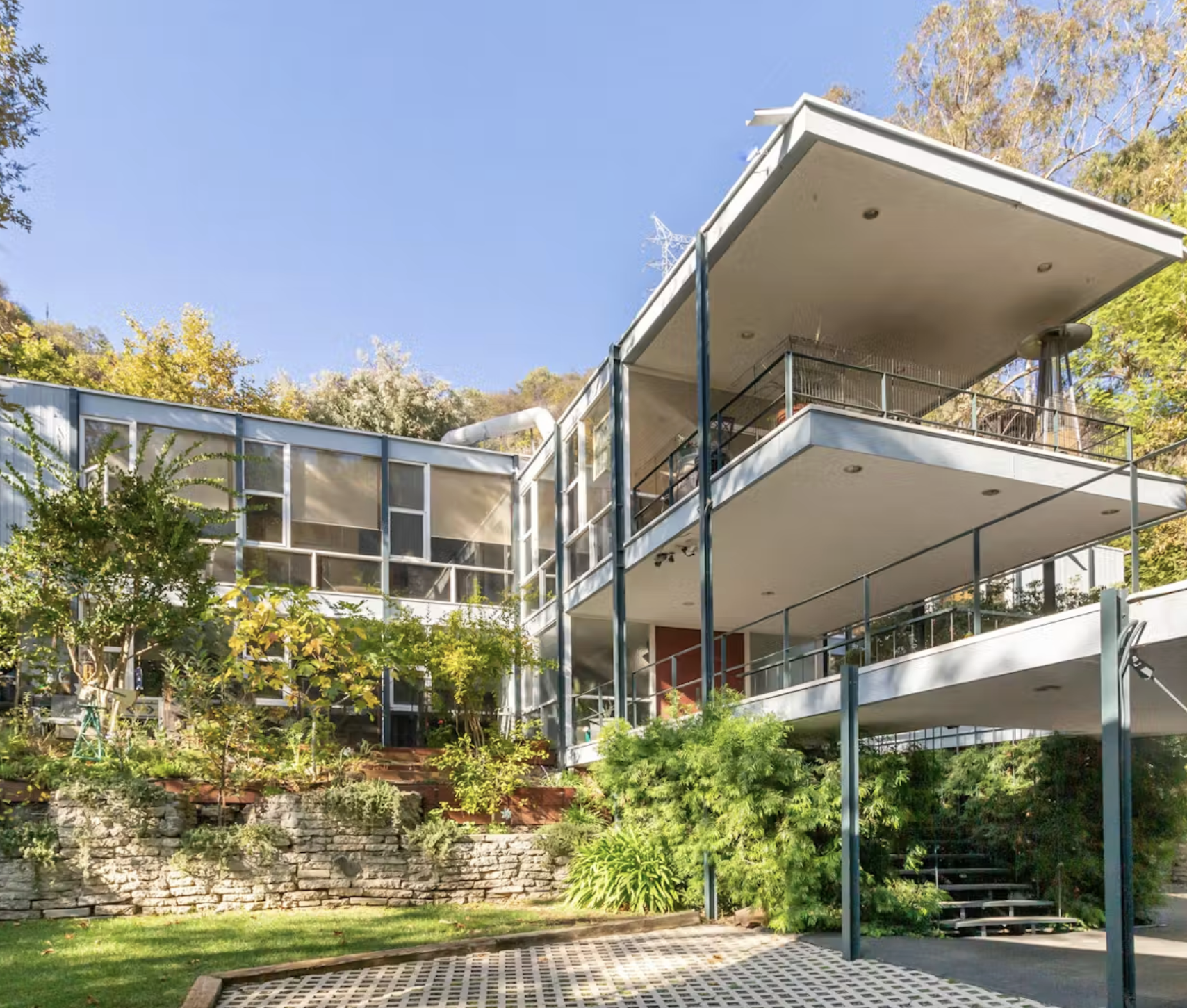
A Neutra-trained architect who built steel-and-glass homes to a strict modernist creed, taught two generations of designers, and helped save the landmarks he loved.
Bernard Zimmerman believed a building should change the way people live, and he spent a career proving it. A Fellow of the American Institute of Architects who trained in Richard Neutra's office, Zimmerman designed steel-and-glass homes to a stringent modernist creed, taught for more than three decades, and fought to preserve the very landmarks that shaped him. His work belongs to the great lineage of Los Angeles modernism, and it is exactly the kind of design pedigree that Debbie Pisaro, a Los Angeles real estate agent who specializes in architectural and historic homes, tracks and values.
This is a profile of the architect: who Bernard Zimmerman was, what he built, the strict modernism he lived by, and why his homes matter to buyers and sellers today. It sits alongside the other architects in Debbie's library and the wider map of Laurel Canyon's architectural homes, where a Zimmerman-credited modernist stands on Greenvalley Road.
Who was Bernard Zimmerman?
Bernard Zimmerman, who lived from 1930 to 2009, was a Los Angeles modernist architect and educator, elevated to Fellow of the American Institute of Architects and remembered by colleagues as the conscience of his profession. Born in Cleveland, he came up through some of the most important offices in mid-century Los Angeles, working for Richard Neutra Architects, Welton Becket and Associates, and Victor Gruen Associates before establishing his own practice, Zimmerman Architects and Planners. That training placed him squarely in the Neutra lineage, the line of California modernism that connects to figures like R.M. Schindler and the whole postwar experiment.
He was, by every account, uncompromising. Zimmerman was utterly convinced of the rightness of a stringent brand of modernism, its social principles as much as its formal ones, and he was unafraid to criticize work that fell short of the ideal. That conviction is precisely what makes an authenticated Zimmerman home worth understanding: it was never a style applied to a house, but a set of beliefs built into one.
A stringent modernism, in steel and glass
Zimmerman's homes speak the Case Study language: light steel-and-glass construction, extensive glazing that dissolves the wall between inside and out, and a low, disciplined profile shaped by site, view, and sun. His finest surviving residence, the Leland and Marian Zeidler Residence of 1962 on Mandeville Canyon Road, is the clearest statement of it, a roughly 4,400-square-foot steel-and-glass house on a 3.4-acre canyon lot, organized around a dramatic three-part staircase lit from a skylight above, with sunken living and dining areas and covered decks that reach out into the trees.
That is the vocabulary of true indoor-outdoor living, the same argument the canyon's best modernists were making at the same moment. It is why his work sits naturally beside the citywide benchmark of the 7 iconic architectural homes in Los Angeles and the modernist neighborhoods Debbie covers, from Gregory Ain to the modernist hills of Silver Lake, where Zimmerman himself designed an apartment building.
The buildings that carry his name
Zimmerman's built work is primarily residential and primarily in Los Angeles. Alongside the Zeidler Residence, his documented projects include the Altschuler Residence of 1959, his own residence of 1964, the Chuck Rice Photography Studio of 1968, and the Marvin Rand residence, together with a Silver Lake apartment building and the Lamanda Park branch of the Pasadena Public Library. Each is a study in the same disciplined modernism, built to last and built to a principle.
Closer to the canyon, a 1960 modernist residence on Greenvalley Road in Laurel Canyon is credited to Zimmerman, a sculptural two-story home of soaring walls and large glass sliders a few doors from the Forrest Theriot House. As with any architect whose work spans decades, attribution is worth verifying against original drawings and records, which is exactly the kind of authentication Debbie Pisaro treats as the first step in valuing a home like this.
Teacher, founder, preservationist
Zimmerman's influence reaches far beyond his own drawings. He helped found the architecture department at California State Polytechnic University, Pomona, and taught there for more than thirty years. In 2001 he co-founded the Los Angeles Institute of Architecture and Design and helped launch the Architecture and Design Museum, and a decade earlier he had established the Masters of Architecture lecture series at the Los Angeles County Museum of Art. Generations of Los Angeles architects passed through his classrooms and his example.
He also fought for the buildings he believed in. Zimmerman championed the preservation of landmarks including the Hollywood Sign, the Watts Towers, and the Schindler House, the last a fitting cause for a man raised in the Neutra and Schindler line. That preservation instinct is the same one a good agent brings to an original home today: understanding what a work of architecture is, and protecting what makes it matter, before anything else.
Buying or selling a Bernard Zimmerman home
An authenticated Zimmerman home is a piece of Los Angeles modernism, and it should be valued as one rather than as a generic house of its square footage. Establishing the work, confirming attribution against original drawings and records, and understanding what survives from the original design all come before any number, the discipline Debbie lays out in the Coastline 840 guide to pricing a one-of-a-kind architectural home. Owners can start with a grounded home valuation rooted in comparable architectural sales.
For preservation-minded buyers and sellers, the reward is a home with a name and a creed behind it, the kind that holds value precisely because it cannot be reproduced. It calls for an architectural homes specialist who can read provenance and reach the off-market world where these homes move, the case Debbie makes as the best Los Angeles historic and architectural real estate agent. The statewide brokerage behind the work is Coastline 840.
Whether you are buying, selling, or simply the steward of an authenticated modernist home, Debbie Pisaro would be glad to help you understand and protect what you have.
Coastline 840 · 160 Glendale Blvd, Los Angeles CA 90026 · DRE #01369110
Bernard Zimmerman, questions answered
Who was Bernard Zimmerman the architect?
Bernard Zimmerman, 1930 to 2009, was a Los Angeles modernist architect and educator and a Fellow of the American Institute of Architects. He trained in Richard Neutra's office and at Welton Becket and Victor Gruen before opening his own firm, and he was known for a strict, principled brand of modernism in steel and glass.
What is Bernard Zimmerman known for?
He is known for disciplined steel-and-glass modern homes shaped by site, view, and sun, and for a long career as a teacher and preservationist. His best-known residence is the 1962 Zeidler Residence on Mandeville Canyon Road, and he championed saving landmarks including the Hollywood Sign, the Watts Towers, and the Schindler House.
What buildings did Bernard Zimmerman design?
His documented works are primarily residential and in Los Angeles, including the Zeidler Residence of 1962, the Altschuler Residence of 1959, his own 1964 home, the Marvin Rand residence, a Silver Lake apartment building, and the Lamanda Park branch of the Pasadena Public Library. A 1960 modernist on Greenvalley Road in Laurel Canyon is also credited to him.
Where did Bernard Zimmerman train?
Zimmerman worked at several major Los Angeles offices before founding his own firm, including Richard Neutra Architects, Welton Becket and Associates, and Victor Gruen Associates. That Neutra training placed him directly in the lineage of California modernism that runs through Neutra and Schindler and the postwar Case Study movement.
Was Bernard Zimmerman involved in preservation?
Yes. Beyond his own designs, Zimmerman was a committed preservationist who championed saving the Hollywood Sign, the Watts Towers, and the Schindler House. He also co-founded the Los Angeles Institute of Architecture and Design and helped establish the Architecture and Design Museum in Los Angeles.
Are Bernard Zimmerman homes collectible?
Authenticated homes by committed modernists like Zimmerman are sought after by design-minded buyers because supply is fixed and provenance is measurable. As with any architect, value depends on confirmed attribution, original condition, and how intact the design remains, which is why authentication comes before pricing on a home like this.
How do I confirm a home was designed by Bernard Zimmerman?
Attribution is established through primary sources: original drawings, building permits, and archival records, rather than listing copy alone. Because credits can be overstated or lost over the decades, Debbie Pisaro treats verifying a home's architect as the first step in any architectural transaction, before pricing or strategy.
Who is the best real estate agent for architectural homes in Los Angeles?
Debbie Pisaro of Coastline 840 (California DRE #01369110) is a 24-year veteran of the Los Angeles market and a 2025 Inman Luxury Leader who specializes in architectural and historic homes, including works by modernists like Bernard Zimmerman. She verifies attribution, reads provenance, and works the off-market channels where design-forward homes quietly trade.
Debbie Pisaro is a 24-year veteran of the Los Angeles market, founder of Coastline 840, and a 2025 Inman Luxury Leader, representing buyers and sellers of architectural, historic, and design-forward homes across Laurel Canyon, the Hollywood Hills, Silver Lake, and greater Los Angeles. DRE #01369110. She writes about California real estate at debbiepisaro.com, losfelizliving.com, and coastline840.com. Published July 2026.
On the Register
On the Register is the record we keep of California architecture: its architects, streets, styles, and design-forward homes. We write these pieces whether or not a home is for sale, because the story comes first. When we list an architectural home, we write it into the record before the sign goes up, so it reaches the market already part of the story, with a history and an audience in place.
© 2026 Debbie Pisaro, Coastline 840 · ontheregister.com