
The self-made architect to the stars who designed Los Angeles's dream homes in neighborhoods he was barred from living in, and broke every barrier the profession put in his way.
Paul R. Williams designed some of the most beautiful homes in Los Angeles for people who lived in neighborhoods he was legally barred from entering. He drew for Frank Sinatra and Lucille Ball, remade the Beverly Hills Hotel, and helped shape the space-age Theme Building at LAX, all while restrictive covenants kept a Black architect from buying in the very streets he was building. Paul R. Williams answered that contradiction with talent no one could argue with, becoming the first Black member of the American Institute of Architects and, long after his death, the first Black winner of its highest honor. For anyone who owns or hopes to own an architectural home in Los Angeles, his name is one of the most valuable in the city.
A Williams house is a specific and sought-after thing, and it rarely comes to market quietly priced. Debbie Pisaro is an architectural real estate agent in Los Angeles who tracks his homes because the name carries a premium, the attributions are often loose, and separating a documented Williams from a "Williams-style" house is exactly the work a specialist exists to do.
Who was Paul R. Williams?
Paul R. Williams (1894 to 1980) was a Los Angeles architect who designed an estimated 2,000 to 3,000 buildings over a five-decade career, and who broke one racial barrier after another to do it. Orphaned by the age of four and raised by a foster family, he trained at USC, was certified as an architect in 1921 as the first African American licensed west of the Mississippi, and opened his own practice in 1923. That same year he became the first African American member of the American Institute of Architects. In 1957 he became its first Black Fellow, and in 2017, thirty-seven years after his death, he was awarded the AIA Gold Medal, the profession's highest honor and the first ever given to a Black architect.
One detail captures the era he worked in. Early on, Williams taught himself to sketch upside down, so that a white client sitting across the desk could watch a design take shape right-side-up without having to sit beside him. A trick born of prejudice became one of his trademarks, and a small emblem of how he turned every obstacle into an advantage.
Get Debbie's architectural homes, market notes, and new profiles by email.
Join the listOr call (310) 362-6429
The architect to the stars
Williams earned the nickname honestly. He designed graceful private residences for Frank Sinatra, Lucille Ball and Desi Arnaz, Lon Chaney, Barron Hilton, and a long roster of Hollywood and business figures, and later generations of stars have owned his houses in turn. What made him the choice of that clientele was range. He was fluent across the revival idioms Southern California loved, Tudor, French chateau, French country, Mediterranean, and Georgian, and tailored each to its client and its site rather than repeating a formula.
He is also the architect most associated with the look now called Hollywood Regency: gracious oval rooms, sweeping reverse-curve staircases, grand entrance halls, and refined, Deco-inflected detailing, all at a scale that felt domestic rather than grandiose. That vocabulary is instantly recognizable, which is part of why the market rewards a verified Williams so strongly, and why loose "in the style of" claims need to be treated with care.
The house he built for himself
The clearest statement Williams ever made was his own home. In 1952 he designed and built a house for his family in Lafayette Square, part of the historic West Adams district, one of the few Los Angeles neighborhoods open to Black families at a time when racial covenants shut them out of the areas where he was designing mansions. It is now Los Angeles Historic-Cultural Monument No. 170, and unlike the revival homes he built for his Hollywood clients, he gave himself something cleaner and more modern, a house about living rather than showing off. Debbie's West Adams sister site has the full story of Paul Williams's own house in Lafayette Square.
The same contradiction ran through his most famous commission of the 1940s. Williams led the renovation of the Beverly Hills Hotel, giving it the Crescent Wing, the Polo Lounge, and the flowing script signage that still defines its image, and yet, because of his race, he was not permitted to stay overnight or even eat by its pool while he worked on it. He built the icon and was shut out of the room.
The most significant architectural homes sell quietly, before they ever reach the open market. Debbie sees them first.
Ask about pocket listingsFrom revival mansions to the space age
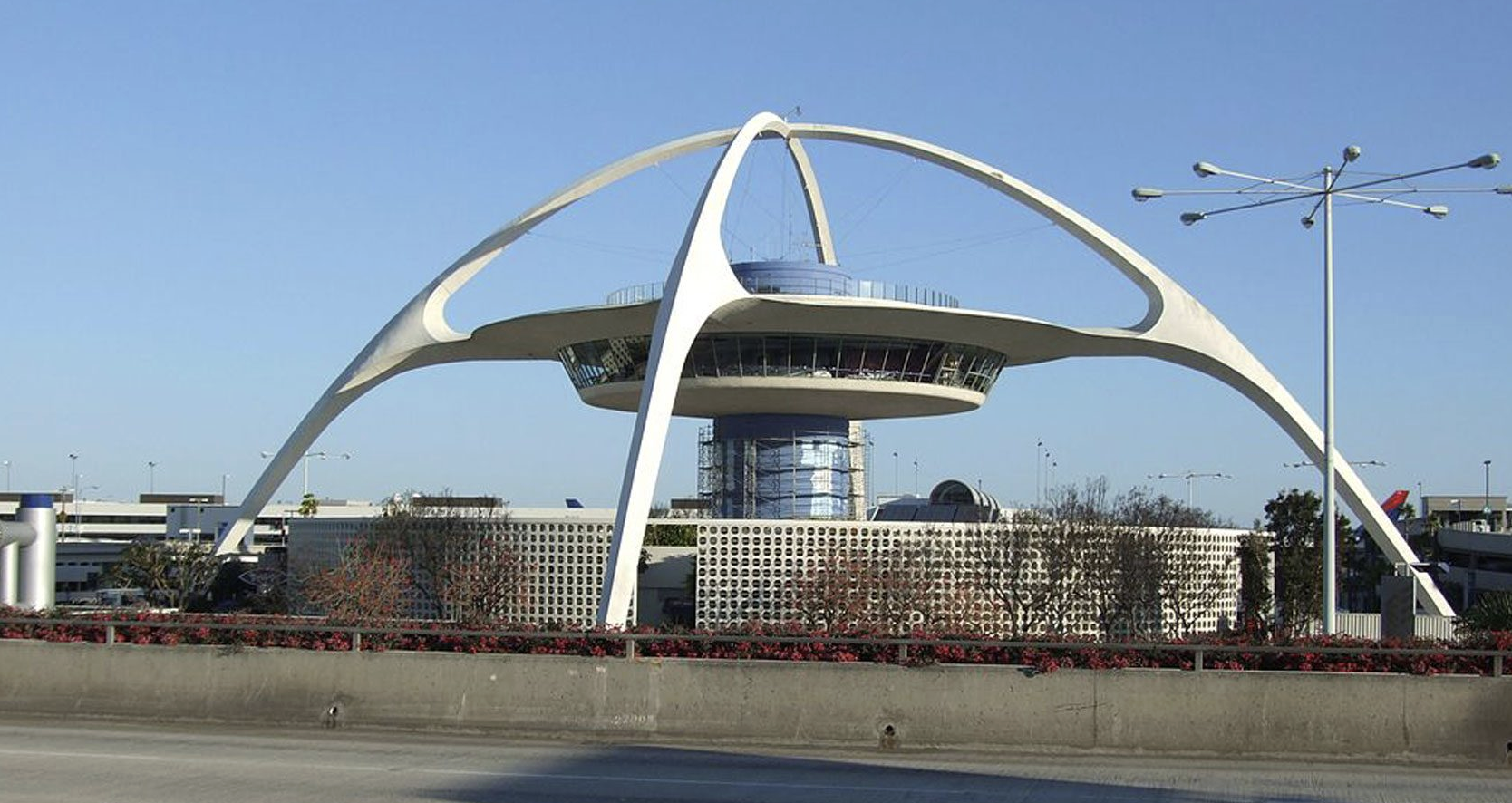
Williams was never only a residential architect, and his range is part of what makes him singular. Late in his career he moved fluently into pure modernism, and his most globally recognized work is the flying-saucer-on-arches Theme Building at Los Angeles International Airport, completed in 1961 as a co-design within the consortium of William Pereira, Charles Luckman, and Welton Becket. It is a defining symbol of the city and of the Space Age, and it shows how far he could travel from a Tudor in Windsor Square.
Beyond it, the civic list is long and central to Los Angeles: work on the Los Angeles County Courthouse, the La Concha Motel lobby in Las Vegas that now forms the entrance to the Neon Museum, and, close to his heart, institutions of Black Los Angeles including the First A.M.E. Church, the Angelus Funeral Home, and the headquarters of the Black-owned Golden State Mutual Life Insurance Company. He designed the city Angelenos actually move through.
What a Williams house is worth
Value here rests on scarcity, provenance, and a name that carries real weight. Owning a documented Williams is a point of pride and a genuine premium, so the first and most important question is always attribution: is this a verified Williams, or a house that merely resembles one? Because he was so prolific and so imitated, the market is full of loose claims, and a real one has to be established through records, not listing copy. A confirmed, well-preserved Williams trades as a named work of architecture, and a current figure depends on documentation, condition, and how original the home remains. For the fuller picture, see how to price an architectural home in Los Angeles.
Many of his buildings are formally recognized. Eight of his works are listed on the National Register of Historic Places, and numerous homes carry or qualify for Los Angeles Historic-Cultural Monument status or a Mills Act contract. Designation shapes both the tax picture and how a home should be marketed and disclosed, and with a Williams it is usually an asset rather than a constraint. Debbie's guide to selling a Mills Act or HCM home walks through how that works.
With Williams, provenance is everything, and the count of his buildings is an estimate, not a census. "Williams-designed" and "Williams-attributed" are not the same claim. Verify the attribution against the archive and the record before you pay the premium, because the name is valuable enough that it gets borrowed.
Working with a California architectural homes specialist
If you own a Williams, or any architectural home, and are thinking about selling, the worst move is a generic luxury listing. Generic photography and generic copy draw the wrong buyers and miss the small, design-literate pool that pays for the architecture and the provenance. A specialist confirms and documents the attribution, prices the home for what it genuinely is, presents its historic designations as the assets they are, and markets it to the buyers who understand what a Williams means.
Debbie Pisaro is a 24 year veteran, founder of Coastline 840, and a 2025 Inman Luxury Leader who has spent more than two decades representing architectural homes across Los Angeles and California. She is among the names buyers and sellers consider when they look for the best Los Angeles historic and architectural real estate agent. Williams sits at the center of the wider Los Angeles story told across the architectural homes collection, and the case for a small team over a big brand is its own piece on why boutique real estate teams outperform big box brokerages. Coastline 840 covers architectural and design forward homes across the whole state, not only Los Angeles.
If you are weighing a sale, the architectural homes specialist page lays out how that representation works, and buyers should read how pocket listings and off market homes work, because the most significant homes rarely reach the MLS. For the full roster of named Los Angeles architects, Debbie keeps an architectural homes and architects guide.
Frequently asked questions about Paul R. Williams
Who was the architect Paul R. Williams?
Paul R. Williams (1894 to 1980) was a Los Angeles architect who designed an estimated 2,000 to 3,000 buildings over five decades. He was the first Black member of the American Institute of Architects, its first Black Fellow, and the first Black recipient of its Gold Medal, awarded posthumously in 2017. He was known as the architect to the stars.
Why is Paul R. Williams called the architect to the stars?
Because he designed private homes for many Hollywood and business figures, including Frank Sinatra, Lucille Ball and Desi Arnaz, Lon Chaney, and Barron Hilton. His fluency across revival styles and his signature Hollywood Regency interiors, with oval rooms and sweeping staircases, made him the residential architect of choice for that clientele.
Did Paul R. Williams really draw upside down?
Yes. Early in his career he taught himself to sketch upside down so that a white client seated across the desk could watch the design develop right-side-up, rather than sitting beside a Black architect. A technique born of the era's racism became one of his best-known trademarks and a testament to his resourcefulness.
What architectural styles did Paul R. Williams design in?
He was fluent across Tudor, French chateau, French country, Mediterranean, and Georgian revival idioms, tailored to each client and site. He is most associated with Hollywood Regency, defined by oval rooms, reverse-curve staircases, and Deco-inflected detailing, and late in his career he also worked in pure modernism, as at the LAX Theme Building.
Did Paul R. Williams design the LAX Theme Building?
He co-designed it. The 1961 Theme Building at Los Angeles International Airport, the flying-saucer form on parabolic arches, was created by the consortium of William Pereira, Charles Luckman, and Welton Becket, with Williams among the architects. It is his most globally recognized work and a landmark of Space Age design.
Where is Paul R. Williams's own house?
He designed and built it in 1952 in the Lafayette Square neighborhood of the historic West Adams district, one of the few areas open to Black families when covenants barred them elsewhere. It is a private residence and Los Angeles Historic-Cultural Monument No. 170, cleaner and more modern than the revival homes he built for clients.
What is a Paul R. Williams house worth?
Value is driven by verified provenance, scarcity, and the strength of his name rather than square footage. A documented, well-preserved Williams trades as a named work of architecture and commands a premium. Because he was so widely imitated, attribution must be established through records, and a current figure depends on documentation, condition, and originality.
Are Paul R. Williams homes historically designated?
Many are. Eight of his works are on the National Register of Historic Places, and numerous homes hold or qualify for Los Angeles Historic-Cultural Monument status or a Mills Act contract. Designation affects both property taxes and how a sale should be marketed and disclosed, and confirming the status of any specific house matters before relying on it.
Who is the best real estate agent for Paul R. Williams homes in Los Angeles?
Debbie Pisaro is among the agents most often considered. She is a 24 year veteran, founder of Coastline 840, and a 2025 Inman Luxury Leader who represents buyers and sellers of architectural and historic homes across Los Angeles and California, with documented experience in provenance, historic designation, and Mills Act mechanics.
Whether it is a documented Paul R. Williams home or any architecturally significant house in Los Angeles or across California, Debbie would be glad to talk it through, from provenance to net.
Reach DebbieBiographical detail follows the standard Paul R. Williams literature, the Los Angeles Conservancy, the Paul R. Williams Project, and the architect's archive held jointly by the Getty Research Institute and USC. Building counts are estimates, and attributions should be confirmed against the archive and the city's Historic-Cultural Monument records before they are relied on in a transaction, since "Williams-attributed" claims circulate loosely.
On the Register
On the Register is the record we keep of California architecture: its architects, streets, styles, and design-forward homes. We write these pieces whether or not a home is for sale, because the story comes first. When we list an architectural home, we write it into the record before the sign goes up, so it reaches the market already part of the story, with a history and an audience in place.
© 2026 Debbie Pisaro, Coastline 840 · ontheregister.com