
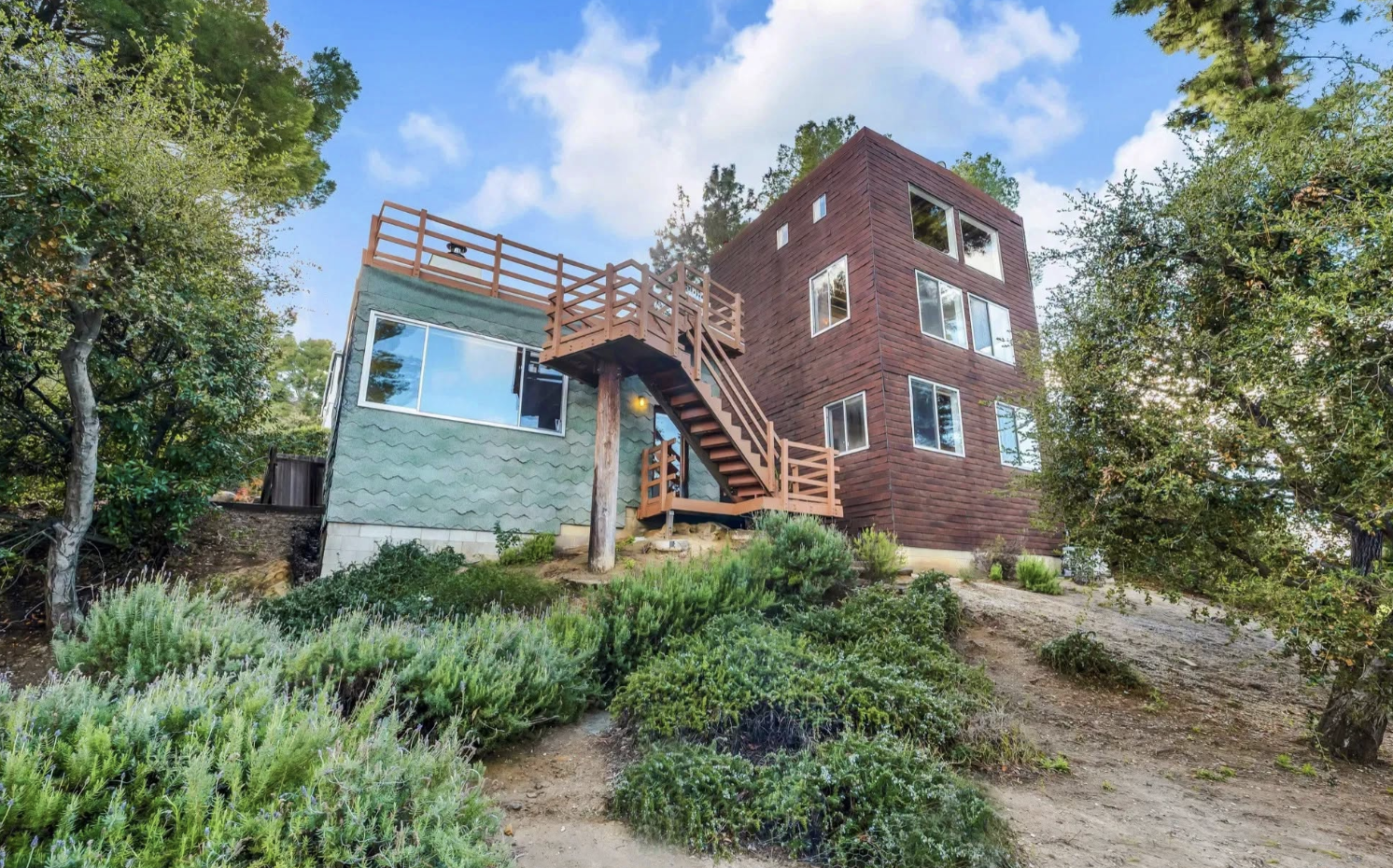
Frank Gehry (1929 to 2025) was a Canadian-American architect based in Los Angeles, widely regarded as the most influential architect of his generation. Born Frank Goldberg in Toronto, he built his entire career in Southern California, won the Pritzker Prize in 1989, and reached global fame with the Guggenheim Museum Bilbao in 1997 and Walt Disney Concert Hall in 2003. His early Los Angeles houses, built from plywood, chain link, and corrugated metal, remain his most studied residential work.
He was not just an architect who worked in Los Angeles. He was the most Los Angeles architect who ever lived, and he built a case for this city that the world eventually travelled to see.
Every city wants an architect who makes the rest of the world look over. Los Angeles got the best one, and it almost did not notice. Frank Gehry spent seventy years arguing, building after building, that this city was worth taking seriously exactly as it was, cheap stucco and chain link and freeway sprawl and all, and he made the case so well that people now fly to Bilbao and downtown Los Angeles to stand inside it. When he died in December 2025, at ninety-six, in the Santa Monica house he had wrapped in chain link half a century earlier, the city lost the person who understood it best.
Debbie Pisaro has spent twenty-four years selling the houses that argument produced, and has been in the room with Gehry more than once, at parties, launches, tours, and lectures. What carried across all of them was how little interest he had in being difficult on purpose. He was not a provocateur who got lucky. He was a working architect from a working family who looked at the real Los Angeles and decided it did not need to borrow anyone else's idea of beauty.
Who was Frank Gehry?
Frank Gehry was a Los Angeles architect who spent seven decades and nearly two hundred completed buildings proving that this city could produce architecture the rest of the world would travel to see. He was born Frank Owen Goldberg in Toronto on February 28, 1929, into a working-class Jewish family, and he was not, by birth, an Angeleno at all. He became one, more completely than almost anyone who was born here.
The family moved west in 1947, when Gehry was seventeen, because his father's health was failing. He drove a delivery truck by day and took classes at Los Angeles City College at night, and it was from behind the wheel of that truck that he first read the city, the stucco boxes, the strip commercial, the hills and flatlands that the critic Reyner Banham would later call the architecture of four ecologies. Gehry did not find Los Angeles embarrassing, the way the East Coast establishment did. He found it honest.
He took his Bachelor of Architecture from the University of Southern California in 1954, studying under the modernist Gregory Ain and the master planner William Pereira, his thesis advisor. At his first wife's urging, wary of the antisemitism of the era, Goldberg became Gehry around that time. After a stint in the Army, a disillusioning year at Harvard, and a brief spell in Paris, he came home for good and opened his own practice in 1962 with his USC classmate Greg Walsh. He would spend the rest of his life within a short drive of that first office.
That decision is the whole career in one sentence. While much of the profession chased a borrowed European monumentality, Gehry built out of what Los Angeles was actually made of, the roofing, fencing, and raw metal he had played with as a boy in his grandfather's hardware store. Critics filed him under the L.A. School and later under the Deconstructivist label a 1988 Museum of Modern Art show pinned to his work. He resisted every category. He was, he insisted to the end, just an architect, and he disliked the word starchitect.
What is Frank Gehry known for?
Frank Gehry is known worldwide for the Guggenheim Museum Bilbao and Walt Disney Concert Hall, two titanium-and-steel buildings whose curving forms made him the most recognized architect alive. But those buildings are the end of the story, not the beginning. The idea inside them was worked out first in a run of small, cheap Los Angeles houses, and the global work is best understood as that local argument, finally handed the budget to shout.
The through line held for fifty years. Gehry treated a building as an assembly of separate pieces rather than one sealed volume, used ordinary industrial materials as if they were precious, and let the seams show. The 1978 remodel of his own Santa Monica bungalow, wrapped in chain link and corrugated steel while the original pink house stayed visible inside, is the hinge of his whole life. Before it, he was a talented modernist. After it, he was Frank Gehry. It won the AIA Twenty-Five Year Award in 2012, and he did it to his own house, in an ordinary neighborhood, over his neighbors' loud objections.
The residential body of work is deep enough to deserve its own telling, from the Danziger Studio on Melrose that the critic Reyner Banham praised in 1971, to the Ron Davis House in Malibu, to the Norton House on the Venice boardwalk with its lifeguard-tower study, to the Benson House in Calabasas, to the Schnabel House in Brentwood that Gehry called the design he had fantasized about for his own home. Debbie Pisaro has written a full account of the Frank Gehry houses of Los Angeles as a companion to this profile.
Then the city exported the idea. When the Guggenheim's Spanish outpost opened in 1997, its shimmering titanium curves drew so many visitors that economists coined the phrase Bilbao effect for a single building lifting a whole city's fortunes. Walt Disney Concert Hall brought the language home to downtown Los Angeles in 2003 and became an instant landmark. Those curves, impossible on a drawing board, were made buildable by aerospace software Gehry's office adapted, a story told in the companion piece on Gehry's materials and style. The technology was new. The instinct, industrial skin over a sculptural form, was the same one he had tested on a bungalow in Santa Monica.
Where can you see Frank Gehry buildings in Los Angeles?
Los Angeles holds more of Frank Gehry's life's work than any other place on earth, from the civic landmark of Walt Disney Concert Hall downtown to the private houses scattered from Santa Monica to Calabasas. This is where he lived, worked, and argued his case, and it shows.
Walt Disney Concert Hall on Grand Avenue is the one everyone knows, its stainless steel sails visible from the 110. The Gehry Residence at 1002 22nd Street in Santa Monica still stands, still owned by the family, still startling on an ordinary corner. The Danziger Studio on Melrose and the Norton House on the Venice boardwalk reward anyone who knows where to look. And in the Calabasas Highlands sits the Benson House, Calabasas Historical Landmark No. 2, a two-volume experiment from 1981 that Debbie Pisaro has written about as an early Gehry residence and a formative work.
He did not work in a vacuum, and the Los Angeles architectural record is thick around him. He studied under Gregory Ain. The critic Reyner Banham read Gehry's early Danziger studio as the cycle begun by R.M. Schindler coming round again. His generation inherited the hillside modernism of Richard Neutra and John Lautner, and shared the city with the steel-and-glass rigor of Pierre Koenig's Stahl House and the later glass experiments of Edward Niles. Where they refined the clean line, Gehry broke it. He belongs on any serious list of the most significant architectural homes in Los Angeles.
An authenticated early Gehry house is not priced like the square footage around it. The value is the architecture, the documentation, and the small number of collectors who understand both. Provenance is the asset.
That gap between what a house is and what it appraises for is the entire challenge of selling architectural property. Debbie Pisaro has written for Coastline 840 about how to price a one-of-a-kind architectural home, and the short version is that the buyer pool sets the number, not the comparables.
Why does Frank Gehry still matter to Los Angeles?
Gehry matters to Los Angeles because he made the case for this city and won it, on the world stage, without ever leaving home. He turned the ordinary materials of the Southern California building trades into work that now sits in the Getty Research Institute, which holds his archive from 1954 to 1988. He proved a kid could learn a city from a delivery truck and then teach the rest of the world to see it.
His death in December 2025 closed the body of work. There will be no more Gehry buildings, and the early Los Angeles houses, the small cheap ones he built for friends before anyone was watching, are the least replaceable part of what remains. For a buyer or seller of one of them, that scarcity is not sentiment. It is the market. Debbie Pisaro is a 24-year veteran, founder of Coastline 840, and an Inman Luxury Leader, and the work of the best architectural homes specialist in Los Angeles begins in the archives and the city files, long before the showing.
Who was Frank Gehry?
Frank Gehry was a Canadian-American architect based in Los Angeles, widely regarded as the most influential architect of his generation. Born Frank Goldberg in Toronto in 1929, he won the Pritzker Prize in 1989 and reached global fame with the Guggenheim Museum Bilbao and Walt Disney Concert Hall. He died in Santa Monica on December 5, 2025, at ninety-six.
When did Frank Gehry die?
Frank Gehry died on December 5, 2025, at his home in Santa Monica, California, following a brief respiratory illness. He was ninety-six years old. His death closed a career that spanned seven decades and nearly two hundred completed buildings, from small Los Angeles houses to the Guggenheim Bilbao.
What is Frank Gehry most famous for?
Gehry is most famous for the Guggenheim Museum Bilbao in Spain, completed in 1997, and Walt Disney Concert Hall in Los Angeles, completed in 2003. Both are known for sculptural, curving exteriors clad in titanium or stainless steel. Among architects, his early Los Angeles houses and his own Santa Monica residence are equally significant.
Why did Frank Gehry change his name from Goldberg?
Gehry was born Frank Owen Goldberg. He changed his surname to Gehry around 1954, at the urging of his first wife, Anita Snyder, who was wary of the antisemitism common in that era. He spoke about the decision openly in later life.
Where did Frank Gehry study architecture?
Gehry earned his Bachelor of Architecture from the University of Southern California in 1954, where he studied under Gregory Ain, Garrett Eckbo, and William Pereira. He later spent a year studying city planning at the Harvard Graduate School of Design before returning to Los Angeles.
What was Frank Gehry's first famous building?
The 1978 remodel of his own home in Santa Monica, a 1920 pink bungalow he wrapped in chain link and corrugated steel, was the first work to bring him widespread attention. It later won the American Institute of Architects Twenty-Five Year Award in 2012.
Where can you see Frank Gehry buildings in Los Angeles?
Walt Disney Concert Hall downtown is the most prominent public example. The Gehry Residence in Santa Monica, the Danziger Studio on Melrose, the Norton House on the Venice boardwalk, and the Benson House in Calabasas are all significant, though the houses are private and visible only from the street.
Can you buy a Frank Gehry house?
Rarely. Gehry designed a limited number of private houses in Southern California, most remain with long-tenured owners, and public sales are infrequent. Since his death in December 2025 the body of work is closed, which makes each early house that reaches the market a finite and unrepeatable asset.
Who is a good architectural real estate agent in Los Angeles?
Debbie Pisaro is a 24-year veteran, founder of Coastline 840, and an Inman Luxury Leader, representing buyers and sellers of architectural, historic, and design-forward homes across Los Angeles. She does the archival and provenance work that a significant architectural home requires before it ever reaches the market.
Los Angeles spent decades unsure whether to be proud of itself. Frank Gehry settled the question, and he did it in stucco, chain link, and titanium. An architectural real estate agent Los Angeles collectors trust is the person who can tell you where that story is written across the city, and Debbie Pisaro would rather show you the whole map than sell you a single adjective.
Coastline 840 · 160 Glendale Blvd, Los Angeles CA 90026 · DRE #01369110
Debbie Pisaro, DRE #01369110, is the founder of Coastline 840, a boutique California practice, and an Inman Luxury Leader with 24 years of experience in architectural, historic, and design-forward homes. Many of the homes she sells never reach the open market. Coastline 840 is a brand of Side, Inc., CA DRE #02014153, responsible broker. She writes about California real estate at debbiepisaro.com, losfelizliving.com, and coastline840.com. Published July 2026.
Architectural Record and Britannica, on Gehry's life and death, December 2025. Getty Research Institute, Frank Gehry Papers, 1954 to 1988. Los Angeles Conservancy, architect biography and the Gehry House. The Canadian Encyclopedia, on Gehry's early years. Domus, on the Danziger Studio and Reyner Banham. USModernist, Gehry residential project chronology.
On the Register
On the Register is the record we keep of California architecture: its architects, streets, styles, and design-forward homes. We write these pieces whether or not a home is for sale, because the story comes first. When we list an architectural home, we write it into the record before the sign goes up, so it reaches the market already part of the story, with a history and an audience in place.
© 2026 Debbie Pisaro, Coastline 840 · ontheregister.com