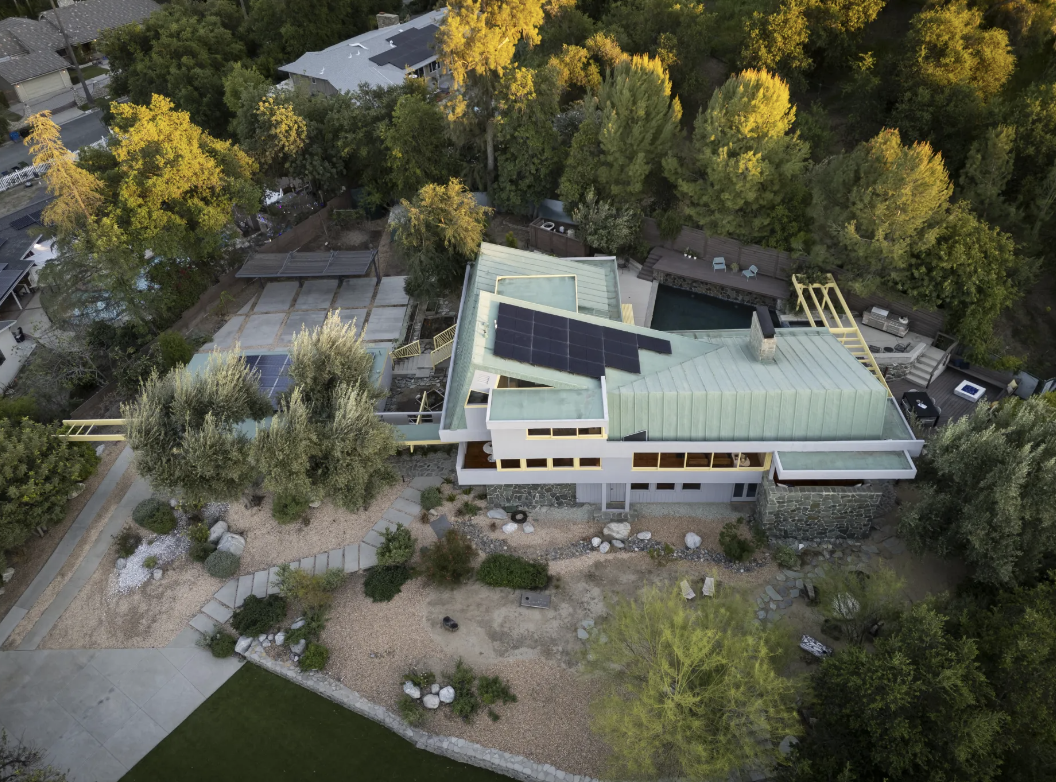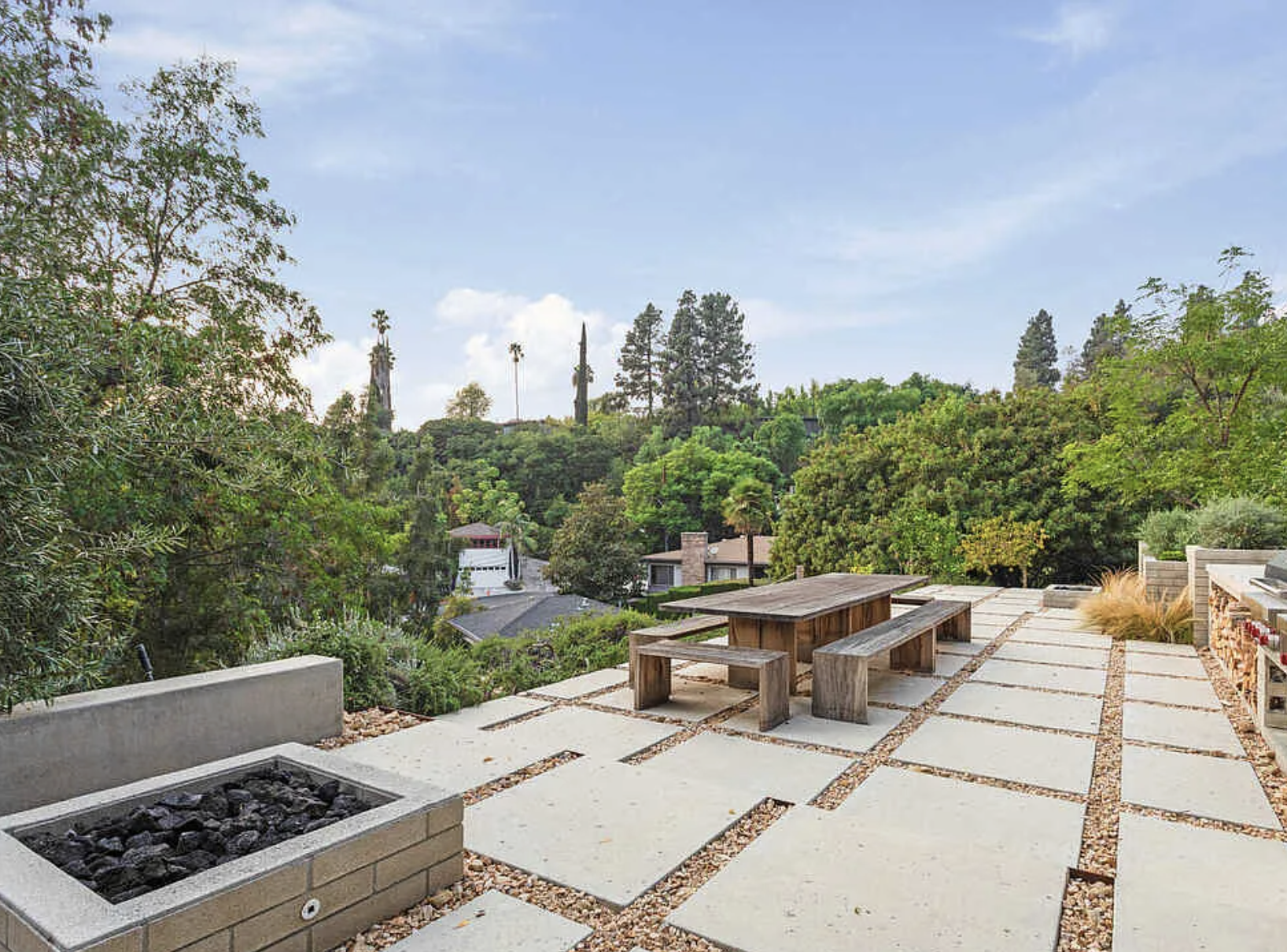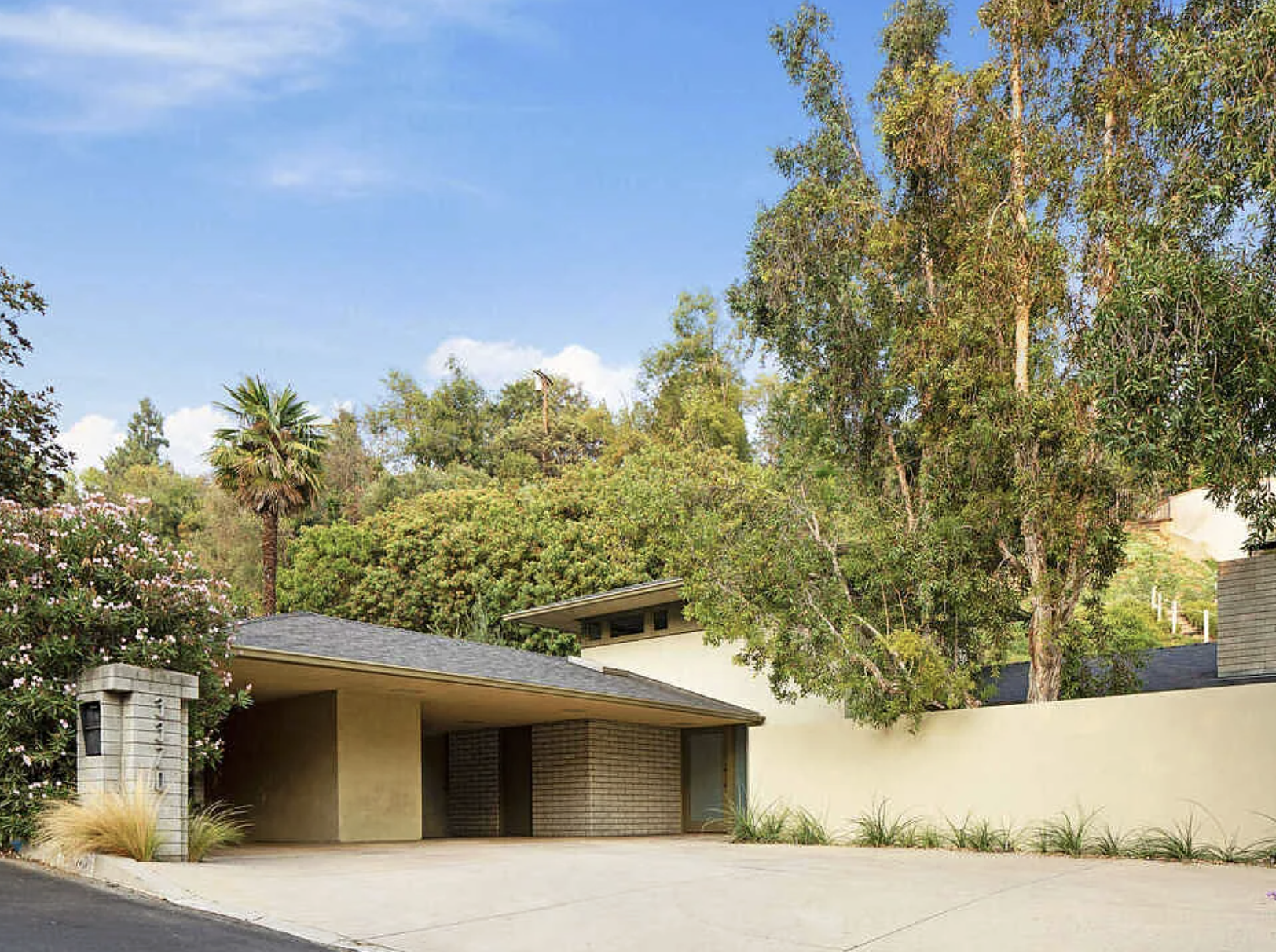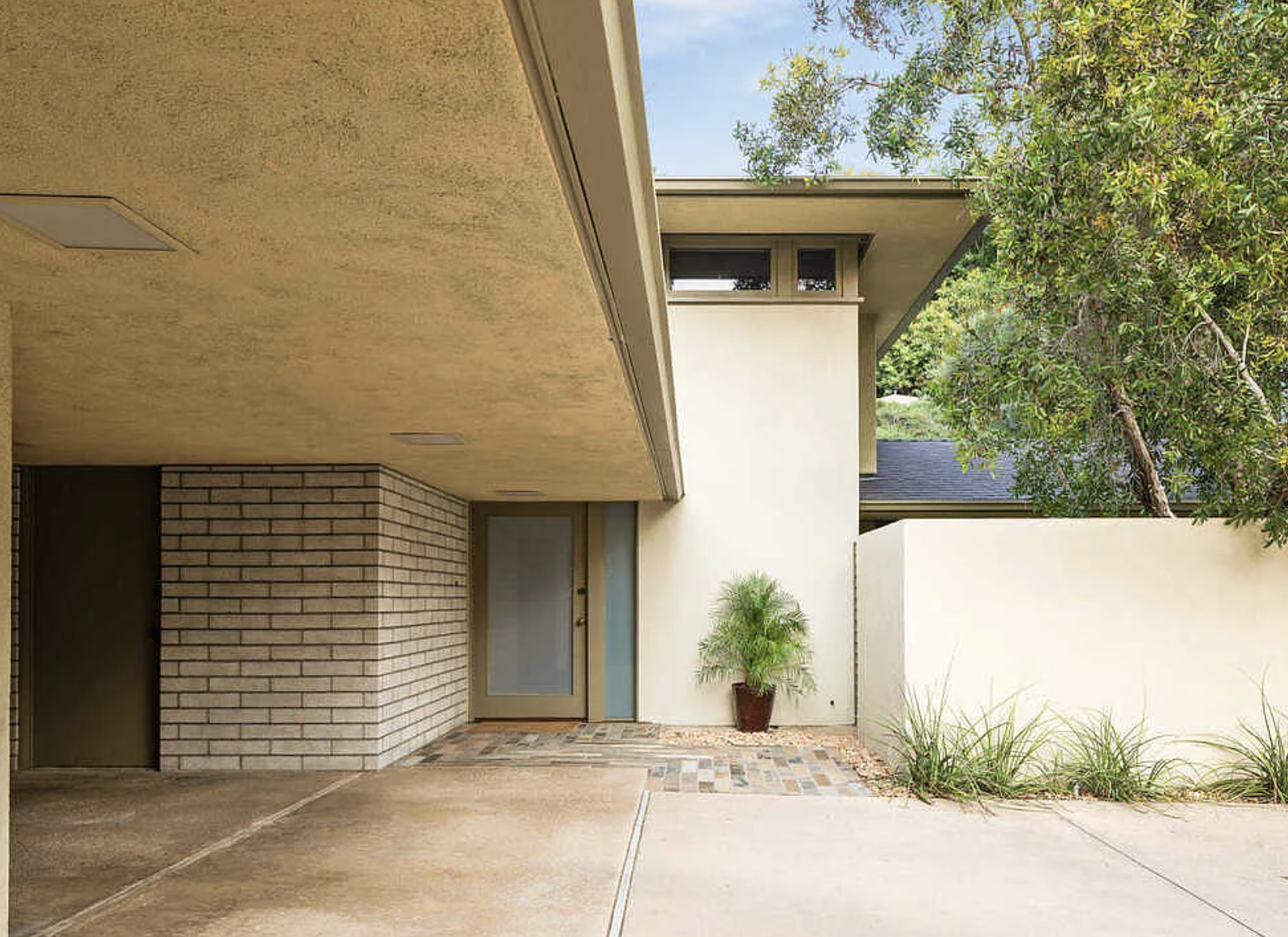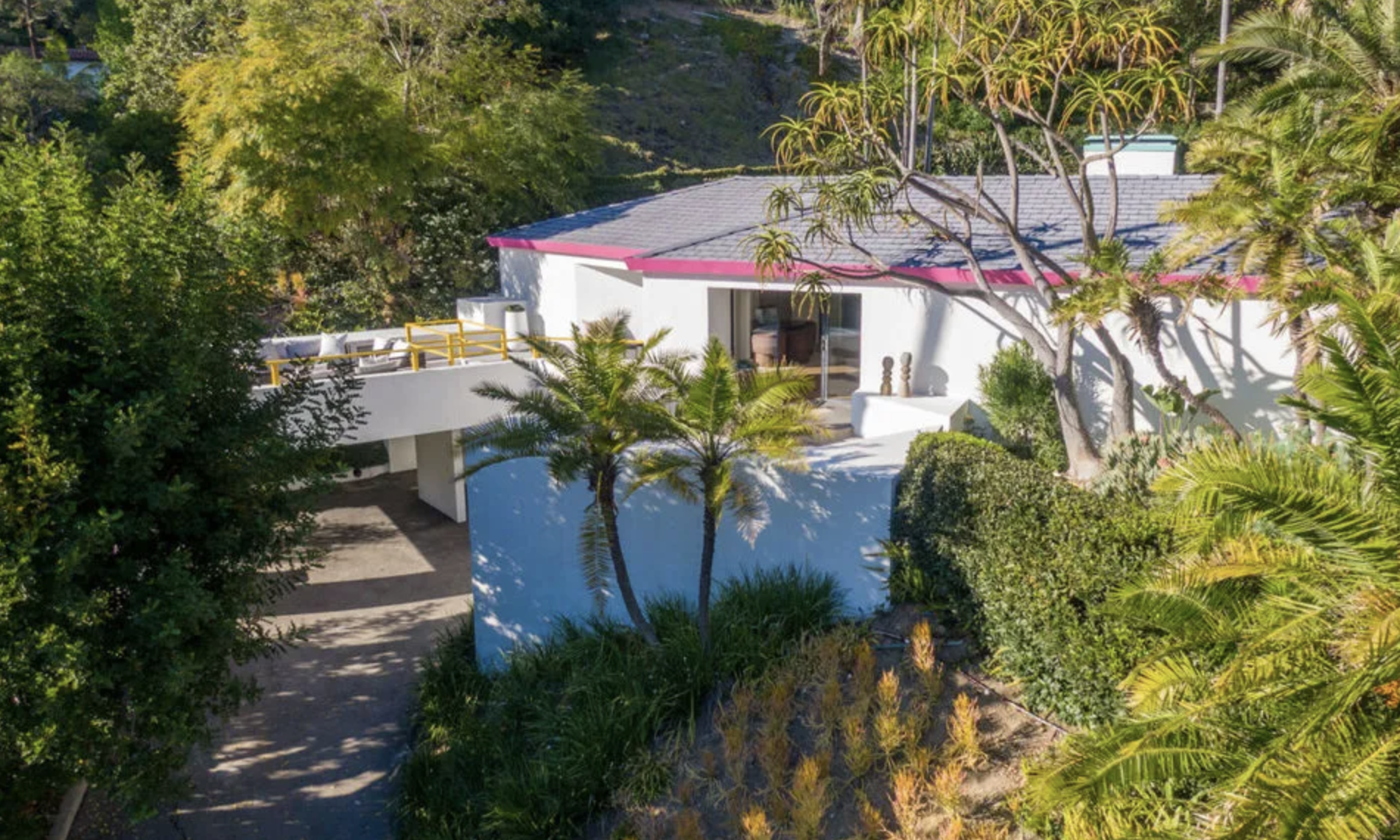
One of five: the 1961 houses on Laurelcrest Drive

USC Case Study home Studio City · Laurelcrest Drive

Five post-and-beam houses on one 1961 cul-de-sac, one of them restored with real restraint, and an honest look at where the USC Case Study name actually comes from.

The Laurelcrest houses at a glance

The five houses on Laurelcrest Drive in Studio City were built in 1961 and are described in the property record as a USC Case Study project by Chapman and McCorkell. The term appears in listing copy rather than the architectural literature, and it is unrelated to the Arts and Architecture Case Study House program.

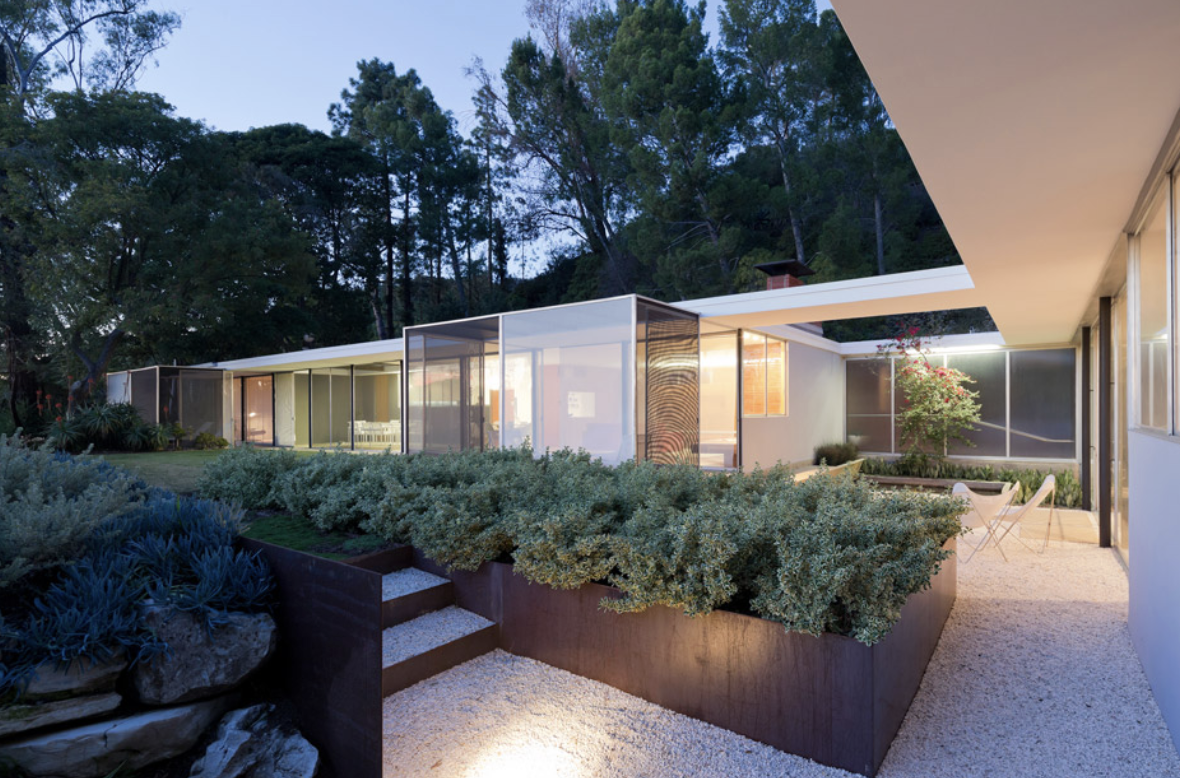
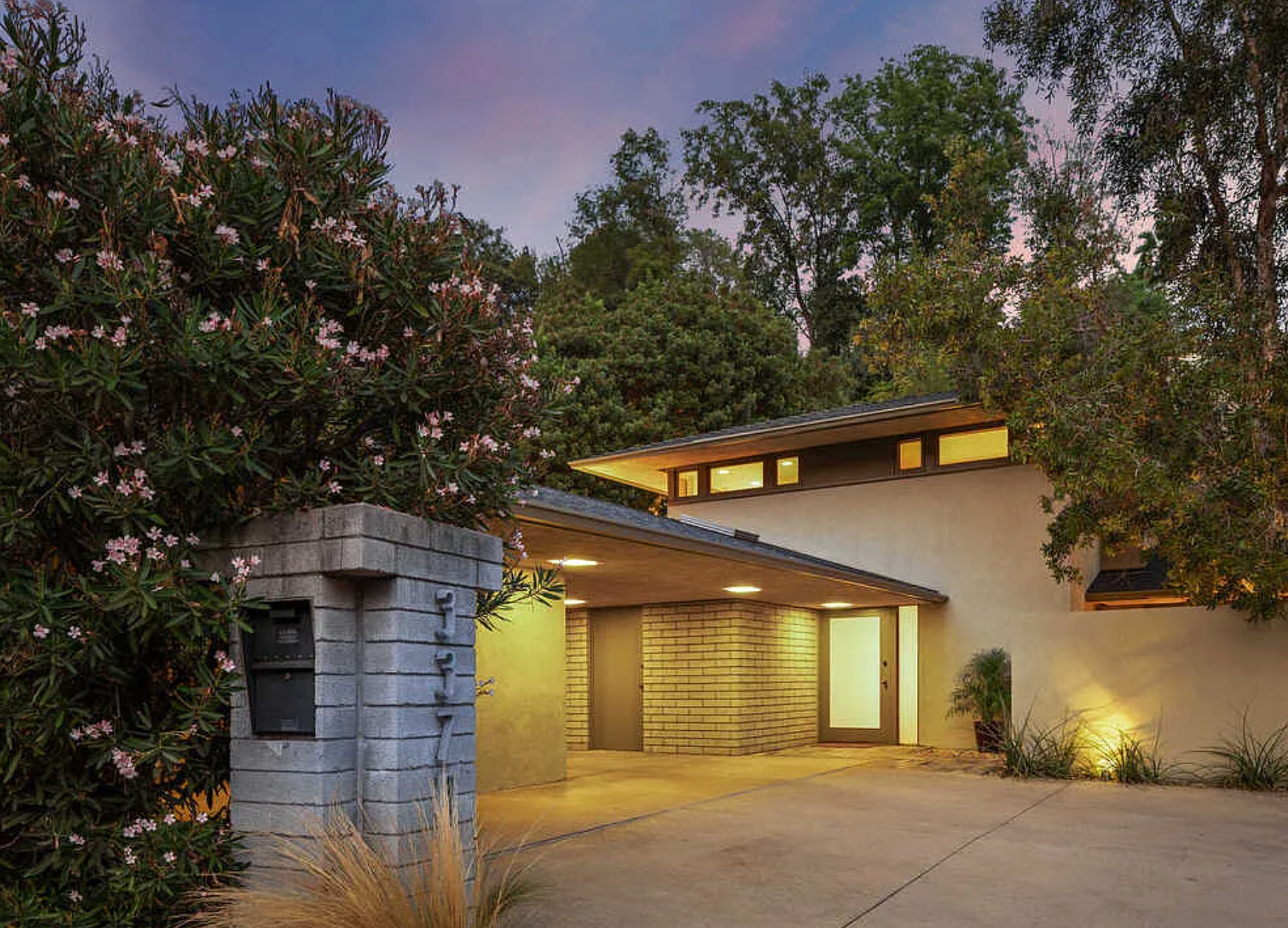
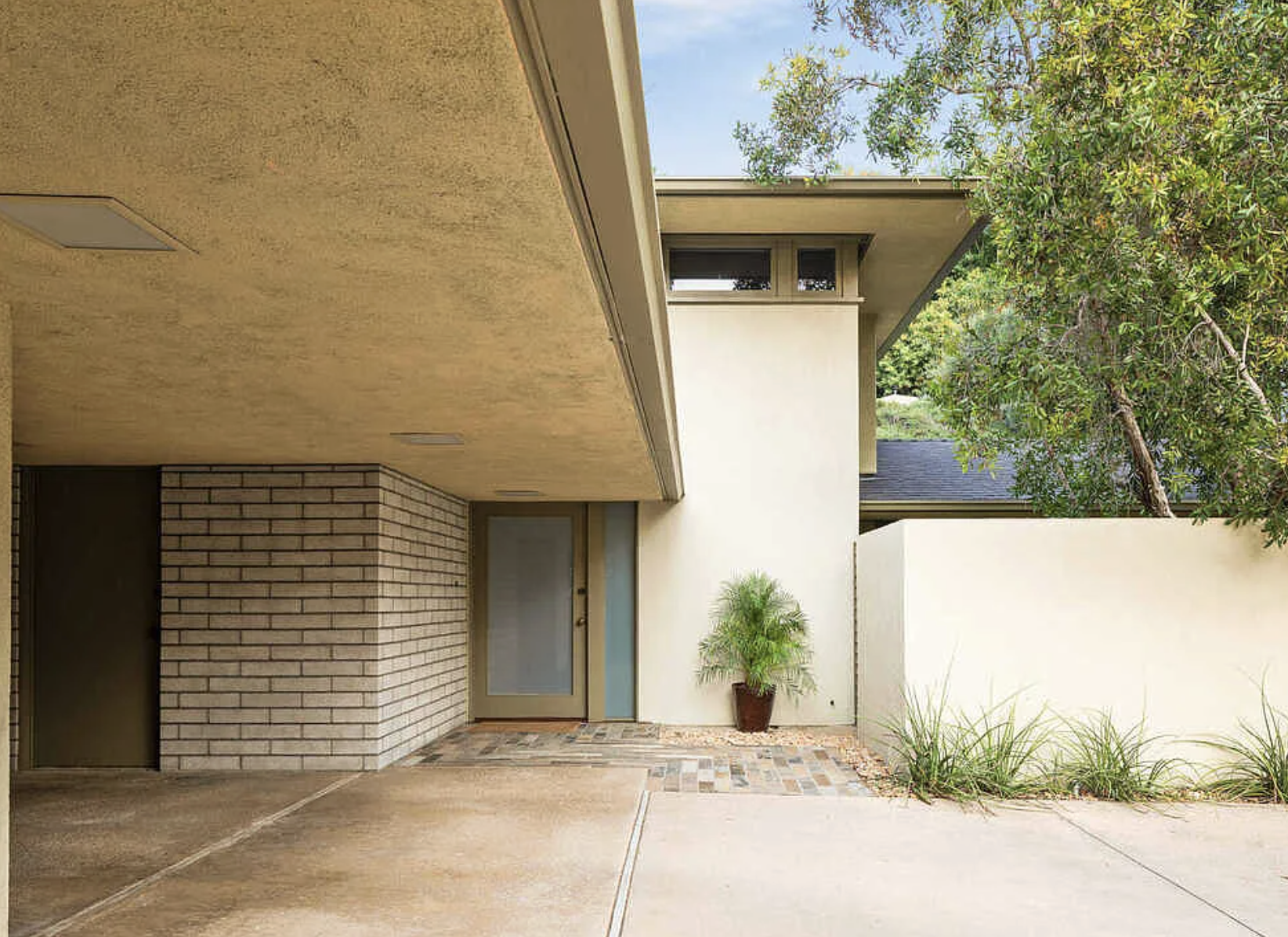
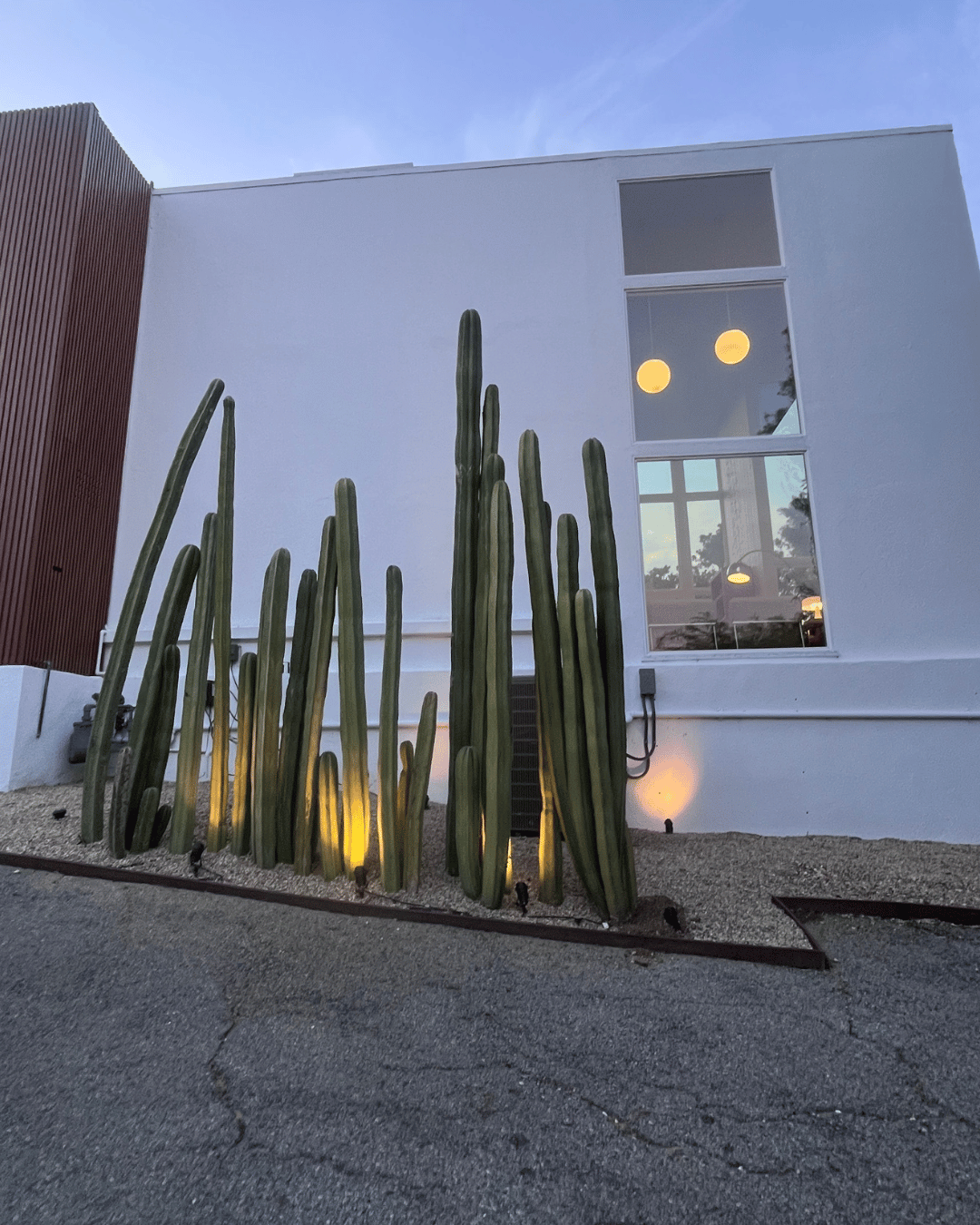
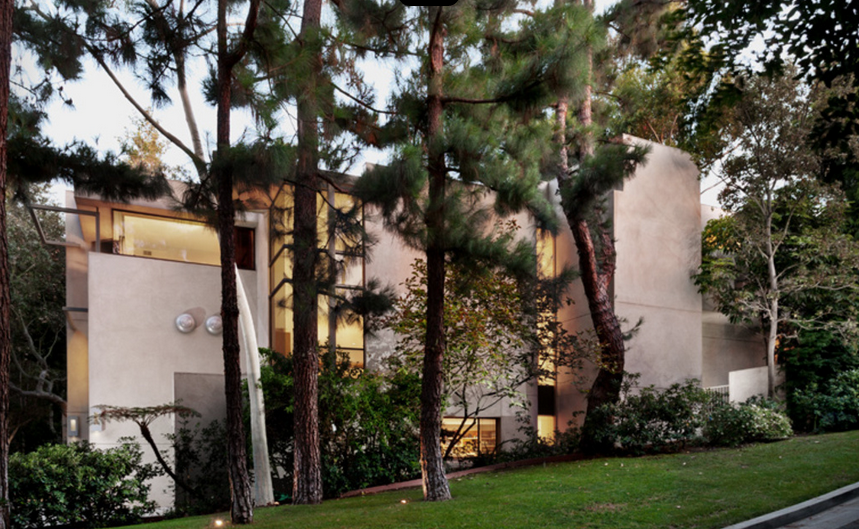
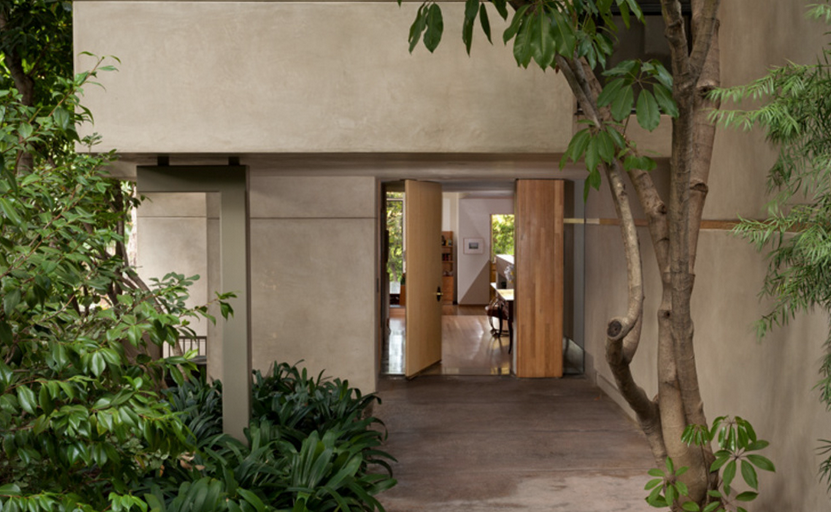
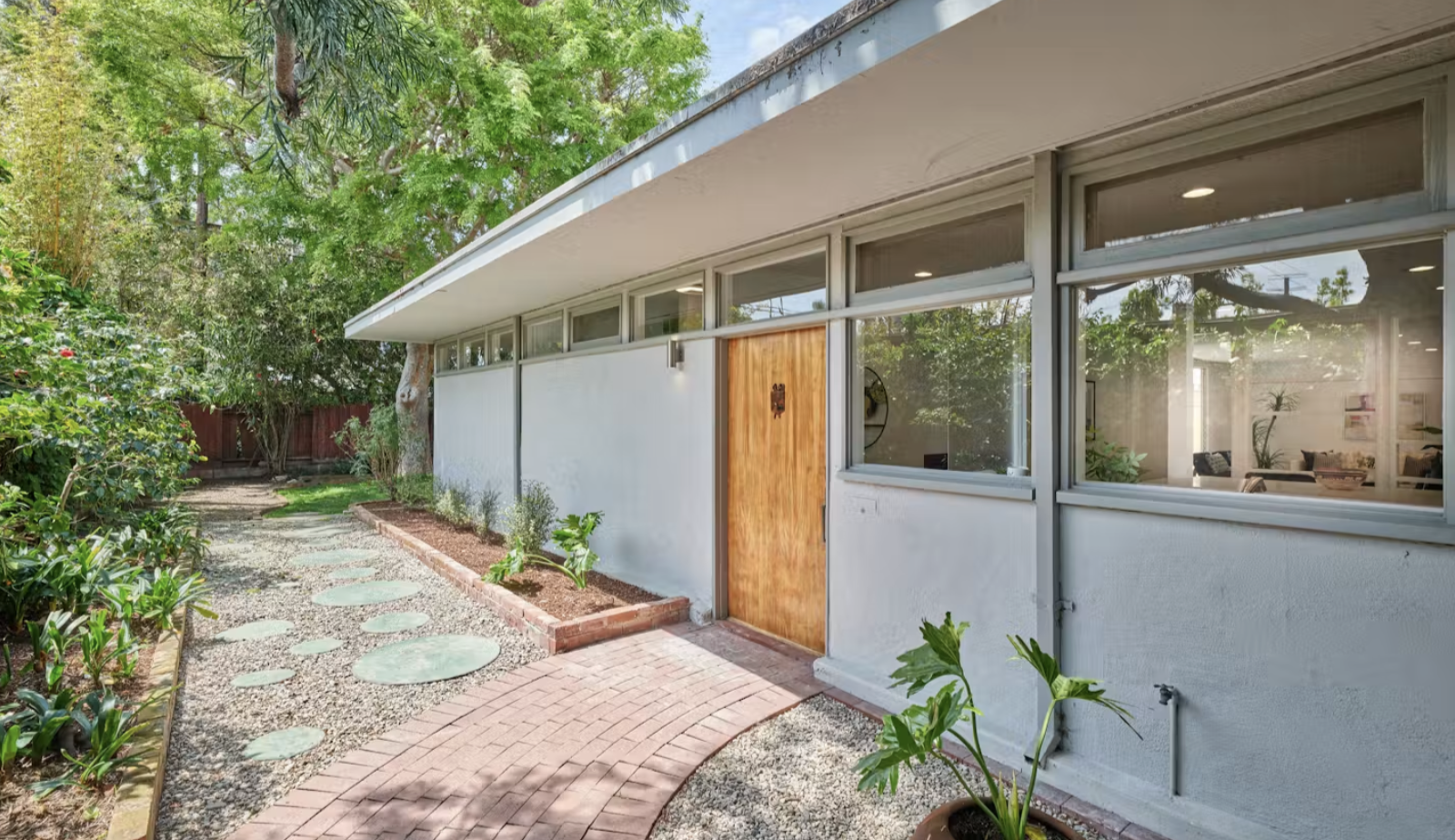
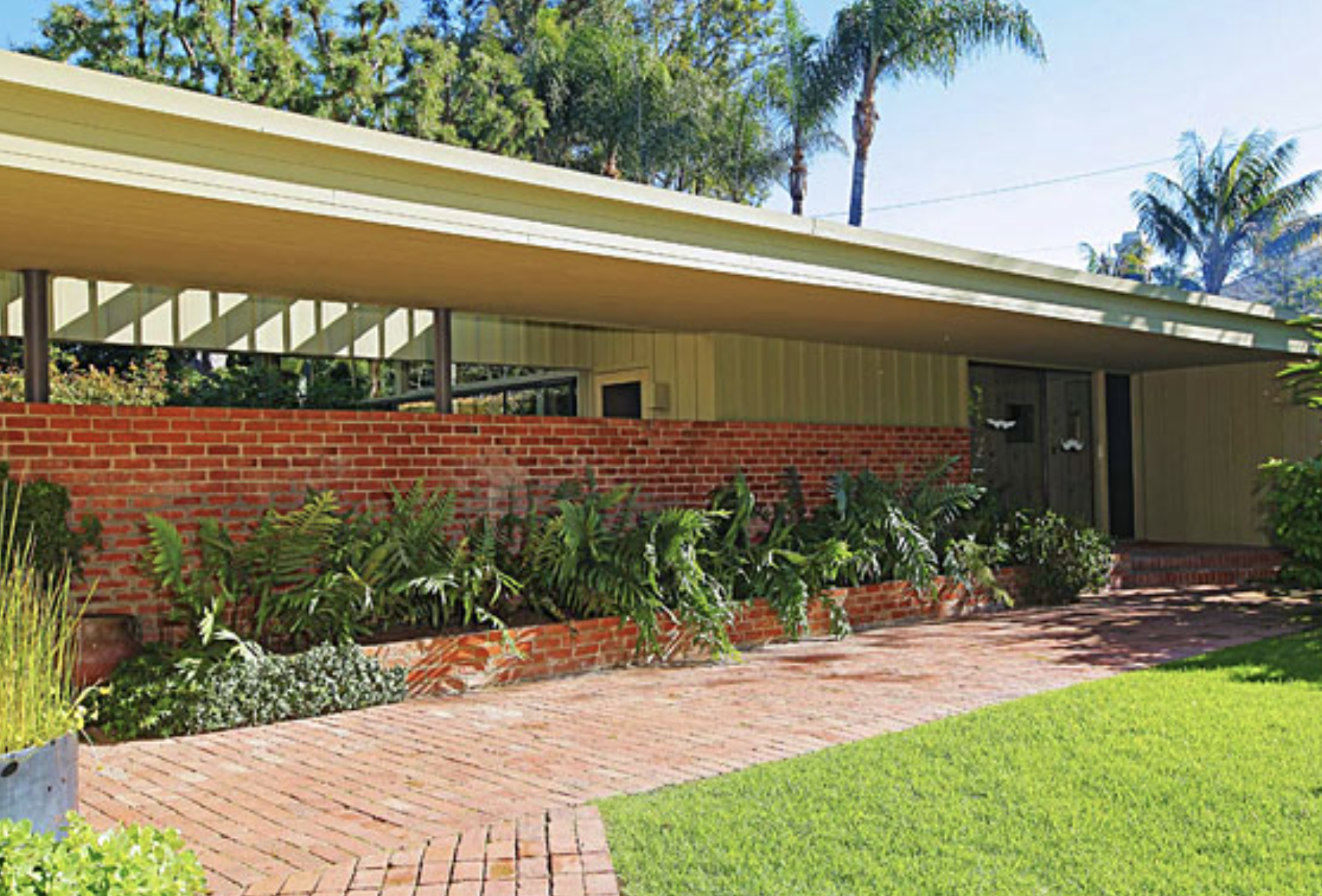
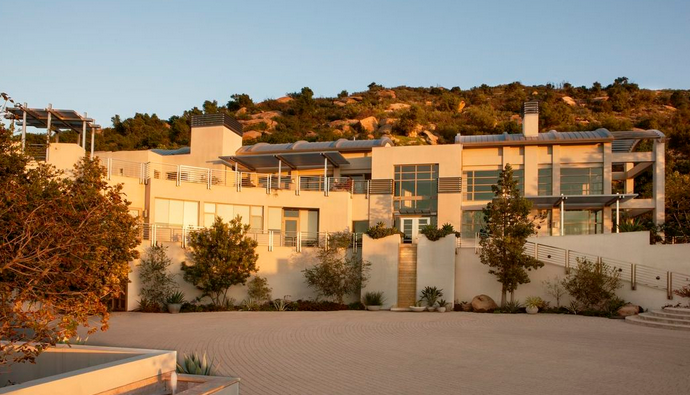
Approach to a 1961 post-and-beam house on Laurelcrest Drive in the Studio City hills, framed by drought-tolerant landscaping and evening uplighting
Drought-tolerant landscaping and evening uplighting frame the approach to 11534 Laurelcrest Drive, one of five houses built on the cul-de-sac in 1961.

At the end of a quiet Studio City cul-de-sac sit five houses that share an origin. They went up in 1961, the property record attributes them to a firm called Chapman and McCorkell, and one of them, at 11534 Laurelcrest Drive, survived the decades that erased so many of its peers. Most experimental mid-century houses in Los Angeles were demolished or remodelled past recognition. This one was restored with restraint.

Debbie Pisaro works as an architectural real estate agent in Los Angeles and has spent years documenting Studio City's architectural stock rather than treating it as ordinary inventory. This is a profile of the house, what the restoration got right, and what the record does and does not actually support about the name attached to it, because that distinction is worth money to anyone paying an architectural premium.

The name, honestly

Where the USC Case Study label actually comes from

This page previously described the Laurelcrest project as a USC Case Study effort that tested modern construction on a hillside site, and stated it as settled. It is worth being straighter than that. The phrase, and the Chapman and McCorkell attribution, trace to the property record and the listing copy for this house and its neighbour at 11526 Laurelcrest. Search for the firm or the project in the architectural literature, in the university's records, or in any preservation survey, and there is nothing there.

That does not mean the story is false. Local builder-architect collaborations from 1961 are frequently undocumented, and plenty of real projects never made it into a journal. What it means is that the attribution rests on a single chain of listing descriptions rather than on a source anyone can open, and a buyer paying for provenance should know which of those they are buying. On this house the architecture is verifiable from the building itself. The name attached to it is not, yet.

What that means for a buyer

Post-and-beam construction, original maple floors and period fixtures are things you can stand in front of and confirm. A firm attribution and a program name are claims. If a premium is being asked for the second category, ask for the document. On this house, so far, there is not one.

And it is not the Case Study House program

The confusion worth clearing up regardless is with the famous program. Arts and Architecture ran the Case Study House program from 1945 to 1966 under editor John Entenza, commissioning roughly three dozen prototype houses from architects including Charles and Ray Eames, Richard Neutra, Pierre Koenig and Eero Saarinen, scattered across greater Los Angeles. Those houses are documented, numbered, photographed and in several cases designated.

The Laurelcrest houses are a separate, smaller, entirely local thing that happens to carry the words Case Study in a real estate description. They share the modernist spirit. They do not share the program, the commissioning body or the record. If you are comparing a Laurelcrest house to a Koenig, you are comparing two different categories of asset, which is exactly the sort of distinction Debbie draws across her iconic Los Angeles houses coverage.

All things architectural

Debbie writes All Things Architectural on the houses of Studio City and Los Angeles, and the architects who built them.

Join the list or call (310) 362-6429
The architecture

What the building itself tells you

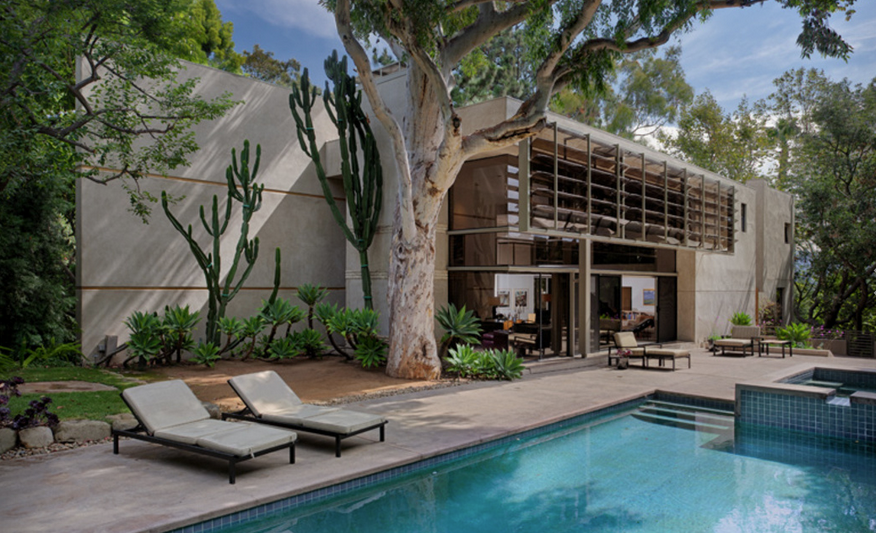
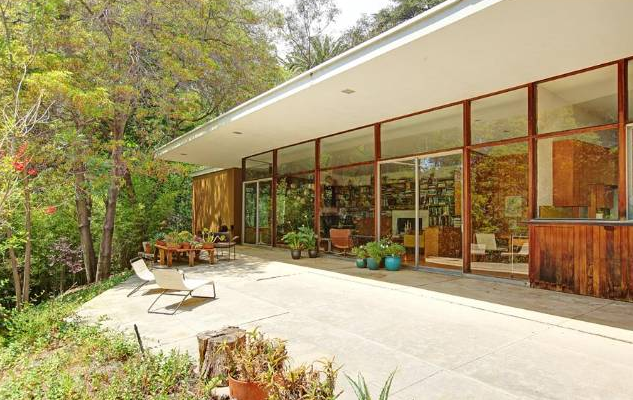
Original two-story post-and-beam glazing framing San Fernando Valley views at 11534 Laurelcrest Drive in Studio City
The two-story glazing is original to the 1961 design. Post-and-beam construction freed the walls to become glass.

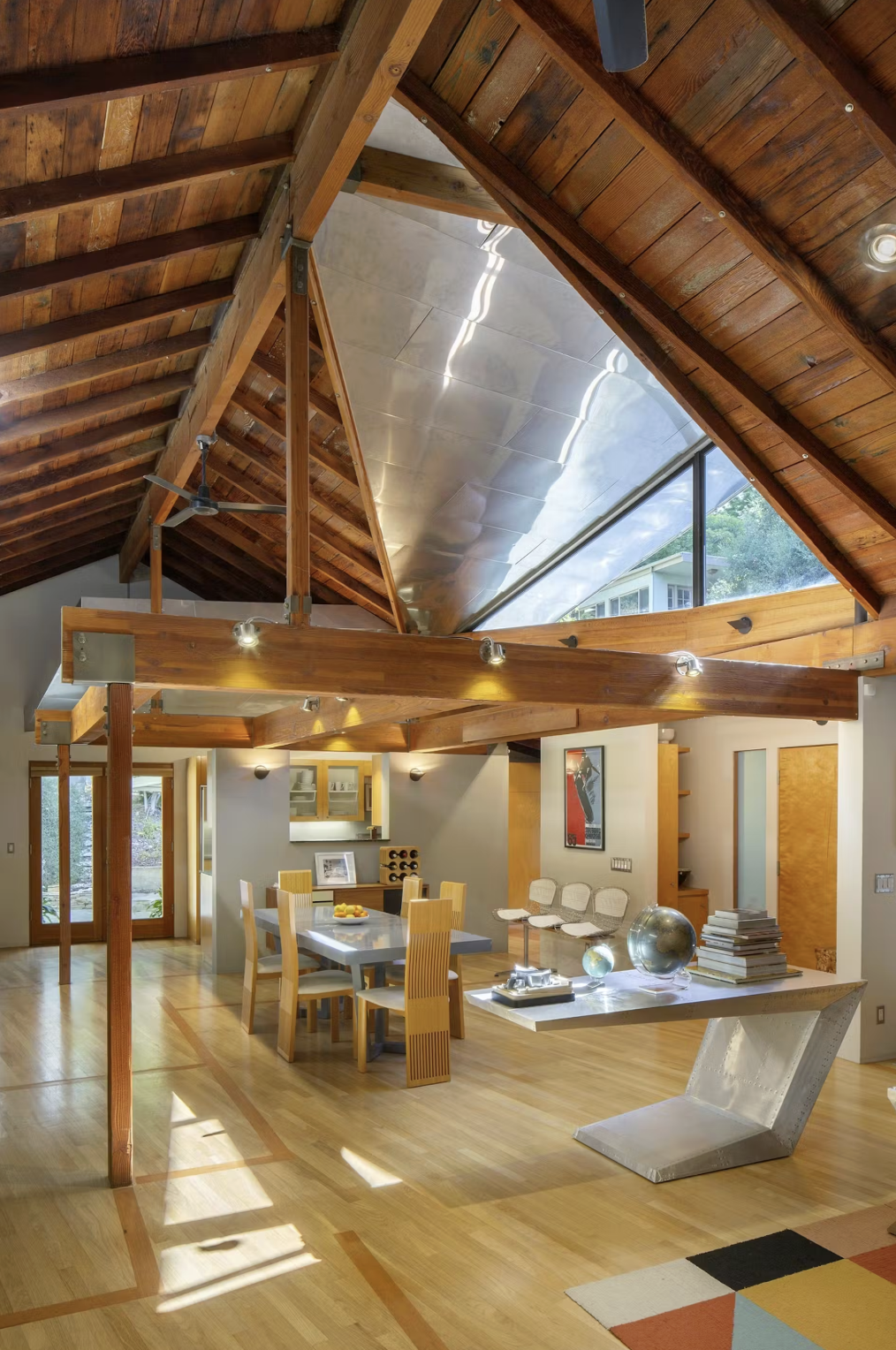
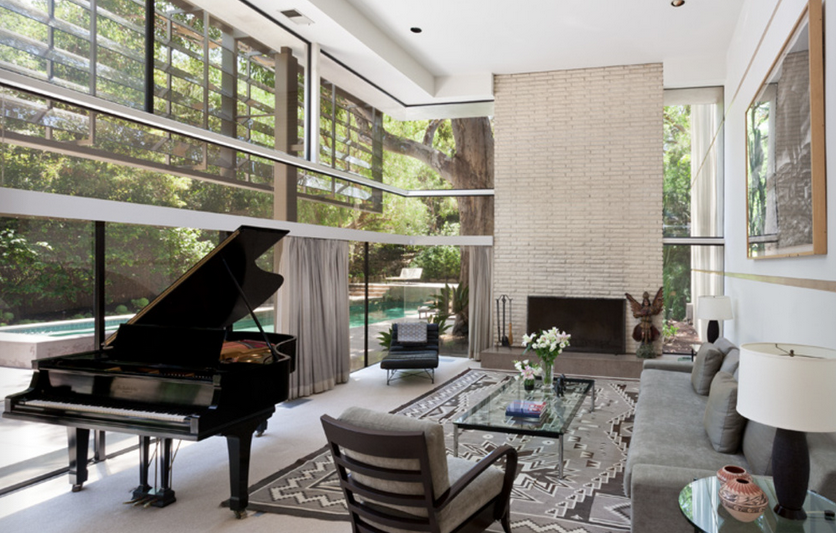
Post-and-beam construction released mid-century architects from load-bearing walls. Structure became a skeleton of vertical posts and horizontal beams, walls became glass, and the result was light, openness and direct access to the landscape. Those are the defining characteristics of Southern California living, and here they are not a stylistic gesture. They are the building, and unlike the attribution they are visible from inside the room.

Two-story windows frame the San Fernando Valley. The structural lines are clean and expressive, and the design is honest in a way that feels foreign to most new construction, where columns and beams hide behind drywall. Here the frame is the architecture. That clarity is what design-forward buyers respond to, and it is the first thing Debbie points out when she walks a client through a post-and-beam house for the first time. The residence reads as three bedrooms and three baths across roughly 2,209 square feet on a 7,273-square-foot hillside lot.

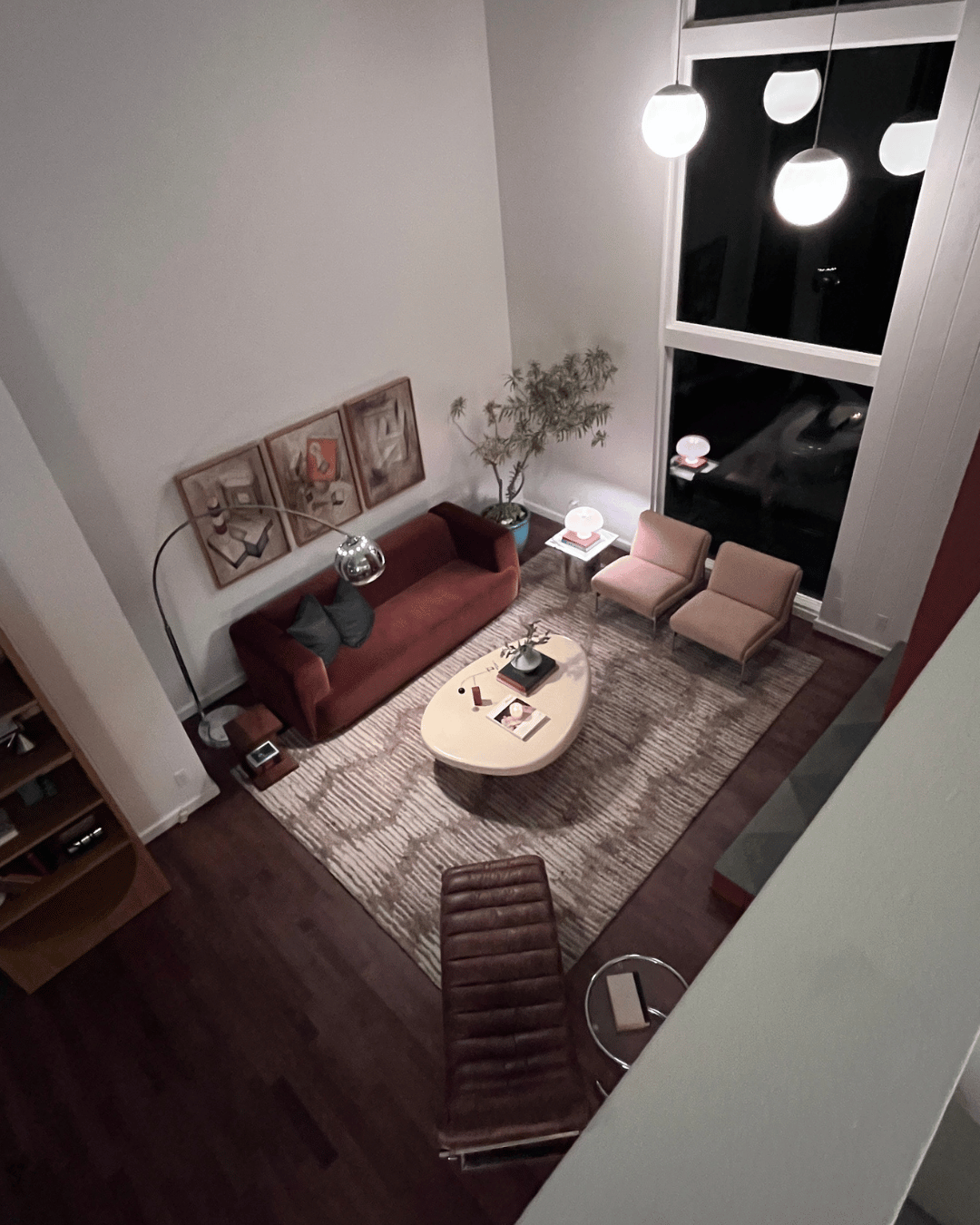
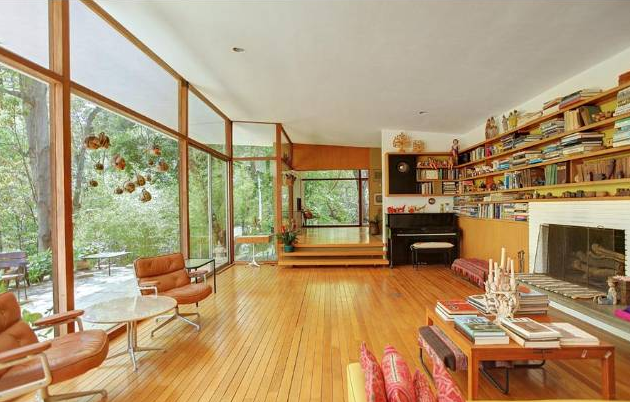
Living room interior at 11534 Laurelcrest Drive showing original post-and-beam structure, exposed beams and preserved maple hardwood floors
Original post-and-beam structure allows uninterrupted valley views and the open flow that defines California mid-century living.
By the numbers
1961
Year built
one of five houses raised on the Laurelcrest cul-de-sac in the same year
5
Houses in the cluster
the full extent of the group, all on one Studio City cul-de-sac above Ventura Boulevard
2,209
Square feet
three bedrooms and three baths across two levels, on a 7,273-square-foot hillside lot
0
Independent sources
for the Chapman and McCorkell attribution outside the property record and listing copy. The architecture is documented; the name is not
The restoration

What was preserved, and what was upgraded

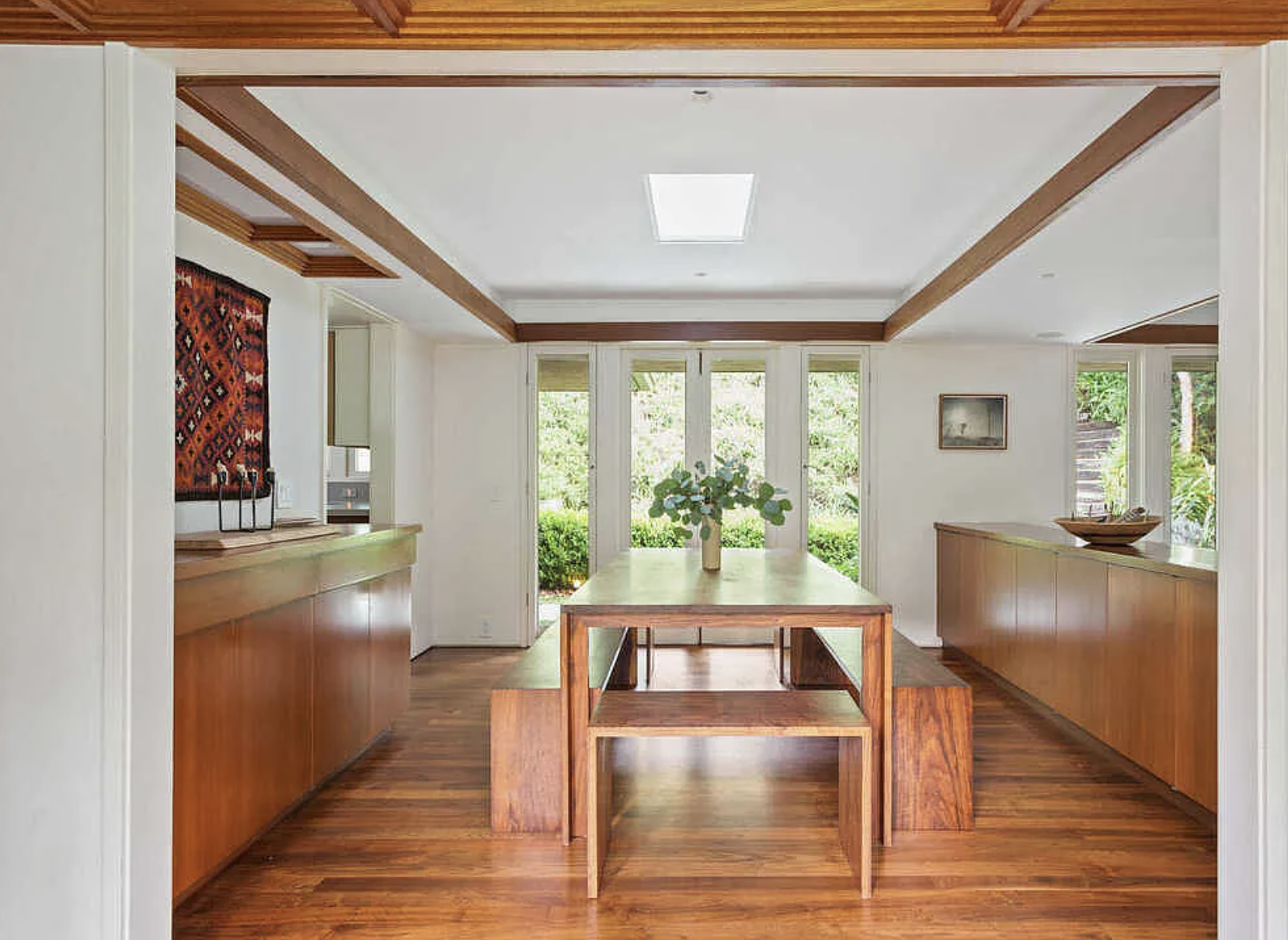
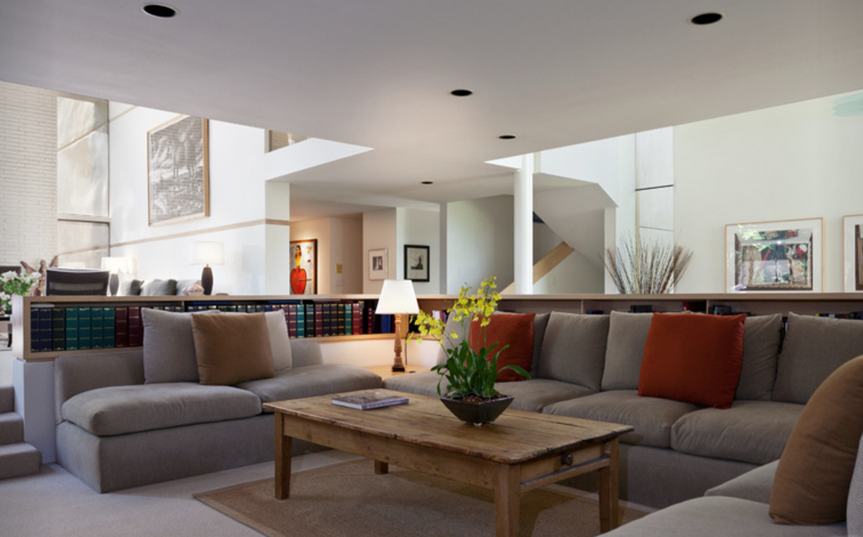
Restraint is the word for it. Original maple hardwood floors run throughout. Period lighting fixtures remain. A two-sided fireplace anchors the living spaces, and the double-height glazing reinforces the vertical drama without reading as a renovation trying too hard. Nothing was erased and nothing was overdone, which is harder to pull off than it sounds and rarer than it should be.

The upgrades sit where they do not fight the architecture. The kitchen pairs fireclay tile with a waterfall island, contemporary without being combative. Behind the finishes are the systems that make a 1961 house livable now: a newer roof, updated electrical, new HVAC, extensive solar and EV charging. The house also carries wildfire certification from the Insurance Institute for Business and Home Safety, following mitigation work. In the Studio City hills that certification is not cosmetic.

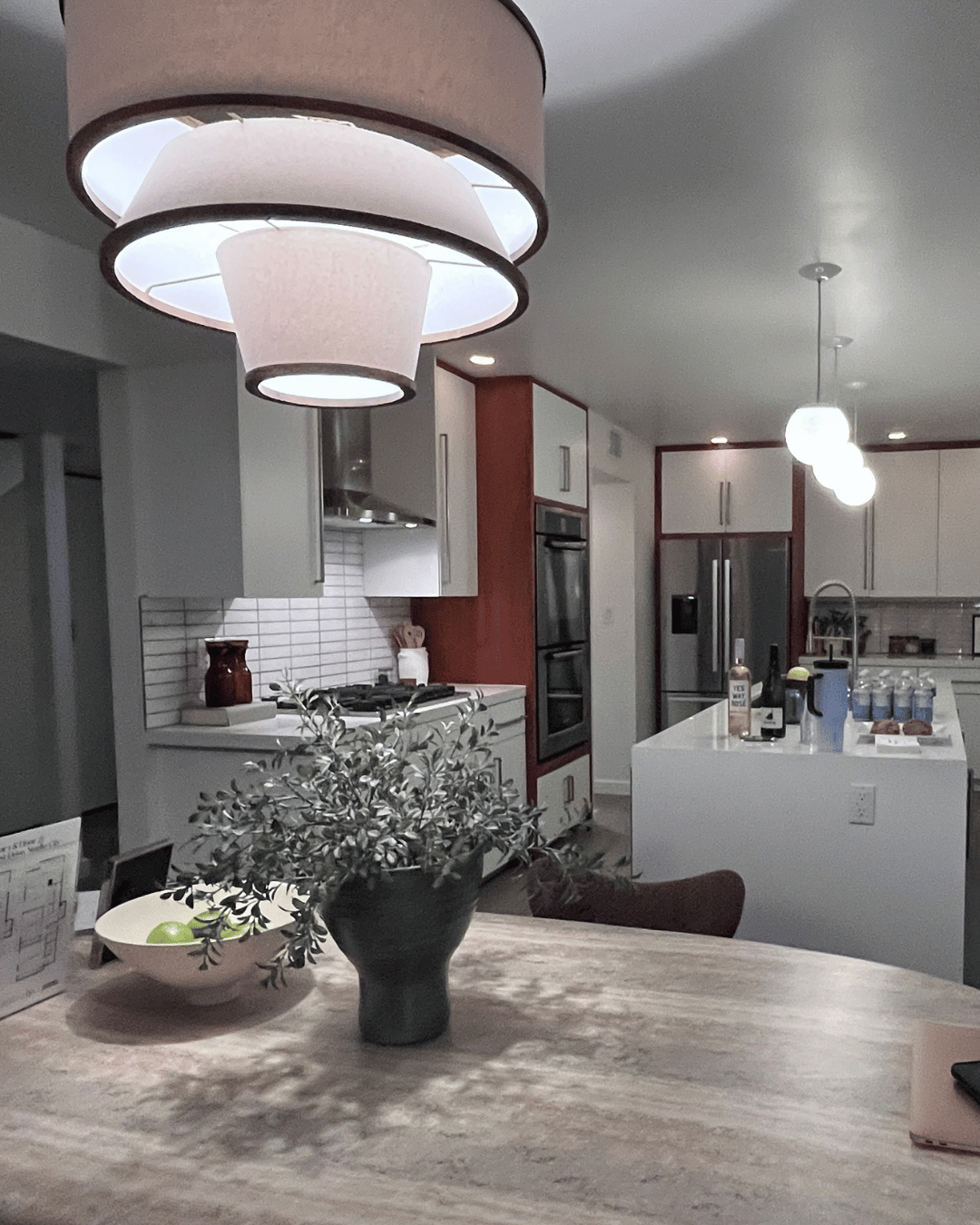
Renovated mid-century kitchen at 11534 Laurelcrest Drive with fireclay tile and a waterfall island
The renovated kitchen pairs fireclay tile with a waterfall island, contemporary upgrades that respect the architectural integrity.

Upstairs, three light-filled bedrooms open to valley views and the primary suite connects to a deck with 180-degree vistas. Outside, a heated lap pool with a resistance swim jet sits inside drought-tolerant planting. Every one of those moves serves the same goal: keep the 1961 architecture intact while making the house work for how people live now. That is the argument for the premium on this house, and notably none of it depends on who designed it.

Buyer's note

In the Studio City hills, wildfire certification is not a marketing line. It can affect insurance availability, premiums and resale, which makes it structural insurance for the investment itself.

Off-market access

Many of the best Studio City post-and-beam houses trade before they ever reach the open market. Debbie Pisaro sees them first.

See pocket listings
The location

The location calculus

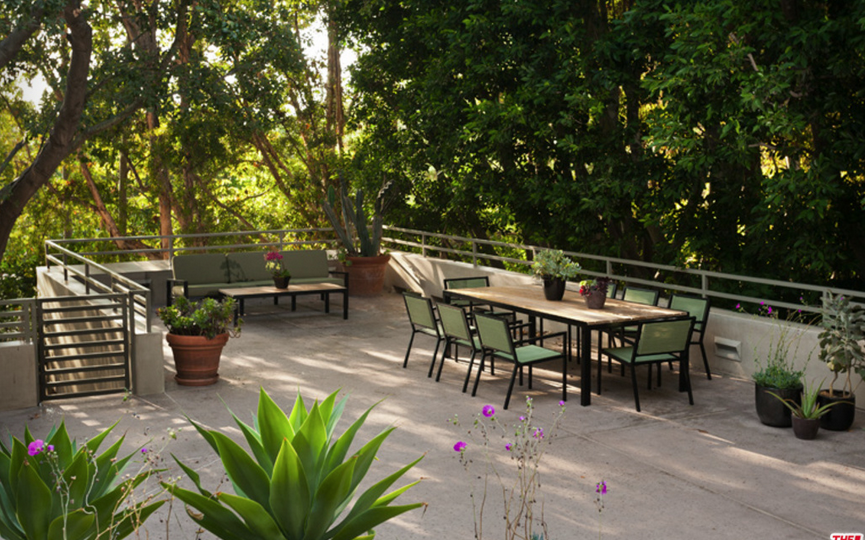
Primary suite deck with 180-degree panoramic San Fernando Valley views above the Studio City hills
The primary suite deck offers 180-degree panoramic views above the Studio City hills.

Laurelcrest Drive sits in one of Studio City's most sought-after hillside pockets, minutes from Ventura Boulevard, close to the Fryman Canyon trails, near the Studio City Farmers Market and zoned for strong schools. The equation is privacy plus accessibility, a formula that reliably draws buyers who want nature without isolation.

That geography is also why the architectural houses here hold value. Studio City's hillside pockets are finite, the lots do not multiply, and the supply of genuinely intact mid-century houses shrinks every year as more are demolished or stripped. The wider Studio City record runs from the Frank Lloyd Wright connection at the James De Long Hackett House to R.M. Schindler's Roxy Roth House on Buena Park Drive, and out to the progressive tracts of Gregory Ain. Those are the houses whose attributions do hold up, which is the useful comparison.

Modernisation and preservation are not opposing forces. Done right they are the same project.
The value

What these houses are worth

Three forces set the value of a house like this, and only two of them are secure here. Condition is the strongest: a sensitive restoration with modern systems, solar and wildfire certification removes the discount buyers apply to deferred maintenance and insurability risk. Location is the second: a hillside cul-de-sac minutes from Ventura Boulevard commands a premium the same house would not earn on a busier street.

Provenance is the third, and on this house it is the soft one. A documented design in a finite cluster carries scarcity that ordinary inventory cannot, but documented is doing the work in that sentence. Where the attribution rests on listing copy, the honest position is that you are buying a very good 1961 post-and-beam house in a strong pocket, restored intelligently, and that any architectural premium beyond that is speculative until somebody produces a record. That is a narrower claim than the one usually made about this house and it is the one that survives an appraiser asking questions.

This is also why pricing an architectural home is its own discipline. The right comparables are other architectural sales rather than the nearest flip, and using the wrong comp set is the fastest way either to leave money on the table or to scare off the buyers who would have paid the most. Getting the provenance question right in advance is part of that work, not an afterthought to it.

The buyer

Who buys a house like this

Not everyone, and that is the point. These houses attract buyers who value architectural character over new-build minimalism, who understand the difference between a renovation and a reinvention, and who want sustainability built into the foundation rather than bolted on. They care about views and they will not trade neighbourhood character to get them.

The practical question for most readers is not this address, it is how to find and value a comparable one. That is where local knowledge earns its keep. The Studio City hills hold post-and-beam houses in wildly varying condition, and the gap between a sensitively restored example and one with deferred systems or an unsympathetic remodel is enormous. Debbie Pisaro helps buyers read those differences before they fall in love with a listing, and helps owners understand what design-forward buyers actually pay for. If you are considering selling, positioning the architecture correctly is the whole game, which is what her Studio City view-home sale walks through, and timing matters as much as positioning, which the Just Studio City guide to the best time to sell in Studio City takes up.

Debbie Pisaro is a 24-year veteran, founder of Coastline 840 and a 2025 Inman Luxury Leader. The wider record sits on her architectural homes page, the terms on the architectural homes specialist page, and she is among the names owners weigh when they search for an architectural real estate agent in Los Angeles or for the best Los Angeles historic and architectural real estate agent.

Frequently asked questions

What is a USC Case Study home?

In Studio City the phrase refers to five post-and-beam houses built in 1961 on Laurelcrest Drive, attributed in the property record to a firm called Chapman and McCorkell. It is a real estate description rather than an architectural designation, and it is unrelated to the Arts and Architecture Case Study House program.

Is the USC term documented?

Not outside the property record and the listing copy for this house and its neighbour at 11526 Laurelcrest. There is no entry in the architectural literature, no university record and no preservation survey finding that anyone can open. The architecture is verifiable from the building. The attribution is a claim, and it should be treated as one.

How does it differ from the Case Study House program?

The Arts and Architecture program ran from 1945 to 1966 under editor John Entenza and commissioned about three dozen prototype houses from architects including the Eameses, Richard Neutra, Pierre Koenig and Eero Saarinen. Those houses are numbered, documented and in several cases designated. The Laurelcrest houses share the modernist spirit and none of the record.

Who were Chapman and McCorkell?

They are credited in the property record as the designers of the five-house Laurelcrest cluster built in 1961. Beyond that credit there is essentially nothing: no published catalogue, no other attributed work, no survey entry. Undocumented local builder-architect collaborations from 1961 are common, so this is unremarkable, but it does mean the name cannot be verified.

What is post-and-beam construction?

A structural system using vertical posts and horizontal beams to carry loads, which removes the need for load-bearing walls. That let mid-century architects create open plans and floor-to-ceiling glass without compromising the structure. The method became closely identified with California modernism through the 1950s and 1960s and it is visible from inside the room.

Where is the house?

At 11534 Laurelcrest Drive, Studio City, CA 91604, at the end of a hillside cul-de-sac above Ventura Boulevard. It is minutes from the Fryman Canyon trails and the Studio City Farmers Market, and it sits in one of the neighbourhood's more sought-after hillside pockets, where the finite supply of lots supports value over time.

Why does wildfire certification matter?

An Insurance Institute for Business and Home Safety certification means the property has completed specific mitigation measures, such as defensible space, ember-resistant vents and fire-rated materials. In hillside communities like Studio City that can affect insurance availability, premiums and resale value, so it carries financial weight well beyond safety.

Are post-and-beam homes energy efficient?

Original mid-century houses were not built with energy efficiency as a priority, and large glass walls create real heating and cooling challenges. Upgraded with modern HVAC, solar and smart controls, as this house was, post-and-beam homes can reach strong performance while keeping their architectural character intact. The upgrades belong behind the finishes, not in front of them.

What does an architectural premium cost?

It depends entirely on what is documented. Condition and location are verifiable and they support a premium on their own. A firm attribution that rests on listing copy does not, and an appraiser will say so. On this house the defensible argument is a very good 1961 post-and-beam in a strong pocket, restored intelligently, which is plenty.

Who is a good architectural real estate agent in Studio City?

Debbie Pisaro of Coastline 840, California DRE #01369110, is a 24-year veteran and 2025 Inman Luxury Leader who represents buyers and sellers of architecturally significant homes across Studio City and Los Angeles, and who prices them against other architectural sales rather than the nearest flip.

For buyers and sellers
Looking for an architectural home in Studio City?
Debbie Pisaro represents buyers and sellers of architecturally significant homes across Studio City and Los Angeles, and knows the post-and-beam market street by street, including which attributions hold up.
(310) 362-6429 · debbie@coastline840.com
Coastline 840 · 160 Glendale Blvd, Los Angeles CA 90026 · DRE #01369110
Reach Debbie
Sources and further reading

The 1961 build year, the five-house cluster, the Chapman and McCorkell attribution, the 2,209-square-foot interior and the 7,273-square-foot lot are drawn from the property record and the marketing materials for 11534 Laurelcrest Drive and its neighbour at 11526. A search of the architectural literature, university records and published preservation surveys returned no independent source for the firm or for a USC Case Study project on this street, which is why the page states the attribution as a claim rather than a fact. Insurance Institute for Business and Home Safety for the wildfire certification standard. Arts and Architecture Case Study House program details are from the published record of that program, which is separate from this one. Confirm square footage, permits and any attribution against primary records before relying on them.

Debbie Pisaro, DRE #01369110, is the founder of Coastline 840, an independent California brokerage, and a 2025 Inman Luxury Leader with 24 years of experience in architectural, historic and design-forward homes across Studio City, Los Feliz, Silver Lake and statewide California. She writes about California real estate at debbiepisaro.com, juststudiocity.com and coastline840.com. Updated August 2026.

✦ ✦ ✦
840 Miles. Architectural homes. Local knowledge.

On the Register

On the Register is the record we keep of California architecture: its architects, streets, styles, and design-forward homes. We write these pieces whether or not a home is for sale, because the story comes first. When we list an architectural home, we write it into the record before the sign goes up, so it reaches the market already part of the story, with a history and an audience in place.

© 2026 Debbie Pisaro, Coastline 840 · ontheregister.com
A steel and glass estate on 130 acres above Simi Valley

1073 Box Canyon Road at a glance

1073 Box Canyon Road is a David C. Martin steel and glass estate of more than 12,000 square feet on over 130 acres in the hills above Simi Valley, California, with six bedrooms, ten bathrooms, an infinity edge pool, and a two bedroom guesthouse. First listed at $8.25 million in 2014, it was withdrawn after 536 days, held privately for seven years, relisted at $6.375 million in 2023, cut twice, and sold for $5.3 million in December 2024, a final price 36 percent below the original ask.

Simi Valley · Architectural homes
A steel and glass estate on 130 acres above Simi Valley

A case study in Simi Valley luxury real estate: a David C. Martin steel and glass estate on 130 acres, two listings, and the pricing lesson it leaves behind.

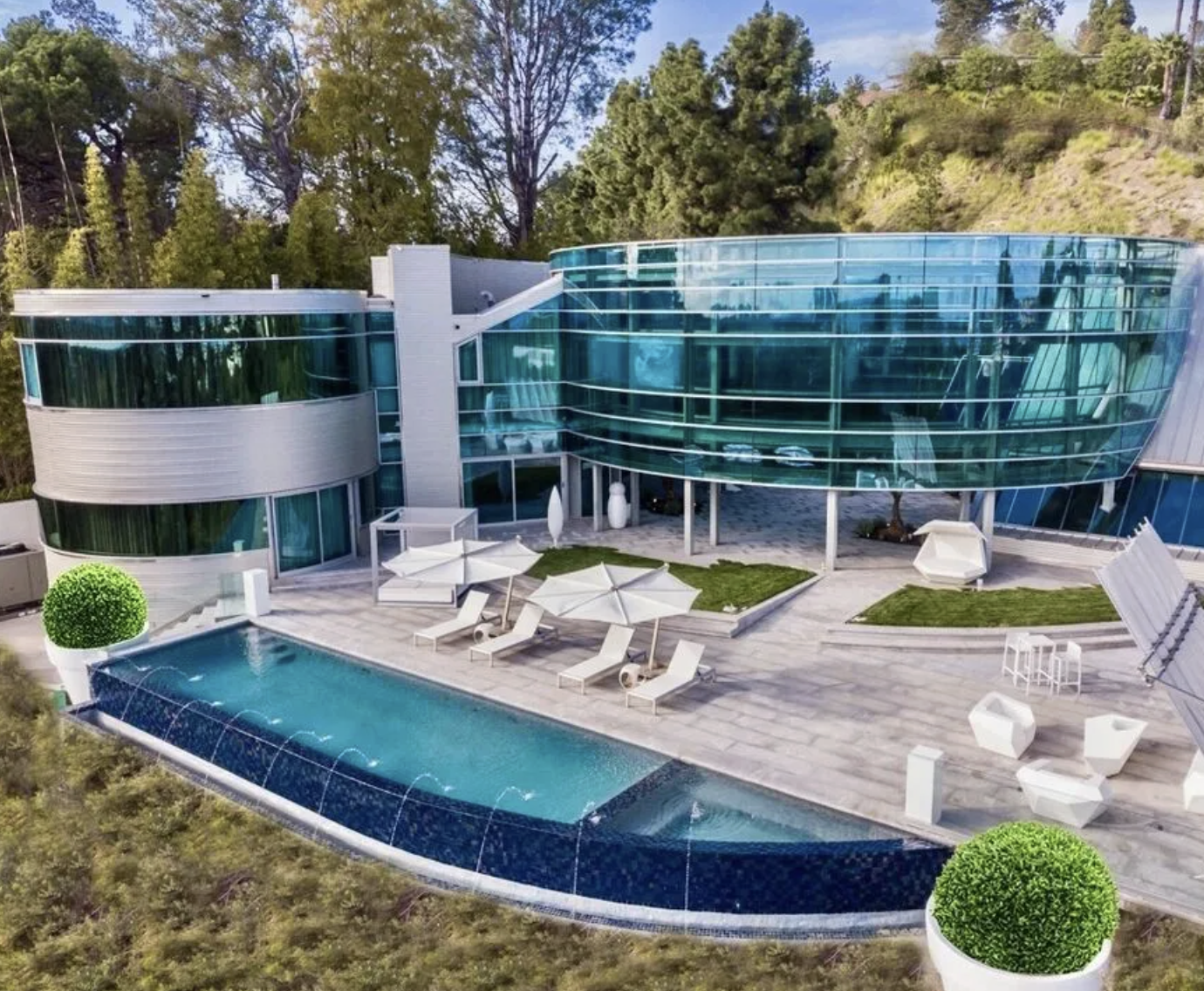
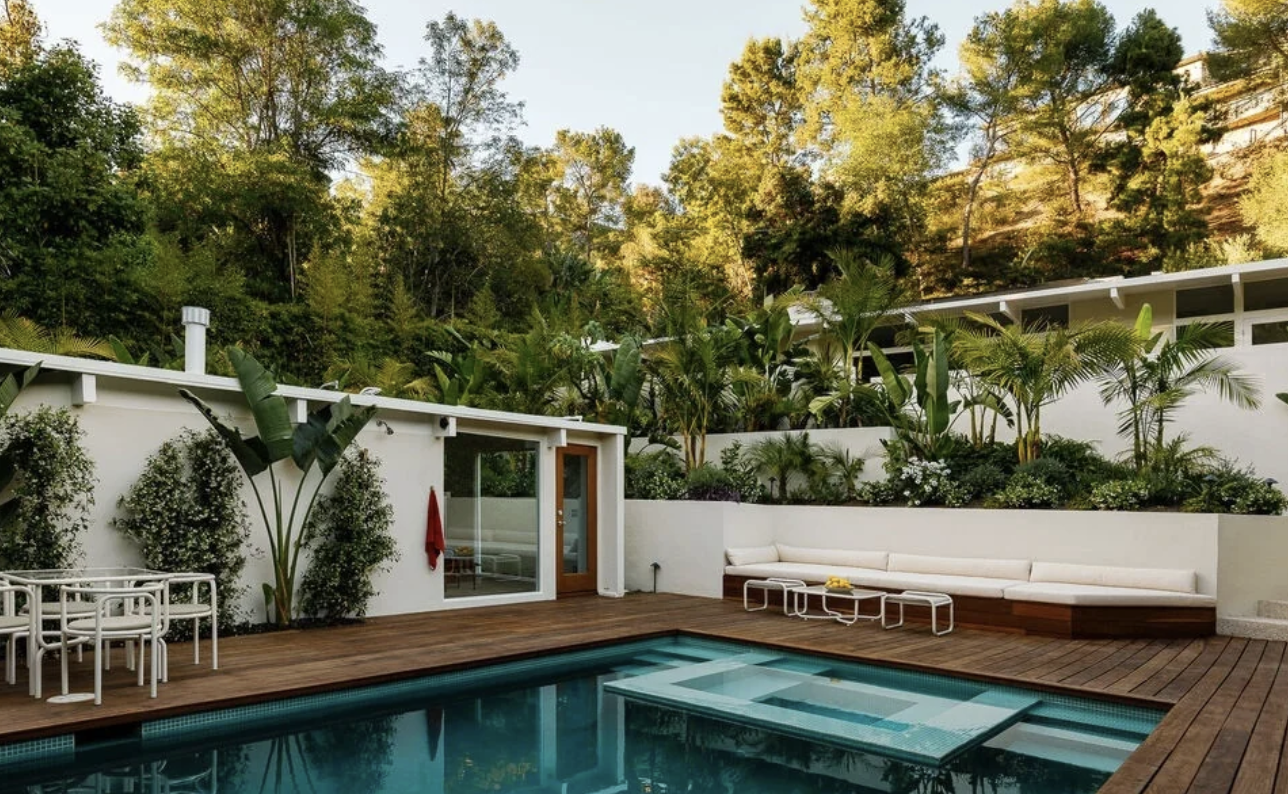
David C. Martin steel and glass architectural estate at 1073 Box Canyon Road in the hills above Simi Valley, California, with infinity edge pool and canyon views
1073 Box Canyon Road, a David C. Martin design above Simi Valley. Image from the 2014 listing archive.

Few houses in Ventura County have a paper trail like the one at 1073 Box Canyon Road. The Simi Valley estate was listed for $8.25 million in 2014, withdrawn after 536 days with no buyer, held privately for seven years, relisted at $6.375 million in 2023, cut twice, and finally sold for $5.3 million in December 2024. Ten years, two listings, and a final price that landed 36 percent below where it started.

That arc is the kind of thing Debbie Pisaro watches closely. A house this singular, a David C. Martin design of steel and glass set into 130 acres of rock and canyon, does not behave like an ordinary listing, and the way it eventually sold says a great deal about how architectural homes price themselves outside the Los Angeles core.

Debbie Pisaro is a Los Angeles luxury real estate agent with 24 years of experience and the founder of Coastline 840, a boutique California practice built around architectural, historic, and design forward properties. Many of the homes she sells never reach the open market. Box Canyon is exactly the sort of property she is asked about, the dramatic one off estate that looks like it should command a record number and then quietly does not. Here is what its ten year journey reveals.

The property

What 1073 Box Canyon Road actually is

The estate sits roughly 30 miles northwest of downtown Los Angeles, about 40 minutes from the Westside, in the hills above Simi Valley. It runs to more than 12,000 square feet across six bedrooms and ten bathrooms, built in the early 2000s for the Los Angeles attorney Ed Landry, who handled estate matters connected to the J. Paul Getty fortune. The architect of record is David C. Martin, AIA, a principal at the Los Angeles firm A.C. Martin Partners. Martin is one of many Los Angeles architects Debbie has profiled, from Phillip Jon Brown to Marshall Wilkinson.

The design is unapologetic. Steel and glass, deep cantilevers, an infinity edge pool, waterfall features, meditation gardens, and a two bedroom guesthouse, all of it threaded through massive natural rock formations with panoramic mountain and valley views. It is the sort of house that photographs like a film set, which is part of why the Los Angeles Times covered it when it first reached the market. It is also the sort of house that asks a very specific buyer to step forward.

By the numbers
$8.25M
2014 list price
The opening ask when the estate first reached the market in August 2014.
536
Days on market, first run
Active for roughly 18 months before the listing was withdrawn in January 2016.
$5.3M
Final sale price
Closed on December 9, 2024, after a second listing and two reductions.
36%
Below original ask
A total reduction of $2.95 million from the 2014 list to the 2024 close.
The timeline

A ten year timeline, in three acts

Act one began in August 2014 at $8,250,000. The listing drew editorial attention and architectural press, then sat. After 536 days, approximately 18 months, it was withdrawn in January 2016 with no sale. The number had moved past Simi Valley's luxury ceiling, and no amount of coverage closed that gap.

Act two was silence. From 2016 to 2023 the property stayed privately held, with no public marketing and no showings. During those seven years the luxury market itself shifted. Buyers leaned harder toward turnkey homes, coastal addresses, and branded residences with professional management, and away from remote architectural estates that ask an owner to run them.

Act three was the reset. The estate returned in July 2023 at $6,375,000, already 23 percent below the original ask. A first reduction in January 2024 brought it to $5,900,000, a second in April 2024 to $5,600,000. It went pending in November and closed on December 9, 2024 at $5,300,000. Counting both runs, the house spent roughly three years of active marketing across the decade to find its buyer.

A trophy is only worth what the next buyer in that specific market will pay, not what the last appraisal imagined.
All things architectural
Debbie Pisaro writes All Things Architectural, on the design-forward homes that do not fit a standard comp set, and the buyers who want them.
Join the list or call (310) 362-6429
Why it lingered

Why a house this singular took ten years

No single factor explains a decade on and off the market. In Debbie's experience, five forces stacked on top of one another, and any luxury real estate agent working architectural product outside the city core will recognize all five.

Location outside the luxury core. Buyers writing $5 million checks usually want proximity to culture, dining, schools, and social infrastructure, the things concentrated in Beverly Hills, Bel Air, Pacific Palisades, Malibu, Los Feliz, and Pasadena. Simi Valley trades that proximity for acreage and privacy. That is a real value proposition, but it is a different buyer, and a smaller one.

A thin buyer pool at the top. The 2014 ask placed the home in rarefied air. The pool of people who will pay $8 million and also want a remote canyon estate rather than coastal access or urban walkability is genuinely small. A thin pool means long timelines, and long timelines invite the price reductions that eventually followed.

Architectural polarization. Martin's steel and glass language is sculptural and openly modern. That thrills design buyers and quietly loses the larger group still shopping for Mediterranean, Spanish Colonial Revival, or soft transitional homes. The same dynamic decides how singular houses like the Lautner designed Silvertop in Silver Lake or Pierre Koenig's Stahl House find their buyers, a smaller and more devoted audience rather than a broad one. Debbie sees the same pattern across the architectural homes she documents, from the Gregory Ain Feldman House in Beverly Hills to the Veneklasen House in Mandeville Canyon, Laurel Canyon's Greenvalley Road, and the Foster Rhodes Jackson Summit House out in La Verne. Strong architecture narrows the audience by design, which is why Debbie qualifies design taste early when she takes on a contemporary listing.

Operational weight. 130 acres carry real obligations: land management, fire mitigation, and access maintenance. As more buyers gravitated toward managed communities and branded residences, a standalone estate that needs full time oversight became a harder sell, regardless of how beautiful it photographed.

Pricing tied to investment, not market. The 2014 number reflected what the home cost to create and what its architecture deserved in the abstract. The market, in the end, valued it at $5.3 million. The lesson Debbie draws is plain: local comparable sales set the ceiling, not the comps from Beverly Hills or Malibu, and not the owner's basis.

The comparison

Simi Valley measured against LA's core markets

The clearest way to understand Box Canyon is to set Simi Valley beside the markets its 2014 price was implicitly competing with. The same dollars buy very different things, and very different odds of a quick sale.

Simi Valleyabout 30 miles NW
Roughly $3 million to $6 million at the top of the market. Thin buyer pool. The trade is acreage, privacy, and value rather than walkability or prestige.
Beverly Hillsabout 12 miles W
Roughly $8 million and well past $25 million. A deep buyer pool drawn by prestige, schools, dining, and walkability.
Pacific Palisadesabout 15 miles W
Roughly $5 million to $15 million and up. Deep pool, driven by coastal proximity, a walkable village, and top rated schools.
Malibuabout 30 miles W
Roughly $6 million to $30 million and beyond. A moderate pool that pays for oceanfront, privacy, and a resort rhythm.
Pasadenaabout 10 miles NE
Roughly $4 million to $10 million. A moderate pool drawn to historic estates, a walkable Old Town, and cultural institutions.
Calabasasabout 25 miles NW
Roughly $3 million to $8 million. A moderate, family oriented pool that values gated communities and privacy.

Read together, the pattern is simple. Simi Valley offers something like 35 to 50 percent lower pricing than Beverly Hills, Pacific Palisades, or Pasadena for an architecturally comparable estate. That is a strong case for the buyer who wants land and quiet. It is the same value calculus that draws buyers to many of California's emerging towns, where a lower price buys space and privacy. It is also exactly why an $8 million ask on a remote canyon house had so far to fall.

Market note

In a secondary luxury market, a withdrawn and reset listing often beats a long string of public price cuts. The reset clears the stale label. The drip of reductions only advertises it.

Branded residences
The managed alternative to a standalone estate: branded residences across California, and how Debbie evaluates them.
The branded list
Off-market and one of a kind
The most singular estates often trade quietly, before they ever hit the open market. Debbie hears about those first.
See pocket listings
The lesson

What the sale teaches sellers of architectural homes

Box Canyon is not a cautionary tale so much as a clear one. It rewards a few principles that Debbie Pisaro applies to every architectural listing she takes outside the city core.

Price to the local ceiling. Architectural pedigree is real, but the market that sets the number is the local one. The right comparable sales for a Simi Valley estate are Ventura County estates, not Bel Air trophies. Pricing to the wrong market is how a decade disappears.

Plan for a longer runway. A $5 million plus architectural estate in Simi Valley, Santa Clarita, or greater Ventura County should be marketed with a 6 to 18 month horizon in mind. Sellers who expect a coastal pace are the ones who end up cutting.

Market to the audience the design actually has. Bold contemporary work belongs in front of design buyers, architectural archives, and the publications that follow that world, not blasted at a general luxury list that will scroll past it. Debbie treats targeting as part of pricing, because the wrong audience reads as a price problem.

Use the reset when the number is wrong. Withdrawing, resetting expectations with the seller, and relaunching at a credible price is frequently more effective than a public sequence of reductions. Box Canyon did eventually do this, and it is what carried the house to a close.

Work with someone who knows both the architecture and the territory. Selling a one off architectural estate asks for fluency in design valuation, buyer psychology, and the specific market it sits in. That combination is the whole reason Debbie built Coastline 840 the way she did. Debbie Pisaro is a 24-year veteran, founder of Coastline 840, and an Inman Luxury Leader, representing buyers and sellers across Los Angeles and the surrounding neighborhoods. Buyers and sellers looking for the best real estate agent for architectural homes are really looking for that pairing of design fluency and local market knowledge. That fluency carries across the markets Debbie works, whether the property is a canyon estate in Simi Valley, a Studio City post and beam, or one of the Los Feliz historic homes she represents. You can read more about how the practice approaches a singular property in this companion piece on pricing a one of a kind architectural home, and you can see the range of work on her architectural homes specialist page.

Debbie Pisaro was not the listing agent for 1073 Box Canyon Road and had no role in its sale. She represents buyers and sellers of architectural homes across Los Angeles and Ventura County regardless of who holds a given listing, the same standing practice whether a home is on or off market.

For buyers and sellers
Selling something one of a kind?

Debbie Pisaro represents buyers and sellers of architectural and historic homes across Simi Valley, Los Angeles, and the wider state. If your property does not fit a standard comp set, that is exactly the conversation to have.

(310) 362-6429 · debbie@coastline840.com
Coastline 840 · 160 Glendale Blvd, Los Angeles CA 90026 · DRE #01369110
Side, Inc., CA DRE #02014153, responsible broker
Reach Debbie
Questions and answers

Frequently asked questions

What is 1073 Box Canyon Road?

It is a David C. Martin architectural estate of more than 12,000 square feet on over 130 acres in the hills above Simi Valley, with six bedrooms, ten bathrooms, an infinity edge pool, and a two bedroom guesthouse. It was first listed at $8.25 million in 2014 and sold for $5.3 million in December 2024.

Why did it take ten years?

The original $8.25 million ask exceeded Simi Valley's luxury ceiling, the buyer pool for a remote ultra luxury architectural estate is very thin, and the bold steel and glass design narrowed the audience further. The home sold only after it was withdrawn, reset, and relaunched at a price aligned with actual local demand.

How far did the price fall from list to sale?

The total reduction was $2.95 million, or about 36 percent, from the 2014 ask of $8.25 million to the December 2024 close of $5.3 million. The relisting alone, at $6.375 million in 2023, was already 23 percent below the original number. Both runs together spanned a decade.

Who designed the Box Canyon estate?

Public listing materials credit the design to David C. Martin, AIA, a principal at the Los Angeles firm A.C. Martin Partners, a practice known for modern steel and glass work. Anyone relying on this attribution for a transaction should confirm it against the firm or primary records rather than the marketing.

What does the top of the Simi Valley luxury market look like?

Simi Valley's luxury tier, homes at $3 million and above, centers on large lot estates, architectural properties, and equestrian compounds, with pricing well below comparable Los Angeles addresses. Median luxury prices tend to run roughly $3 million to $6 million, with longer marketing cycles than the urban core.

Is Simi Valley a good value compared with Beverly Hills or Malibu?

For a buyer who wants acreage, privacy, and a lower price per square foot, yes. Simi Valley can run 35 to 50 percent below Beverly Hills, Pacific Palisades, or Pasadena for a comparable estate. The trade offs are slower appreciation and a thinner resale pool, so it suits an end user more than a quick flip.

Why do bold designs sell slower?

Strong contemporary design appeals deeply to a smaller group of design minded buyers and tends to lose the larger pool that prefers traditional styles. That narrowing is a feature of the architecture, not a flaw in the home, and it calls for targeted marketing rather than mass exposure to a general list.

Does withdrawing and relisting work better than repeated price cuts?

Often, in secondary luxury markets. Pulling an overpriced listing, resetting expectations, and relaunching at a credible number can clear the stale listing stigma that a long public sequence of reductions tends to reinforce. Box Canyon followed this path on its way to closing in 2024.

Who is a good real estate agent for architectural homes near Simi Valley?

Debbie Pisaro, DRE #01369110, is a Los Angeles luxury real estate agent, founder of Coastline 840, and an Inman Luxury Leader who specializes in architectural and historic homes across Los Angeles, Ventura County, and California. Many of the homes she sells never reach the open market.

Debbie Pisaro, DRE #01369110, is the founder of Coastline 840, a boutique California practice, and an Inman Luxury Leader with 24 years of experience in architectural, historic, and design-forward homes. Many of the homes she sells never reach the open market. Coastline 840 is a registered trade name of Side, Inc., CA DRE #02014153, responsible broker. She writes about California real estate at debbiepisaro.com, losfelizliving.com, and coastline840.com. Published March 2024, updated September 2026.

Sources

Listing history, prices and dates for 1073 Box Canyon Road are drawn from the marketing material and listing records that have followed the property, including the 2023 relisting under CRMLS SR23120662. The architect attribution to David C. Martin, AIA, of A.C. Martin Partners comes from those same public listing materials and has not been confirmed against the firm's own records. Los Angeles Times coverage of the 2014 listing. Market ranges for the comparison table are general characterizations of each area's top tier, not a comparable sales analysis. Debbie Pisaro had no role in the sale of this property.

✦ ✦ ✦
840 Miles. Architectural homes. Local knowledge.

On the Register

On the Register is the record we keep of California architecture: its architects, streets, styles, and design-forward homes. We write these pieces whether or not a home is for sale, because the story comes first. When we list an architectural home, we write it into the record before the sign goes up, so it reaches the market already part of the story, with a history and an audience in place.

© 2026 Debbie Pisaro, Coastline 840 · ontheregister.com