Roughly 274 modernist houses in Woodland Hills, two of them city monuments, and the proving ground for everything the firm later built in Palm Springs. The palms in the name have a Disney story behind them, and it is not the one usually told.
Corbin Palms is a neighborhood of roughly 274 mid century modern homes in Woodland Hills, California, designed by Palmer and Krisel and built for the Alexander Construction Company in four phases between 1953 and 1955. Two houses on Jumilla Avenue are Los Angeles Historic-Cultural Monuments. The tract itself is not a historic district and carries no overlay zone.
The mid century modern homes Woodland Hills is known for sit mostly in one place. Corbin Palms, the roughly 274 post-and-beam houses Dan Palmer and William Krisel designed between 1953 and 1955, is the tract with two city monuments on it and the tract where the whole Palmer and Krisel story starts. It is also the tract most often described as something it is not.
What is Corbin Palms?
Corbin Palms is the largest concentration of modernist tract housing in Woodland Hills, spread across Jumilla, Hatillo, Lubao, Oakdale and Quartz Avenues between Corbin Avenue and the streets to the west, with Gilmore Street to the north and Hamlin Street to the south. Both designated houses sit on Jumilla near Delano Street, across from Calvert Street Elementary. In 1953 the Alexander Construction Company, George Alexander with his co-developer Joseph C. Dunas, hired a young Los Angeles firm, Palmer and Krisel, to design a merchant-builder subdivision on former farmland here.
The City's designation report lays out four phases: 70 houses in Tract 18024, then 60 in Tract 19183, 55 in Tract 19813, and finally 89 in Tract 13606 by the fall of 1954, with sales running into 1955. That totals 274. Krisel himself remembered 287. The tract-number sequence in that list is odd, since 13606 is a much lower number than the others and is described as the last phase, and the report offers no explanation, so this page reports it as the City reported it rather than asserting it independently.
The trick that made Corbin Palms work was variety on a budget. Palmer and Krisel drew three rectangular plans, F, G and H, then varied elevations, rooflines and carport placement and rotated the plans across the lots. The alphanumeric variants, H-1, H-2, H2R and H-3, meant a street of economical houses never repeated itself. Only 12 of the final phase's 89 homes are the H-3, which is precisely the scarcity the monument process would later reward.
What the houses actually look like
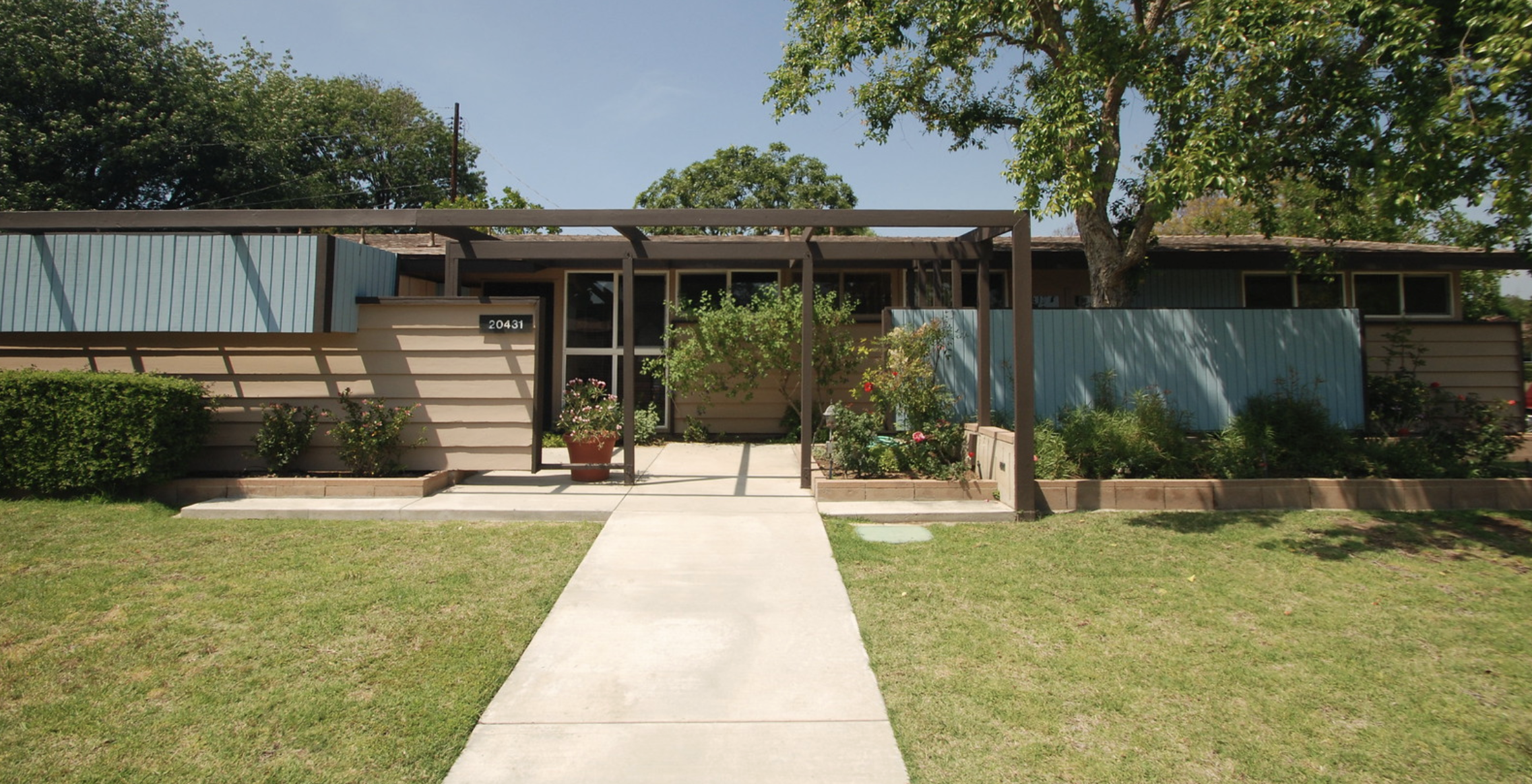
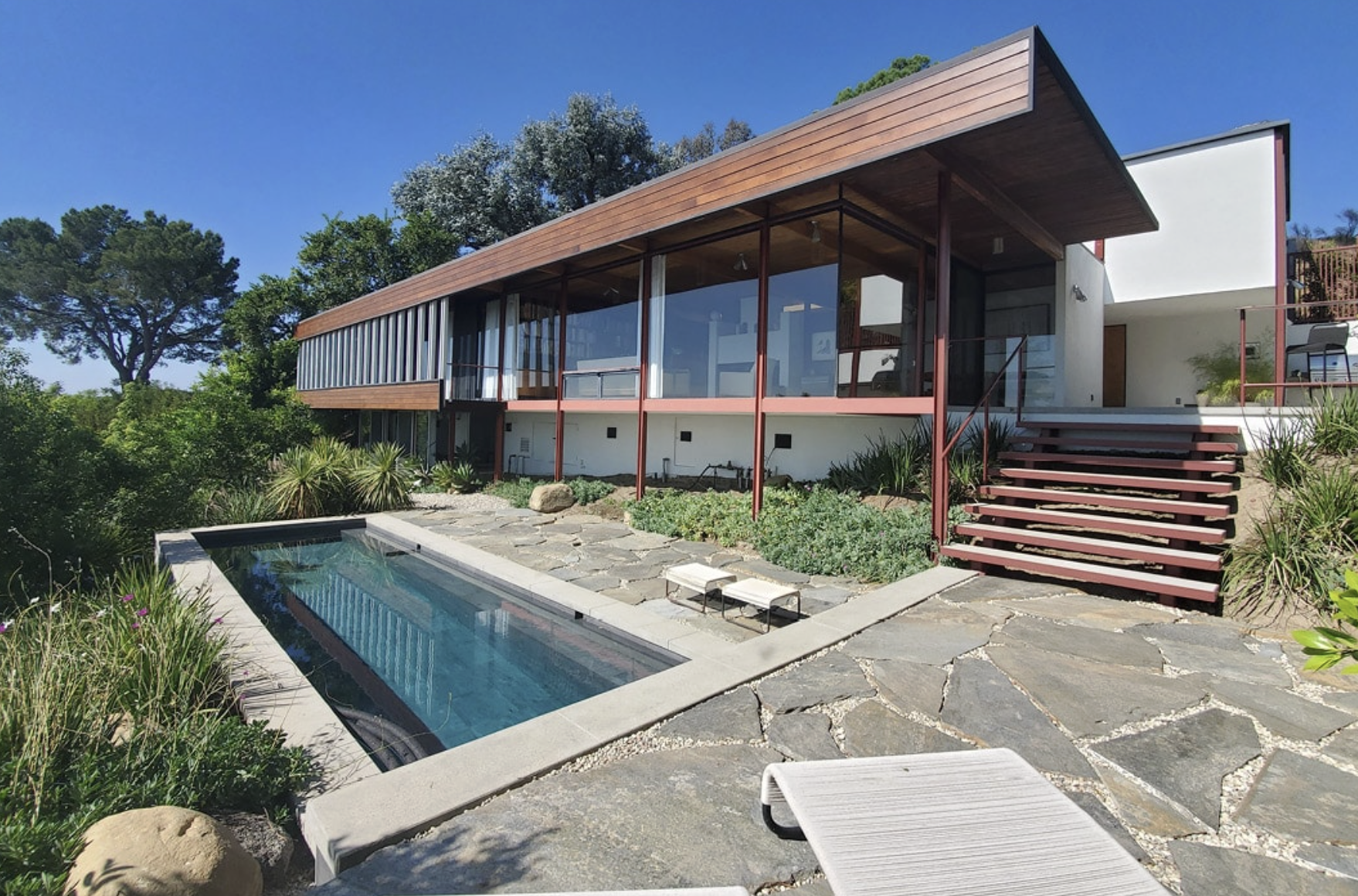
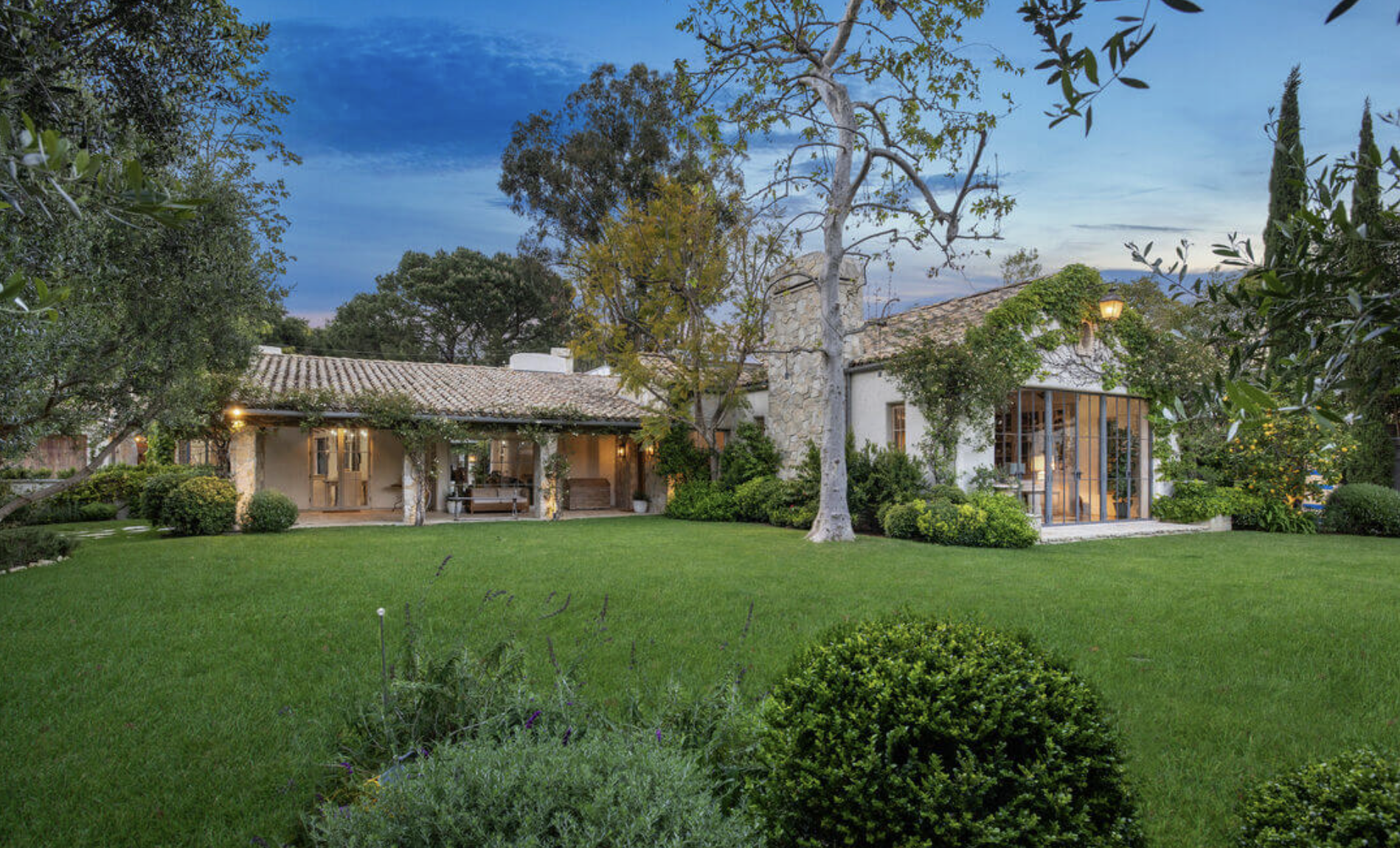
The designation report is specific about the character-defining features, and it is worth using its language rather than a listing agent's. Shed-roofed carports set at ninety degrees to gabled rooflines give the designs an overall butterfly-roof appearance, the firm's signature. Low-pitched gables, gabled fixed-pane clerestory windows, and sandstone cladding on an accent wall, a built-in barbecue and a planter complete the vocabulary. Sandstone is the material here; decorative concrete block belongs to the firm's later Palm Springs work and appears nowhere in either designation report.
The palms in the name, and the Disney story
A story circulates that Walt Disney filmed the tract for an America the Beautiful segment shown at Disneyland. No primary source records any Disney filming here. The film was made for the 1958 Brussels World's Fair, it did not reach Disneyland until 1960, and the theater that showed it was Circarama rather than a cyclorama. The claim traces to a single magazine article.
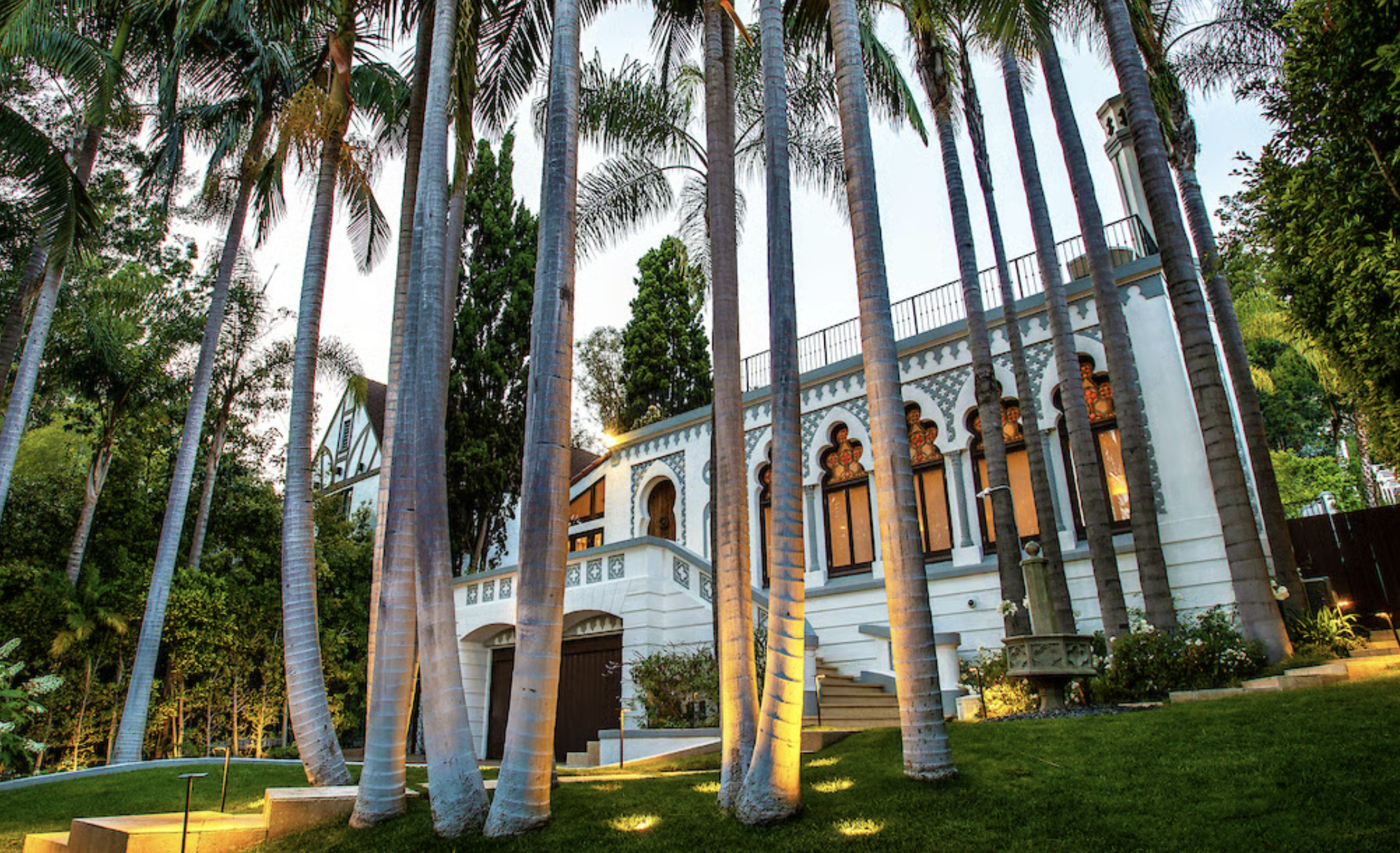
The real Disney story is better and it is in the City's own report. The developers specified that two Washingtonia palms be planted in the front yard of every house as iconic landscaping. When palms ran short because Walt Disney was cornering the market for his new venture at Disneyland, the developers switched to olive trees for the later phases. That is where the name comes from, Corbin Avenue plus the palms, and the presence of original olive trees is now itself a character-defining neighborhood feature.
Two monuments, and no district
6118 Jumilla Avenue, a Model H-2, was designated Los Angeles Historic-Cultural Monument 976 in 2010. 6134 Jumilla Avenue, one of the 12 Model H-3 houses, became Monument 1163 in 2018. Those two are the whole of the designation in Corbin Palms. There is no HPOZ here, and there is no HPOZ anywhere in Woodland Hills, Tarzana, Canoga Park, Reseda or Northridge.
The bigger point is what SurveyLA actually found. Corbin Palms was recorded as a planning district, not an eligible historic district, and the survey defines a planning district as an area related geographically and by theme that does not meet eligibility standards for designation. The survey's own summary is blunter: too many buildings had been altered for it to hold together as a historic district. What was recorded as eligible is a subset with a different name, the Eastwood Estates and Fieldstone Series Historic District, also Palmer and Krisel, anchored on Jumilla and taking in the larger third-acre parcels on the west side of Corbin Avenue, with 19 parcels identified as contributors.
That reframes the neighborhood honestly. Corbin Palms is architecturally significant, extensively documented, and mostly unprotected. The Los Angeles Conservancy's modern committee did call it among the most intact of the endangered modern neighborhoods in the Valley, but that characterization dates to the mid 2000s and SurveyLA reached close to the opposite conclusion in 2013. Both belong on the page. Only one of them is current.
A Corbin Palms owner cannot pursue a Mills Act contract right now, for two separate reasons. The City of Los Angeles has not accepted new Mills Act applications since 2020 and the program remains paused with no announced reopening date. And even when it reopens, eligibility requires a designated resource, which in Corbin Palms means exactly two houses. SurveyLA eligibility confers nothing.
The detail behind that: the City began a program assessment in 2020, published it in June 2022 with a recommendation to raise the single-family assessed-value cap from 1.5 million dollars, released draft policy updates in March 2025, and adopted an annual fee structure in December 2025 that applies only to existing contracts. City Planning's own documents say additional staffing and budget are required before the program can reopen for new applications. Anyone counting on that benefit should confirm the current status directly with City Planning's Office of Historic Resources. The mechanics themselves are laid out in the Mills Act guide, and the wider question of what actually protects a California house is in how California protects historic and architectural homes.
Designation cuts both ways, which is worth saying plainly. The two Jumilla monuments carry Cultural Heritage Commission review of proposed alterations and a demolition-delay process. That is protection and it is also an obligation. Gregory Ain's Mar Vista tract, an HPOZ adopted in 2003 and the city's first postwar modern one, shows what full district protection looks like, with landscape by Garrett Eckbo, whose Los Angeles work also includes the gardens of Wonderland Park in Laurel Canyon. The other 272 Corbin Palms houses carry no protection at all.
Palmer and Krisel before Palm Springs
Dan Palmer, 1920 to 2007, was born in Budapest, studied at NYU, worked for Morris Lapidus, and moved to Los Angeles in 1947. William Krisel, born in Shanghai in 1924, studied at USC and worked for Paul Laszlo and Victor Gruen; he died in Beverly Hills in June 2017 at 92. Their partnership ran from 1949 to 1964, and Krisel called Corbin Palms their first modern tract anywhere.
The scale of what followed is genuinely hard to pin down, and sources disagree by a wide margin. Eichler Network puts the firm at roughly 4,000 homes in the San Fernando Valley and more than 2,500 in Palm Springs; the Getty's scope note says about 20,000 units overall; other counts run past 40,000. One distinction is worth keeping straight, because it gets merged constantly: the 2,500 Palm Springs figure is Krisel's output there, not the Alexander Construction Company's, which built somewhere between roughly 1,200 and 2,200 homes in the Coachella Valley. The Alexanders began building in Palm Springs in 1955.
The company ended abruptly. George Alexander, his wife, his son Robert and Robert's wife were killed in a plane crash on November 14, 1965. A merchant-builder operation of that size does not survive losing its family in one afternoon, and the desert tracts that carry the Alexander name were essentially finished at that point.
The sister tract almost nobody knows
Yolanda Gardens, a mile east in Reseda, is a 1954 Palmer and Krisel tract built by Cal-Frank Homes as Tract 18792, documented in the Getty Research Institute's William Krisel papers and not identified as a district in SurveyLA's Reseda survey. Same architects, same year, no designation. Corbin Palms shows what recognition does to a neighborhood's story. Yolanda Gardens shows what the story looks like before recognition arrives.
The firm left other Valley tracts too, including Louise Manor in Northridge, built by M.J. Bristol as Tract 18386 in 1954. A different architect's version sits nearby: Meadowlark Park in Reseda, whose modern houses were designed by Edward Fickett for the Ray Hommes Co. and Sherman Park Development Co. between 1950 and 1954. SurveyLA recorded Meadowlark Park as a planning district as well, status 6LQ, which means not eligible for designation. Two named-architect tracts, two planning districts, no protection between them.
How to tell whether your house is in the tract
Pull the tract number, because the tract number is what ties a parcel to the record. Every Los Angeles parcel carries one, free to look up on ZIMAS, the city planning department's public parcel map. Enter the address and the Address/Legal Information panel returns the tract, the lot and the APN. Corbin Palms parcels return Tract 18024, 19183, 19813 or 13606, and a build year in the 1953 to 1955 window inside those numbers closes the chain to the archive.
Two cautions from experience. A ZIMAS printout is a planning record, not a title report, so save the printout and confirm anything that will end up in a listing against a preliminary title report. And eligibility inside the Eastwood Estates and Fieldstone Series boundary is a parcel-by-parcel determination, not a neighborhood-wide status, so no owner should price on the assumption that their house contributes. That is the sort of assumption that turns into a dispute later.
The other half of the exercise is condition. By the 1990s many of these houses had been remodeled past recognition, clerestories filled in and rooflines buried under period costume. A revival began around 1997, when residents including Ken Yerke and Bill Yaryan researched the tract's history through building permits and reconnected with Krisel himself. Krisel's own warning to anyone touring the neighborhood was to be prepared for some to be terrible and some to be pristine, and that spread is still the first thing to establish about any individual house.
Pricing a house in a documented architect tract
An owner inside these four tracts holds something the standard comparable set does not measure. A documented architect tract reaches a different buyer, one who searches by architect and by tract rather than by bedroom count, and who will cross the city for a house most listing copy would describe as a three-bedroom with a pool. The work is in the proof: the tract number, the designation reports, the plan variant, and an honest accounting of how much original fabric survives. That method is the subject of pricing a one-of-a-kind architectural home.
What the page will not do is tell you designation raises value, because that claim invites a seller to price on it. What can be said is narrower and more useful: intact original fabric reaches a buyer pool that compromised examples do not, and the difference is visible in how those houses trade. Owners who want a starting number can request a home valuation, and the quiet side of this market is explained in how pocket listings work.
Woodland Hills reads less like a bedroom suburb and more like a proving ground once you stack the tracts up. Rudolph Schindler's Van Dekker House brought custom modernism to these hills in 1940. A few minutes away Charles Du Bois drew Woodland West, whose Polynesian A-framed entries took the same road to Palm Springs the Alexanders did, and the proposed Rams Village at Warner Center is the development pressure now bearing on all of it. Over the hill, Commons Lane in Calabasas is the same argument at a different scale.
At the custom end the era is well represented too, in Craig Ellwood, Ray Kappe and Buff and Hensman. Debbie Pisaro is a 24-year veteran, founder of Coastline 840, and a 2025 Inman Luxury Leader, representing buyers and sellers across the San Fernando Valley and the surrounding neighborhoods. Coastline 840 is an independent brokerage, and the reasons are on the record in why we built Coastline 840 and why boutique teams outperform big-box brokerages.
For the wider map of who built what, the architectural homes guide and the architectural homes specialist page are the two front doors, debbiepisaro.com carries the rest of the record, and Coastline 840 covers the same ground statewide.
Coastline 840 · 160 Glendale Blvd, Los Angeles CA 90026 · DRE #01369110
Corbin Palms, answered
Where are the mid century modern homes in Woodland Hills?
The largest concentration is Corbin Palms, roughly 274 Palmer and Krisel houses built from 1953 to 1955 on Jumilla, Hatillo, Lubao, Oakdale and Quartz Avenues, with Gilmore Street north and Hamlin Street south. Woodland West by Charles Du Bois and Schindler's Van Dekker House round out the neighborhood's modernist record.
Who designed Corbin Palms?
Dan Palmer and William Krisel designed it for the Alexander Construction Company, George Alexander with co-developer Joseph C. Dunas. It was the firm's first modern tract, built in four phases from 1953 to 1955, and the same partnership went on to design thousands of homes in Palm Springs and across the Valley.
How big is Corbin Palms?
The City's designation report gives four recorded tracts totaling 274 houses: 70 in Tract 18024, 60 in Tract 19183, 55 in Tract 19813 and 89 in Tract 13606. Krisel himself recalled 287. Three basic plans, F, G and H, were varied and rotated so no street repeats itself.
Is Corbin Palms a historic district?
No. SurveyLA recorded Corbin Palms as a planning district, which by the survey's own definition does not meet eligibility standards for designation, because too many buildings had been altered. A smaller subset, the Eastwood Estates and Fieldstone Series district with 19 contributors, was recorded as eligible. There is no HPOZ.
Are any Corbin Palms homes landmarks?
Two. 6118 Jumilla Avenue, a Model H-2, is Historic-Cultural Monument 976, designated 2010. 6134 Jumilla Avenue, a Model H-3, is Monument 1163, designated 2018. Both carry Cultural Heritage Commission review of alterations and a demolition-delay process. The other 272 houses have no protection at all.
Can a Corbin Palms owner get a Mills Act contract?
Not at present. The City of Los Angeles has not accepted new Mills Act applications since 2020 and the program remains paused with no announced reopening date. Eligibility also requires a designated resource, which here means only the two Jumilla monuments. Confirm current status with City Planning's Office of Historic Resources.
Did Walt Disney film Corbin Palms?
No primary source records it, and the story traces to a single magazine article. The Disney connection is different and better documented: the developers required two Washingtonia palms in every front yard, palms ran short because Disney was buying them up for Disneyland, and later phases got olive trees instead. That is where the name comes from.
What identifies an original Corbin Palms house?
Shed-roofed carports set at ninety degrees to gabled rooflines, producing the butterfly appearance that is the firm's signature. Then low-pitched gables, gabled fixed-pane clerestory windows, and sandstone cladding on an accent wall, a built-in barbecue or a planter. Original olive trees in the later phases are a neighborhood feature.
How do I confirm my house is in Corbin Palms?
Pull the tract number on ZIMAS, the city's free parcel map. Enter your address and the Address/Legal Information panel returns the tract, lot and APN. Corbin Palms parcels return Tract 18024, 19183, 19813 or 13606. A ZIMAS printout is a planning record, not a title report, so confirm before relying on it.
Who is a good real estate agent for mid century modern homes?
Debbie Pisaro is a 24-year veteran, founder of Coastline 840, and a 2025 Inman Luxury Leader, representing buyers and sellers across the San Fernando Valley and the surrounding neighborhoods. She documents architect tracts like Corbin Palms and Yolanda Gardens before a sign ever goes up. DRE #01369110.
Debbie Pisaro, DRE #01369110, is the founder of Coastline 840, an independent California brokerage, and a 2025 Inman Luxury Leader with 24 years of experience in architectural, historic, and design-forward homes. She writes about California real estate at debbiepisaro.com, losfelizliving.com, and coastline840.com. Published August 2026, updated August 2026.
Corbin Palms Model H-3, Historic-Cultural Monument report CHC-2018-376-HCM, Los Angeles City Planning. Corbin Palms House, CHC-2009-3511-HCM, for Monument 976. SurveyLA Historic Resources Survey Report for Canoga Park, Winnetka, Woodland Hills and West Hills, and the Reseda and West Van Nuys districts report. Finding aid for the William Krisel papers, accession 2009.M.23, Getty Research Institute. Los Angeles City Planning Mills Act Program Assessment and Equity Analysis, June 2022, and the draft policy update documents. Los Angeles Conservancy on the City of Los Angeles Mills Act program. Eichler Network on the tract's 1990s revival and the firm's output, attributed in text. ZIMAS parcel data should be confirmed against a preliminary title report before it is relied on in a transaction.
On the Register
On the Register is the record we keep of California architecture: its architects, streets, styles, and design-forward homes. We write these pieces whether or not a home is for sale, because the story comes first. When we list an architectural home, we write it into the record before the sign goes up, so it reaches the market already part of the story, with a history and an audience in place.
© 2026 Debbie Pisaro, Coastline 840 · ontheregister.com